In schweren Anwendungen wie Bergbau, Abriss und kommunaler Bau bestimmt die Leistung eines Hydraulikbrechers direkt die Betriebseffizienz und die Kosten. Der Kern der Wettbewerbsfähigkeit eines überlegenen Hydraulikbrechers liegt in zwei Punkten: außergewöhnliche sofortige Schlagenergie und langfristige Betriebssicherheit. Viele Benutzer kämpfen oft mit Marke und Preis beim Kauf von Hydraulikbrechern. Tatsächlich liegen die wirklichen Leistungsunterschiede in der Struktur, den Materialien und dem Herstellungsprozess. Dieser Artikel bietet eine eingehende Analyse aus einer technischen Perspektive darüber, wie hydraulische Brecher “ höhere Wirkungsenergie” und “ langfristige Zuverlässigkeit,” Wir helfen Ihnen, eine informierte Wahl zu treffen.
Quelle der explosiven Schlagkraft
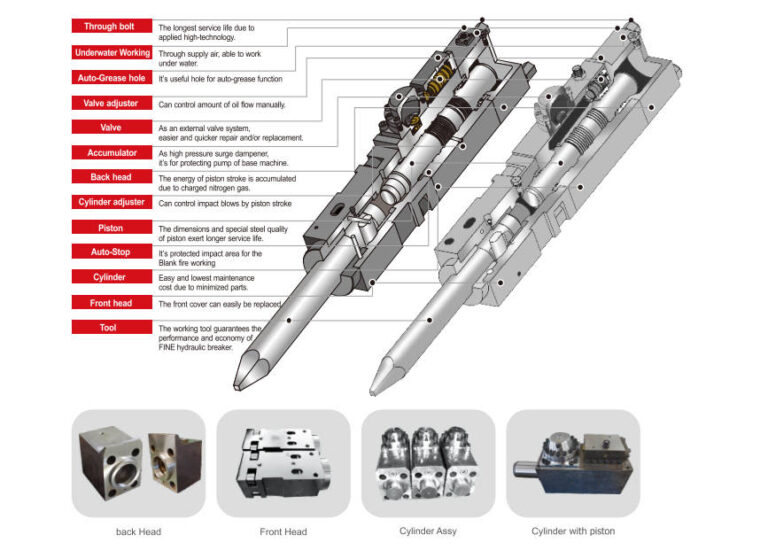
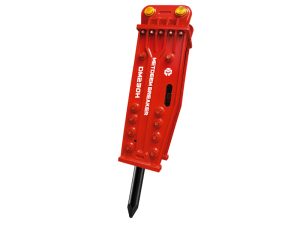
Die METDEEM hydraulisch Unterbrecher Das Leistungssystem ist um drei Kernfaktoren ausgelegt: präzise mechanische Passform, optimierte Hydraulikströmung und stickstoffgesteuerte Energiespeicherung.
Präzisionspassung zwischen Kolben und Zylinder
Die Kolben-Zylinder-Schnittstelle ist das Herz der Energieübertragung. Die thermischen Ausdehnungskoeffizienten beider Komponenten werden im Voraus berechnet, wodurch die CNC-Bearbeitung fest kontrollierte Mikronenabstände erreichen kann. Diese präzise Passform reduziert die interne Leckage erheblich und gewährleistet, dass der Hydraulikdruck effektiv in Schlagenergie umgewandelt wird, anstatt durch Bypassströmung verloren zu gehen. Dadurch bleibt die Aufprallenergie im kontinuierlichen Hochfrequenzbetrieb bei minimalem Energieverlust sehr konsistent.
Optimierte hydraulische Flow Matching
Ein Hydraulikbrecher kann nur so gut funktionieren wie seine Kompatibilität mit der Trägermaschine. Stabile und gut abgestimmte Druck- und Durchflussraten ermöglichen es dem Breaker, die hydraulische Leistung des Baggers voll zu nutzen. Wenn die Systemparameter richtig ausgerichtet sind, werden Druckabfälle und Durchflussverluste minimiert. Dies führt zu einer stabileren Schlagleistung, verringerten Hydraulikverlusten und indirekt zu einer Verbesserung der gesamten Kraftstoffeffizienz, während die Belastung sowohl des Unterbrechers als auch der Hydraulikpumpe des Trägers verringert wird.
Stickstoffgestützte Energiespeicherung und Rücklaufsteuerung
Stickstoffkammern haben eine doppelte Funktion:
- Energiespeicherung zur Verbesserung der Spitzenschlagkraft.
- Absorbiert Rückschlag, um Vibrationen und Ermüdung der Komponenten zu reduzieren.
Durch die Bereitstellung von Hilfsenergie während jedes Schlags und die Pufferung des Rückschlags ermöglicht das Stickstoffsystem stärkere Schläge pro Schlag und verbessert die Brecheffizienz, ohne unnötige Blasfrequenz zu erhöhen - die Produktivität zu verbessern und die Lebensdauer zu verlängern.
Die Grundlage der Langfristigkeit
Kolbenmaterialiauswahl: Warum 40CrNiMo wichtig ist
Bei METDEEMDie Kolben in unserem Design arbeiten mit 40CrNiMo Legierungsstahl, den wir absichtlich ausgewählt haben. Der Kolben besteht aus 40CrNiMo-Legierungsstahl, der nach der Wärmebehandlung zu einem hochwertigen Material mit einer Oberflächenhärte von etwa HRC 60 wurde. Unsere Kolben unterliegen mehrrichtungsorientierten (multiaxialen) Schmiedeprozessen, bevor sie eine präzise CNC-Schleif- und Polierbehandlung erhalten, die sie bei hohen Spannungsbedingungen sowohl gegen Verformungen als auch gegen Ermüdungsrisse beständig macht. Das Ergebnis ist eine verbesserte Dimensionsstabilität unter Hochfrequenzschlagbelastung, die die Lebensdauer erheblich erhöht. Das Material arbeitet länger, was zu einem geringeren Bedarf an Ersatzteilen führt.
Zylinderdesign: Harte Oberfläche, harter Kern
Die Zylinder unseres Hydraulikbrechers verwenden 20CrMo Stahl, der ein hochwertiges Legierungsmaterial darstellt, das sowohl Festigkeit als auch Haltbarkeit gegen Verschleiß bietet. Die Oberfläche des Materials erhält eine schützende harte Schicht durch Wärmebehandlung, etwa 2 mm dick, um eine ausgezeichnete Körperzähigkeit und Reißbeständigkeit zu bieten. Der Zylinder behält eine präzise geometrische Konsistenz, um eine optimale Übereinstimmung mit seinem designierten Kolbendesign zu gewährleisten.
Präzisionsbearbeitung für effizienten Energietransfer
Unser CNC-Bearbeitungsprozess gewährleistet eine Positionstoleranz auf Mikronenebene. Die CNC-Schleifmaschine führt vor dem Abschluss des Vorgangs eine einstückige Klemmung zur Bearbeitung jedes Zylinderkörpers durch. Die Konstruktion eliminiert Konzentrizitätsfehler, wodurch Komponenten ihre bestmögliche Energieübertragungsleistung erreichen können. Das System arbeitet mit höheren Schlagfrequenzen, was zu einer besseren Arbeitseffizienz führt, die hydraulische Energieumwandlungseffizienz auf über 98%, die sich unter optimierten Betriebsbedingungen dem theoretischen Effizienzniveau nähert.
Häufige Mythen
Mythos 1: Größere Breaker liefern immer mehr Leistung
Die Breakergröße allein garantiert keine bessere Leistung. Ohne eine ordnungsgemäße interne Komponentensynchronisation und eine hydraulische Systemabpassung kann ein größerer Schalter ineffizient arbeiten oder sogar vorzeitig verschleißen.
Schlagenergie muss an Anwendungsanforderungen wie Gesteinshärte, Betonverschichtungsdichte und Arbeitsbedingungen abgestimmt werden.
Mythos 2: Carrier Pferdekraft ist das einzige, was zählt
Während Trägerspezifikationen wichtig sind, haben interne Leckagen, Materialqualität und Bearbeitungspräzision einen großen Einfluss auf die reale Leistung. Selbst bei ausreichender Hydraulikleistung begrenzt eine unternorme interne Konstruktion die Schlagwirksamkeit.
Für anspruchsvolle Anwendungen wie dichter Granit oder starker Stahlbeton sind Modelle wie DM75 und DM81A für den Betrieb bei höheren Drücken und Frequenzen entwickelt, unterstützt von Stickstoffspeichern, die die Schlagbeständigkeit verbessern.
Professionelle Tuning: Maximierung der Betriebsleistung
Installationsanleitung zum ersten MalLinien
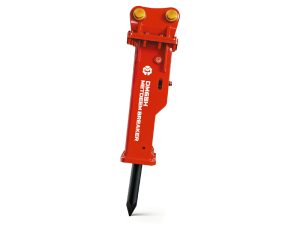
Eine korrekte Anfangseinrichtung ist für einen zuverlässigen Betrieb entscheidend. Der Breaker’ S Schlagkraft hängt vom Druck von Stickstoff und Hydraulikflüssigkeit ab, die mit höheren Durchflussraten arbeitet, um schnellere Schlagfrequenzen zu erzeugen. Unser Website-Support-Abschnitt und Produkthandbücher für DM68 Hydraulischer Breaker Box Typ, DM135 Hydraulic Breaker Side Type, andDM230 Hydraulic Breaker Top Type Modelle sollten verwendet werden, um offizielle Richtlinien für die Einstellung von Druck- und Durchflussparametern zu erhalten. Falsche Einrichtung - insbesondere übermäßiger Stickstoffdruck - kann zu Dichtungsausfall, Kolbendeformation und vorzeitigem Systemverschleiß führen.
Kontinuierliche Überwachung und Anpassung
Ihr Hydraulikbrecher arbeitet unter unterschiedlichen Umgebungsbedingungen, wodurch Sie seine Betriebsparameter anpassen müssen. Kälte Umgebungen, kontinuierlicher 24-Stunden-Betrieb und hohe Arbeitszyklen beeinflussen das Systemverhalten. Anzeichen wie reduzierte Schlagkraft oder Überhitzung können auf Stickstoffdruckverlust oder Dimensionsänderungen hinweisen, die durch temperaturbedingte Ausdehnung verursacht werden. Regelmäßige Inspektion und rechtzeitige Anpassung helfen, eine stabile Leistung zu erhalten und langfristige Schäden zu verhindern.
Schlussfolgerung: Investitionen in Engineered Value
Hohe Aufprallenergie ohne Kontrolle führt zu verschwendeter Energie und verkürzter Lebensdauer der Anlage. Der wahre Wert kommt von kontrollierter Kraft, langlebigen Materialien und Präzisionstechnik. Das Team von METDEEM vereint Konstruktionskompetenz mit Materialwissenschaftlichen Kenntnissen und Prozessoptimierung, um Hydraulikbrecher zu schaffen, die effektive Schläge in jedem Betrieb erzeugen. Unser Engineering-Team liefert maßgeschneiderte Breaker-Empfehlungen und maßgeschneiderte technische Spezifikationen, die Ihren Projektanforderungen entsprechen - um den Investitionsrendiment über den gesamten Lebenszyklus der Ausrüstung zu maximieren.
FAQ (häufig gestellte Fragen)
F: Welche visuellen Inspektionsmethoden gibt es, um die Qualität der Herstellung von Unterbrechern zu überprüfen?
A: Die Inspektion sollte überprüfen, dass das Innere des Zylinders eine gleichmäßige Oberflächenverbindung aufrechterhalten und alle beweglichen Teile enge Abstände zwischen Kolben und Zylinder haben, während minimale Bewegungen auftreten und die kritischen Verschleißkomponenten Anzeichen einer Wärmebehandlung zeigen.
F: Was sind die tatsächlichen Vorteile und Nachteile der Verwendung einer 40CrNiMo-Kolbenstange anstelle einer normalen?
A: Die ursprünglichen Kosten von 40CrNiMo-Stäben Meißeln für eine verlängerte Lebensdauer, da ihre HRC 60-Härtebewertung und Verformung und Rissbeständigkeit unter hohen Spannungsbedingungen den Bedarf an Ausrüstungsaustausch und Wartung minimieren.
F: Was ist der primäre Fehler, der auftritt, wenn jemand einen neuen Breaker installiert?
A: Die Nichteinhaltung der Herstellerspezifikationen für den Hydraulikdruck und die Durchflussraten führt zu einer Verschlechterung der Ausrüstung und verkürzt ihre Lebensdauer.
F: Welche spezifischen Maßnahmen müssen getroffen werden, wenn man in einer extremen Umgebung und einem fortlaufenden vierundzwanzigstündigen Betrieb arbeitet?
A: Das System erfordert häufigere Stickstoffpegelkontrollen und Hydraulikölwechsel bei kalten Temperaturen sowie ordnungsgemäße Berechnungen der thermischen Ausdehnung beim Start, um Betriebsprobleme und mechanische Systemschäden zu vermeiden.