A hydraulic breaker can look affordable when you compare only the purchase price. However, the first invoice is only one part of the real cost. Repairs, replacement parts, downtime, fuel use, installation, operator errors, and delayed projects can quickly make a cheap breaker more expensive than a well-built one.
For contractors, rental companies, demolition teams, and quarry operators, the better question is not “Which breaker is cheapest?” It is “Which breaker gives the lowest total cost over its working life?”
A quality hydraulic breaker should deliver steady impact, reliable parts, suitable hydraulic performance, and practical maintenance. It should also match the excavator and the job. When these factors come together, the initial investment can protect the entire project budget.
The Purchase Price Is Only the Starting Point
The cost of a hydraulic breaker includes far more than the amount paid to the supplier. A useful calculation should include every expense connected with ownership and operation.
The total cost may include:
- Purchase price
- Mounting bracket and installation
- Hydraulic hose and pipeline work
- Chisel and bushing replacement
- Seal and piston maintenance
- Grease and hydraulic oil consumption
- Transport and storage
- Operator training
- Project delays
- Emergency rental equipment
- Lost production during downtime
A cheap breaker may appear attractive because it reduces the first payment. But if it needs frequent repairs or produces weak impact, the contractor pays again through lost working hours.
How Downtime Changes the Cost
A broken breaker can stop more than one machine. The excavator may be unavailable, the operator may still need to be paid, and other workers may have no productive task. If the breaker is being used for road work, demolition, quarrying, or rear mining projects, even a short delay can affect the entire work plan.
For this reason, equipment buyers should compare the cost per working hour rather than the purchase price alone. A more expensive breaker that runs steadily may produce a lower cost per hour over several years.
What Makes a Hydraulic Breaker More Expensive to Own?
Before selecting a breaker, buyers should look at the parts that experience the most stress. A hydraulic breaker contains a piston, valve, cylinder, seals, nitrogen chamber, back head, front head, chisel, and bushings. The condition and fit of these parts directly affect impact energy and service life.
The design should also match the excavator’s operating weight, hydraulic flow, working pressure, and chisel diameter. A mismatch can create weak blows, excessive heat, oil leakage, or early wear.
Material Quality and Manufacturing Accuracy
Strong materials help the breaker withstand repeated impact. Common material choices for major parts include forged 40CrMo for the back head, front head, and chisel; 20CrMo for the cylinder and bushings; 20CrNiMo for the valve; and 40CrNiMo for the piston.
These materials are useful only when heat treatment, machining, and assembly are also controlled. A strong piston with poor alignment may still wear quickly. A good chisel with a loose bushing may damage the front head. Quality is a complete chain, not a single material name.
At METDEEM, we focus on controlled production from processing to delivery. Our hydraulic breaker range includes different models for compact excavators, medium machines, and heavy-duty construction equipment. We also provide technical support for model selection and hydraulic matching.
The Hidden Cost of Weak Impact
Impact energy must reach the material efficiently. If the piston, valve, cylinder, or nitrogen chamber does not work properly, the breaker may strike frequently but break slowly. The operator may then apply more pressure or keep the tool on one point for too long.
This creates a damaging cycle:
- Weak impact slows production.
- The operator increases pressure.
- Hydraulic oil becomes hotter.
- Seals and bushings wear faster.
- The breaker needs repair.
- The project loses more time.
A quality breaker helps reduce this cycle through stable impact energy and better internal fitting. That does not remove the need for maintenance, but it gives the operator a stronger and more reliable working base.
Matching the Breaker to the Excavator
A good breaker can still perform poorly when it is connected to the wrong excavator. The machine must provide suitable oil flow and pressure. The attachment must also match the carrier’s operating weight.
For example, small models may work with excavators from around 0.8 ton to 2.5 tons. Medium models can serve machines from approximately 4.5 tons to 18 tons. Heavy models may be suitable for excavators from 19 tons to 100 tons, depending on the model and working condition.
Check Flow, Pressure, and Chisel Diameter
Hydraulic flow is usually shown in L/min, while working pressure is shown in MPa or bar. A small breaker may require around 15-20 L/min. A large breaker may require 300-330 L/min. The chisel diameter may range from about 30 mm on compact models to 230 mm on heavy models.
Before buying, confirm:
- Excavator operating weight
- Hydraulic flow in L/min
- Working pressure in MPa
- Chisel diameter in mm
- Mounting pin dimensions
- Hose size
- Nitrogen pressure
- Working material and breaking direction
A breaker that is too large can overload the excavator. A breaker that is too small may run continuously without enough output. Both situations increase the hydraulic breaker cost over time.
Select the Right Breaker Structure
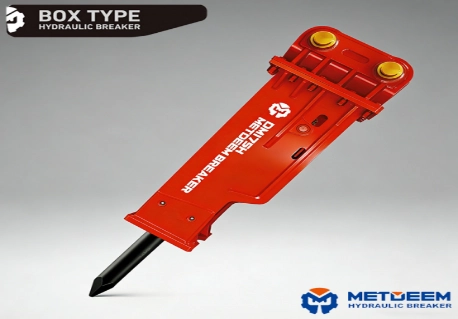
Different structures suit different work. A box type breaker uses an enclosed housing that can reduce noise and protect the impact core. It is useful for urban demolition, indoor work, and noise-sensitive locations.
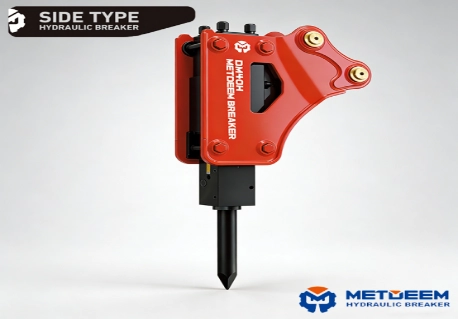
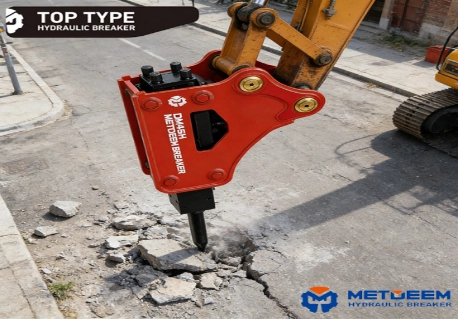
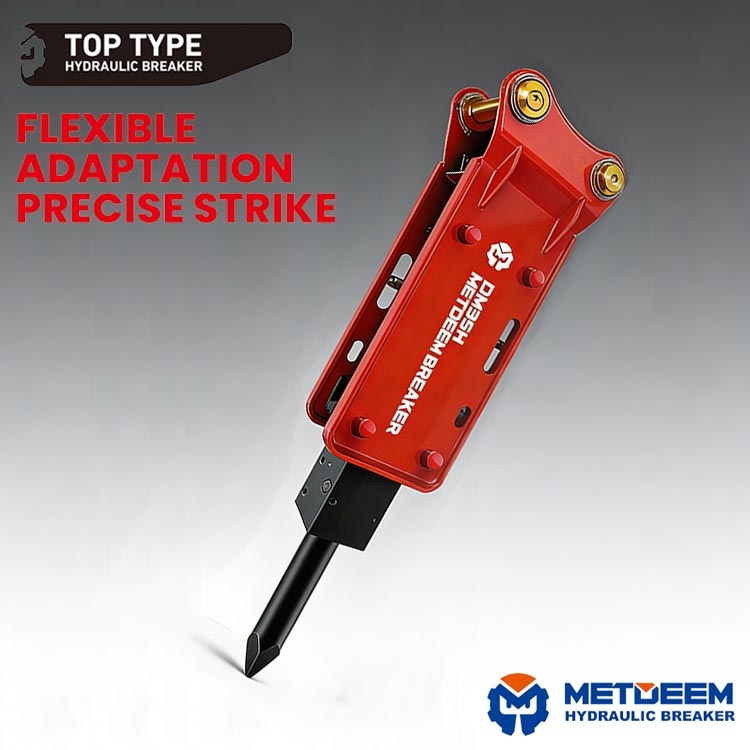
A side breaker can suit horizontal breaking in roads, mines, and quarries. A top type breaker can be useful for demolition, tunnels, and non-horizontal breaking.
The right structure can reduce operator effort and unnecessary stress. That improves productivity and helps protect the attachment during long projects.
Maintenance Is Part of the Purchase Decision
Many buyers focus on the purchase price but pay less attention to the maintenance plan. This is a mistake. A breaker that is easy to service can reduce repair time and help the owner control operating costs.
During operation, grease should generally be added every 2-3 hours. Bolts should be checked before daily work. The chisel, bushings, hoses, seals, and front head should be inspected regularly.
Service Intervals and Wear Parts
For models below MD175, seals may need replacement after approximately 500-600 working hours, depending on material and operating conditions. For MD175 and larger models, replacement may be required after around 300-500 working hours.
The exact interval depends on:
- Rock or concrete hardness
- Daily working hours
- Greasing quality
- Hydraulic pressure
- Operator technique
- Dust and mud exposure
- Chisel alignment
Bushings also need attention. When the internal and external bushings become worn beyond the recommended limit, they should be replaced. Delaying the repair can damage the chisel, front head, piston, and cylinder.
Spare Parts and After-Sales Support
A breaker is only as practical as its spare parts supply. If a seal, chisel, or bushing is unavailable, the machine may remain idle even when the repair is simple.
METDEEM supplies hydraulic breakers along with related excavation attachments. Our product range also includes an excavator timber grab, hydraulic magnet, steel grab, buckets, and other tools. A broader attachment range helps contractors serve more jobs with the same excavator fleet.
We also introduce our production and service capabilities on the About Us page, including our focus on quality control, product improvement, and global customer support.
Low Price, Rental Fleets, and Long-Term Value
Rental companies face a special challenge. Their breakers may be used by different operators on different sites. Some users may have excellent habits, while others may ignore grease intervals or use the chisel as a pry bar.
For a rental fleet, durability must be combined with simple inspection. The breaker should have clear service points, accessible wear parts, and stable performance across common applications.
A fleet manager should record:
- Working hours
- Greasing times
- Chisel changes
- Seal replacement dates
- Hydraulic pressure readings
- Customer damage
- Downtime hours
- Repair cost per rental
This information helps show whether a low-priced breaker is really saving money. In many cases, a durable unit with better support produces higher rental availability and fewer emergency repairs.
The same principle applies to demolition attachments such as a hydraulic magnet or steel grab. A low purchase price is not enough if the attachment loses strength, needs repeated welding, or remains out of service. Quality creates value through availability.
How Quality Protects Project Profit
Quality affects more than the breaker itself. It also influences fuel use, labor efficiency, project timing, and customer trust. A breaker that breaks material in fewer working cycles may reduce excavator hours and lower fuel consumption.
For projects with strict deadlines, stable equipment is even more important. A contractor working on a bridge, tunnel, urban building, or rear mining site cannot always replace a failed attachment immediately.
METDEEM serves construction, mining, quarry, agriculture, and other industries. We continue to improve our products through customer feedback and international market experience. Our exhibition page shows how we communicate with customers and partners in different markets.
The best buying decision is based on the full working picture: equipment fit, material quality, support, service life, and total cost per hour.
Conclusion
The true cost of a hydraulic breaker is not shown by the first quotation. A cheap unit may create higher expenses through weak impact, frequent repairs, poor parts availability, and project downtime. A quality breaker costs more at the beginning, but it can provide stronger performance, longer service life, better fuel use, and more predictable maintenance. The best choice depends on excavator weight, oil flow, working pressure, chisel diameter, application, and support. Contractors should compare total ownership cost instead of purchase price alone. When quality protects production hours, it also protects profit.
FAQs
Q: What is the biggest hidden hydraulic breaker cost?
A: Downtime is often the biggest hidden cost because it affects machines, labor, and project schedules.
Q: How much oil flow does a hydraulic breaker need?
A: Small models may need 15-20 L/min; heavy models may require 300-330 L/min.
Q: How often should breaker seals be replaced?
A: Models below MD175 may need seals every 500-600 hours; larger models may need them every 300-500 hours.