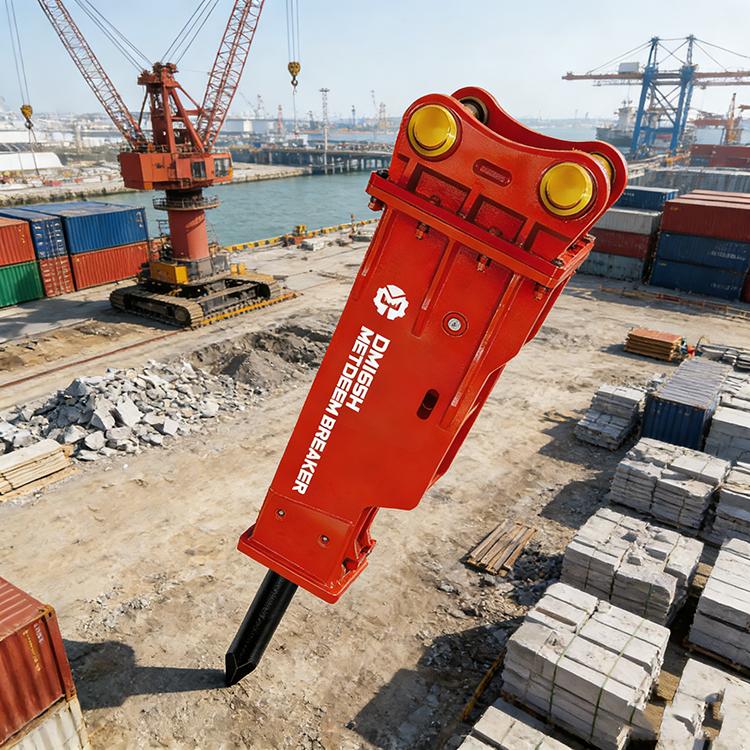
In the manufacturing of hydraulic breakers, the choice of materials directly determines the product’s performance, lifespan, and reliability. An excellent hydraulic breaker requires not only precise machining processes but also the scientific selection of each material from the outset. METDEEM understands this well—we firmly believe that only by injecting “quality genes” into the material selection stage can a hydraulic breaker withstand long-term testing in harsh working conditions such as mines and construction sites.
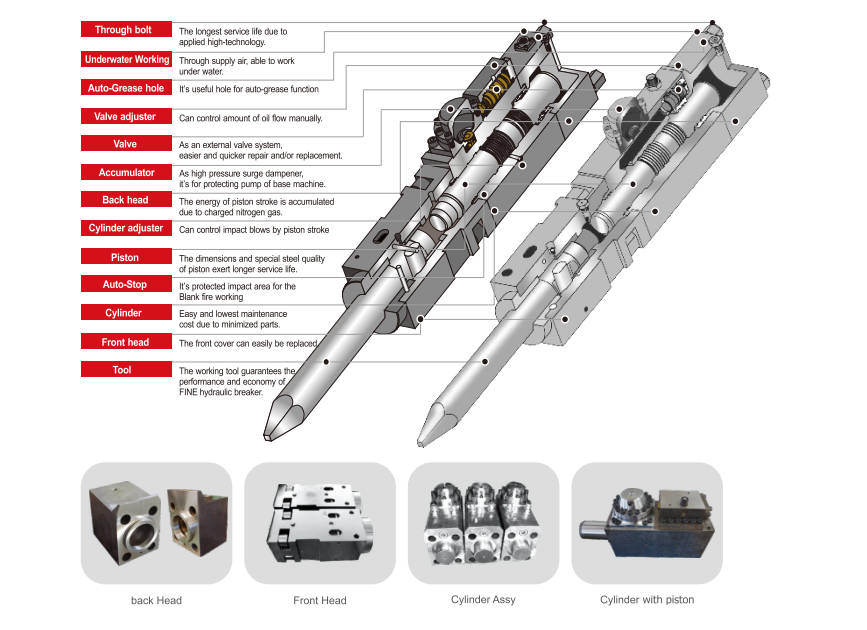
Three-stage CYlinder
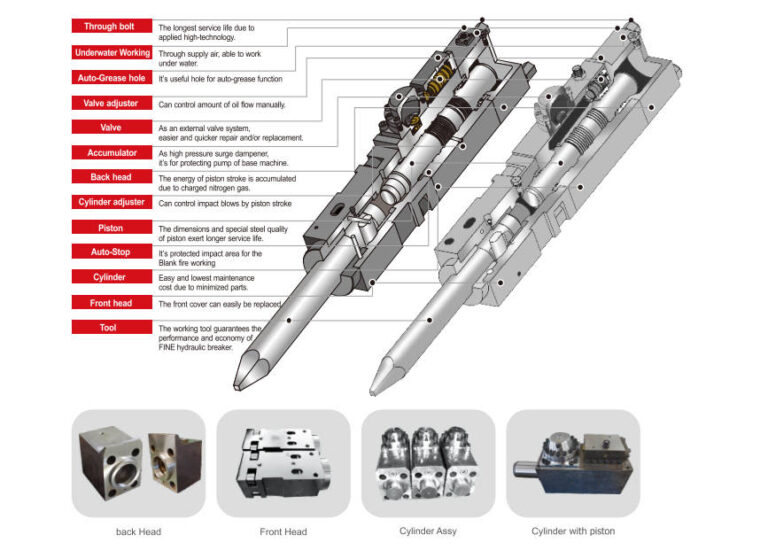
The hydraulic breaker’s cylinder body is divided into three parts: the front head, the cylinder, and the back head, each bearing different functional loads. METDEEM has adopted differentiated material selection and processing for each part based on its working characteristics.
The Front Head
The front head is the chamber in which the hydraulic breaker stores nitrogen. During operation, it mainly bears static pressure and is not directly subjected to external impact.
Our front head is made of 42Cr forged material. This material has excellent comprehensive mechanical properties and fatigue strength, and the forging process further eliminates internal defects and improves the density of the microstructure. This ensures long-term trouble-free operation while keeping material costs within a reasonable range, so users don’t have to pay for “over-design” and truly improves the product’s cost-effectiveness.
The CYlinder
The middle cylinder is the “heart” of the hydraulic breaker—the piston reciprocates at high speed within it and violently impacts the chisel. It must simultaneously withstand hydraulic pressure, impact loads, and frictional wear.
Our middle cylinder is made of high-quality 20CrMo alloy steel. After rough machining, it undergoes overall quenching treatment, forming a dense, hardened layer approximately 2 mm thick on the middle cylinder surface. Its performance advantages are as follows :
- Extremely high structural stability, preventing deformation when subjected to internal pressure or external forces.
- The surface hardening layer provides excellent wear resistance, ensuring smooth piston movement within the cylinder over a long period.
- Even under harsh working conditions and long-term continuous operation, the hydraulic breaker can still ensure stable power output.
The Back Head
The back head is responsible for fixing the chisel and guiding it to maintain a linear motion during striking. The continuous friction between the chisel and the back head makes it a vulnerable part.
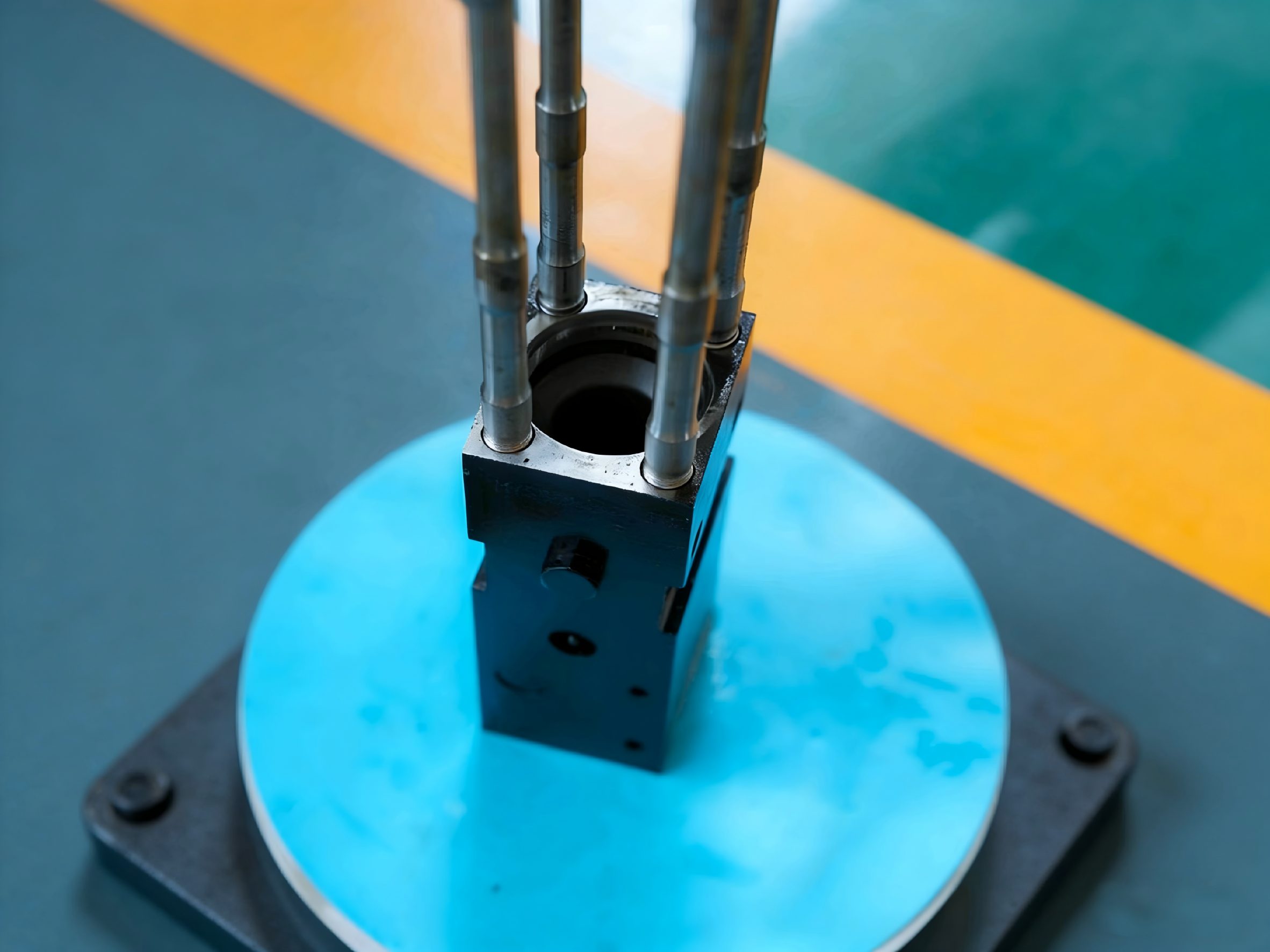
Our back head is made of 40Cr material, which possesses excellent toughness and strength. The core design involves installing a highly wear-resistant inner and outer sleeve made of 40CrNiMo material inside the back head. The significance of this design is:
- The inner and outer jackets act as sacrificial protective layers, bearing the main losses from chisel
- Even if the inner and outer sleeves wear out after long-term use, only the inner and outer sleeves need to be replaced; there is no need to replace the entire back head.
- As a high-grade alloy steel, 40CrNiMo has wear resistance far exceeding that of ordinary materials, greatly extending the maintenance cycle.
This “base protection & vulnerable parts replacement” design not only ensures the durability of the equipment but also significantly reduces the long-term maintenance costs for users.
Các Pi-tôn
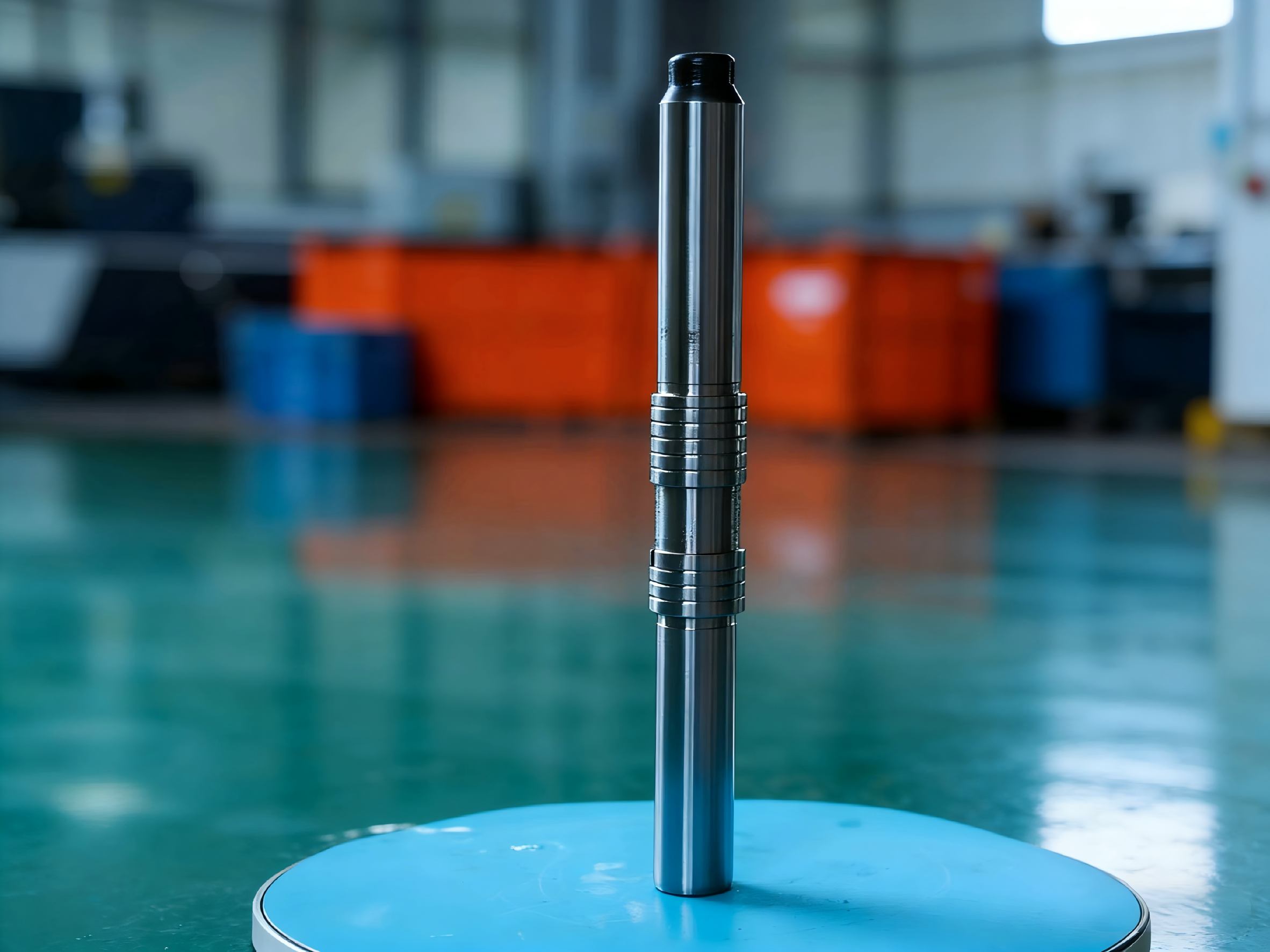
The piston is the core component of a hydraulic breaker that converts hydraulic energy into impact kinetic energy, striking the chisel several times per second at a high frequency. The piston’s material and manufacturing process directly determine the hydraulic breaker’s striking force and service life.
Stringent Material Selection Standards
Our pistons are made of 20CrNiMo special alloy steel. This is a material widely used in the core components of high-end engineering machinery. It combines high strength, high toughness, and excellent hardenability, and can withstand long-term severe impacts without deformation, cracking, or curling.
Cryogenic Từ Treatment and Composite Heat Từ Treatment
The superior performance of METDEEM pistons stems from a complete heat treatment process chain:
- Cryogenic treatment: After the piston is rough-machined, it undergoes cryogenic treatment. This process makes the internal metal molecular structure of the piston more compact and more uniformly arranged, laying the microstructure foundation for subsequent heat treatment.
- Quenching and nitriding: A combined quenching and nitriding process is then performed to form an extremely hard and wear-resistant layer on the piston surface, while maintaining the toughness of the core.
Final Performance
Pistons processed through a complete manufacturing chain achieve a perfect balance between hardness and toughness—the surface is hard enough to resist wear and impact, while the core is tough enough to absorb energy and prevent cracking. This is the fundamental reason why METDEEM pistons can operate stably for extended periods under harsh conditions.
Shell and Connecting Shaft
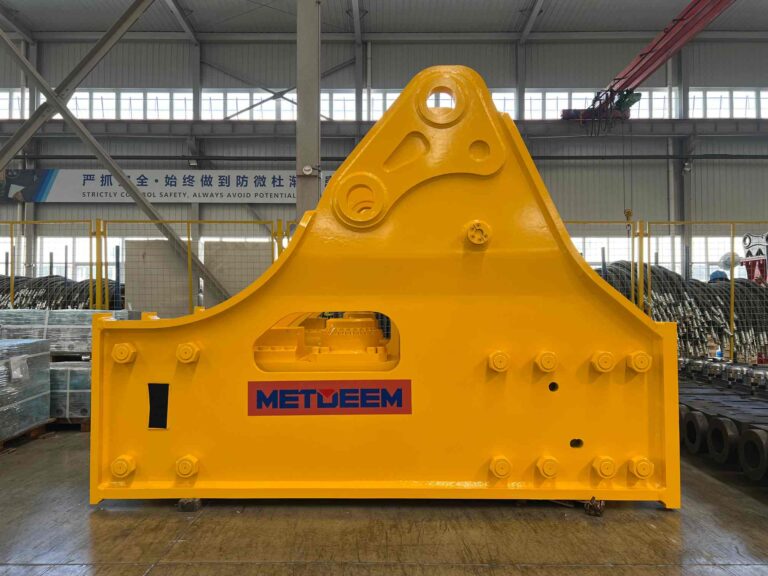
The outer casing is not only the “outer garment” of the hydraulic breaker, but also a key structural component that connects to the excavator and protects the internal mechanism. During breaking operations, the outer casing will inevitably collide and rub against hard objects such as rocks and concrete.
Outer Shell
- The Matrix material: Q235Mn steel plate is used, which has good toughness and weldability.
- Reinforced design: Wear-resistant protective plates are installed on easily worn edges and corners to provide key protection for critical areas.
- Structural advantages: This design ensures that the outer casing will not crack or deform during long-term use, providing reliable protection for the internal precision movement.
Connecting Shaft
The connecting shaft is the crucial link between the hydraulic breaker and the excavator, bearing the entire working load. Our connecting shafts are made of alloy steel. Its ultra-high hardness and wear resistance ensure minimal wear even after prolonged use. Furthermore, it possesses excellent resistance to deformation, preventing disassembly difficulties caused by shaft deformation and facilitating subsequent maintenance.
Chisel
The chisel is the part of the hydraulic breaker that directly contacts the material and is considered a wear part. METDEEM’s investment in chisels directly translates into lower consumable costs for users.
Vật liệu Selection and Heat Từ Treatment
Our chisels are made of 40Cr material and undergo a penetration hardening process, allowing the hardened layer to penetrate deeply from the surface inwards.
Hardness Standards and Service Life
- Hardness testing: The finished chisel is tested by a hardness tester, and the surface hardness can reach HRC 58° (Rockwell hardness).
- Performance characteristics: The extremely high hardness gives the chisel excellent wear resistance.
- Service life: Under the same working conditions, the service life of one METDEEM chisel is equivalent to that of two chisels made of ordinary materials on the market. This means that users can reduce the frequency of chisel replacement by half without increasing procurement costs.
Comprehensive Protection from Material Selection to Product Delivery
METDEEM understands that excellent materials are just the starting point; strict process control is the guarantee of quality.
- Full-process control: From material warehousing and processing to assembly and debugging, every process has clear process standards and operating procedures.
- Three inspection mechanisms: Strictly implement the three-inspection system of “self-inspection, mutual inspection, and special inspection” to ensure that every component and every finished product meets the factory standards.
- Our philosophy of responsibility: We are committed to being responsible for our customers and our products, and we integrate quality management into every detail of production.
Conclusion: Building World Trust in Made in China
METDEEM firmly believes that true “cost-effectiveness” is not simply about lowering prices, but about delivering products that stand the test of time through scientific material selection, exquisite craftsmanship, and strict quality control at a reasonable cost. From the differentiated material selection of the three-stage cylinder to the cryogenic and composite heat treatment of the piston, and the infiltration hardening of the chisel—this dedication to every detail is to fulfill our promise to our users: to make the world fall in love with “Made in China,” and to make METDEEM your trustworthy partner.
Ready to upgrade your breaking performance and reduce long-term operating costs? Contact METDEEM today to learn more about our high-performance hydraulic breakers and discover how our material-driven engineering approach can bring greater efficiency and reliability to your projects. Let us help you build stronger results—starting from the core.
Câu hỏi thường gặp
Hỏi: Why not use higher-end materials for the front head?
A: The front head mainly stores nitrogen and does not withstand external impact. The use of 42Cr forged material effectively controls costs and improves the overall cost-effectiveness of the machine while ensuring long-term reliability.
Hỏi: What is the practical significance of the 2mm hardened layer in the middle cylinder?
A: The hardened layer significantly improves the wear resistance of the cylinder inner wall, ensuring that the cylinder does not deform or wear when the piston moves at high speed for a long time, which is a key guarantee for stable power output.
Hỏi: Is it easy to replace the inner and outer sleeves of the back head after they wear out?
A: It’s very convenient. The inner and outer sleeves are independent parts, so there’s no need to replace the entire back head, which saves on maintenance costs and reduces downtime.
Hỏi: Why do pistons need to undergo deep cryogenic treatment?
A: Cryogenic treatment can make the internal metal molecular structure of the piston denser and more uniform, eliminate residual stress, lay the foundation for subsequent quenching and nitriding, and ultimately achieve a perfect balance between hardness and toughness.
Hỏi: Can METDEEM Chisels really be used twice as long as regular ChiselS?
A: Yes, by using 40Cr material and a penetration quenching process, the surface hardness of the chisel reaches HRC 58°, significantly improving wear resistance. Under the same working conditions, its service life can be twice that of ordinary materials.