An excavator breaker hammer serves as a highly practical tool for jobs involving concrete, solid rock, asphalt, brick, and similar tough materials. It lets a single excavator handle heavy demolition duties. You will not need to haul an extra demolition machine to your job site.
This kind of versatility proves essential across multiple industries. Building firms regularly clear away old foundations. Quarry workers have to break down large rocks. Highway crews shatter asphalt and fix broken pavement. Mining groups process tough earth in harsh environments. Meanwhile, city contractors frequently require small machinery. This equipment must function well in tight areas.
You achieve the finest results by picking the proper breaker for your specific excavator, target material, and site conditions. A strong hammer offers great value. However, this holds true only if its physical size, hydraulic flow, pressure limits, and operating style match up perfectly.
Construction and Building Demolition
Taking down buildings stands out as a primary use for an excavator breaker hammer. Site crews attach this tool to smash through thick concrete walls. They also destroy floor slabs, deep foundations, support columns, stairs, and various other solid structures.
City demolition jobs present unique hurdles. The heavy machine might have to operate very close to busy streets, houses, offices, schools, or buried utility lines. Working room remains quite scarce. Therefore, the site manager must actively manage ground vibration, thick dust, loud noise, and dropping rubble.
A breaker enables the driver to chip away tough material in careful stages. This approach offers much better control. It proves safer than relying on one massive machine to crush every single part of the building.
Why Breakers Suit Urban Demolition
Before selecting a breaker for a downtown project, managers must look at site access. They should also check the required working height, base carrier size, local noise limits, and concrete thickness. Compact excavators can easily drive into narrow lots, tight basements, alleys, and tiny building zones. Huge machines simply cannot function smoothly in these restricted spots.
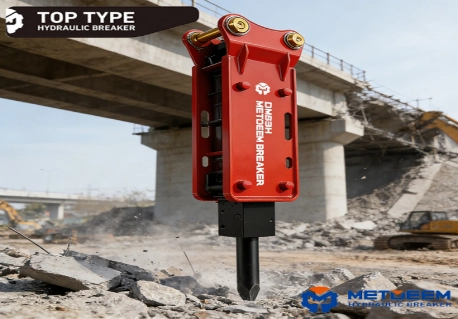
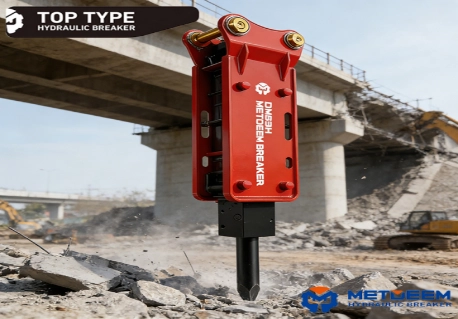
For city tasks, a fully enclosed box type breaker can significantly lower loud noise. It also shields the main hammer body from damage. A top type breaker proves quite helpful for certain tasks. It works well when the driver has to smash vertical walls, foundations, or angled structures from a safe distance.
People frequently ask, “Which models are best for urban excavation work?” In the majority of situations, the ideal option is a compact hydraulic breaker. It must feature a proper chisel diameter and a reasonable working weight. Furthermore, its hydraulic demands must perfectly align with the base carrier.
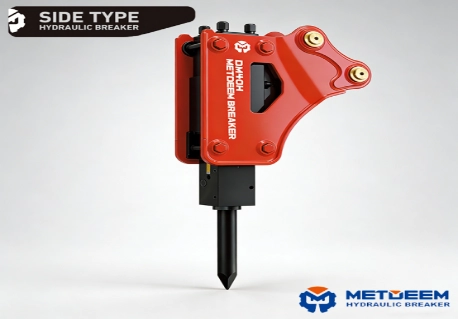
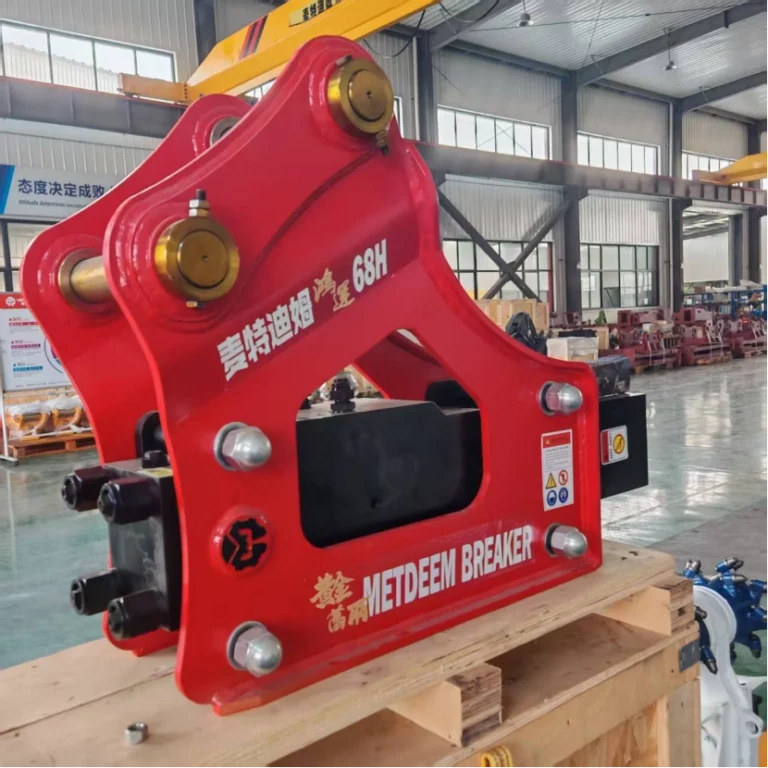
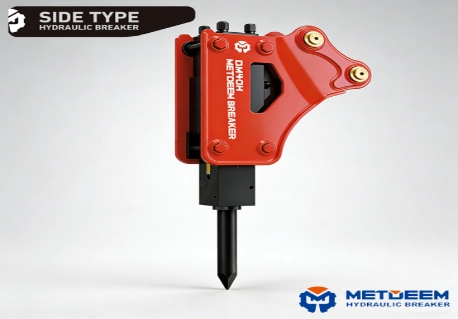
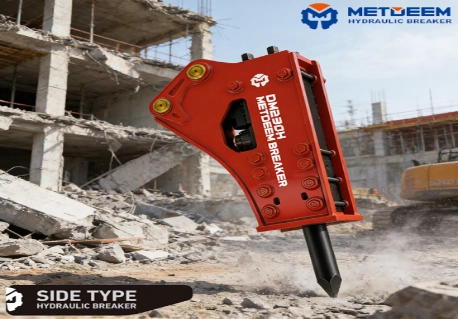
Die METDEEM hydraulic breaker range features box type, side type, and top type layouts. These distinct designs cater to various digging and demolition environments.
Quarrying and Rock Breaking
Stone quarrying puts immense stress on breaking machinery. Natural rock is extremely hard, highly abrasive, and frequently uneven in shape. A breaker might run continuously for extended hours. Selecting the wrong equipment causes weak striking power. It can also trigger rapid overheating, severe metal wear, or constant repair stops.
At a busy quarry, crews typically utilize an excavator breaker hammer to:
- Smash oversized rocks
- Detach stone from a main working face
- Clear new access routes
- Shrink large pieces prior to truck loading
- Remove stubborn hard layers
- Assist with drilling and blasting operations
- Tear down damaged quarry structures
A side breaker normally fits perfectly for flat rock surfaces, loose road materials, and specific quarry duties. Its unique shape grants the driver a clear view while working across a broad surface. For straight vertical demolition or angled tasks, a top type breaker generally proves much more effective.
Matching Rock Work with Hammer Size
The specific material and the excavator’s actual size must dictate your final choice. Small models easily handle light concrete duties. They also perform brilliantly in tight spaces. Conversely, larger units are engineered specifically for tougher rock and much heavier carriers.
METDEEM model specifications cover chisel diameters starting from approximately 30 mm up to 230 mm. The recommended excavator range spans from roughly 0.8 ton to 100 tons. This figure depends strictly on the chosen breaker model. Required hydraulic flow might span from 15-20 L/min for compact units all the way to 300-330 L/min for heavy models.
This broad range grants machinery dealers and site contractors greater flexibility. Even so, buyers must always verify the published figures against their actual excavator’s hydraulic system. You should never pick a breaker based merely on its outward appearance or its chisel size.
Mining and Rear Mining Support Work
Mining activities frequently occur far away from repair workshops, paved roads, and parts suppliers. A sudden breakdown during a big project can easily halt loading, truck hauling, deep drilling, and ore processing. Because of this risk, mining corporations pay extremely close attention to overall durability. They also value easy maintenance access and a steady parts supply.
In rear mining support zones, an excavator breaker hammer actively helps clear away stubborn ground. It removes cracked concrete, prepares safe access routes, and shatters oversized stones. This tool also assists with vital maintenance work. Crews use it around large crushers, long conveyors, retaining walls, and dirt service roads.
Mining environments get incredibly dusty and highly abrasive. Therefore, the breaker must feature tight seals, robust bushings, and a long-lasting chisel. It also requires a tough piston that safely absorbs constant, heavy impacts. Furthermore, machine operators must carefully watch the hydraulic oil temperature and check for unwanted hose movement.
Why Reliable Hammers Reduce Mining Delays
A hammer with a minimal failure rate drastically cuts down on unexpected work stops. However, true reliability relies heavily on the entire mechanical system. The inner piston, control valve, main cylinder, and nitrogen chamber must function flawlessly. The seals, steel chisel, and bushings must also operate together correctly.
Engineers categorize breaker designs by their specific valve placement. You will find built-in valve types and external valve versions. An external valve sits firmly outside the middle cylinder. It normally demands a dedicated valve base for support. This technical choice directly impacts future maintenance access and overall product configuration.
Die METDEEM construction machine portfolio contains premium hydraulic breakers alongside various other attachments. These tools serve construction, stone quarrying, deep mining, agriculture, and general material handling sectors.
Road Construction and Infrastructure Repair
Highway teams rely on hydraulic breakers to tear up old asphalt and thick concrete pavement. They also destroy street curbs, heavy bridge sections, concrete drainage structures, and ruined road foundations. The excavator can easily smash the hard surface first. After that, the driver attaches a standard bucket for quick cleanup and site preparation.
This specific workflow proves incredibly handy during rapid repair projects. The road crew might have to fix a tiny stretch of highway. They want to avoid shutting down a huge traffic area for hours. A reliable breaker attachment lets the excavator switch swiftly from smashing rock to scooping debris. This cuts down the total number of machines needed on site.
A side breaker performs wonderfully on flat, horizontal road sections. Meanwhile, a top type breaker provides vastly superior positioning for tricky spots. Crews favor it for bridge edges, tall retaining walls, dark tunnels, and similar complex structures.
Street construction constantly generates intense time pressure. Site managers absolutely require machinery that powers up dependably. The tool must deliver steady impact force and allow for rapid daily servicing. Consequently, mechanics should repeatedly inspect the grease levels, rubber seals, metal bushings, and overall chisel condition throughout the entire project.
Utility, Foundation, and Tunnel Work
Utility workers frequently have to break solid concrete around buried pipes, electrical cables, and water drainage channels. They also clear space near hidden underground structures. This task remains highly delicate. The skilled operator must carefully strip away hard earth without harming any nearby active services.
An excavator breaker hammer can also support:
- Foundation preparation
- Basement work
- Tunnel maintenance
- Pipeline construction
- Drainage channel repair
- Railway infrastructure work
- Bridge and retaining wall repair
Compact excavators are particularly useful in these projects. Their smaller size gives them access to restricted areas, while a suitable breaker provides enough impact for concrete and compacted ground.
The breaker must be used with care around buried utilities. Operators should verify the work area before striking and avoid using the chisel as a lever. Side loading can damage the chisel, bushings, piston, and front head.
Disaster Recovery and Emergency Clearance
After earthquakes, floods, storms, or industrial accidents, crews may need to clear broken concrete, masonry, stone, and damaged structures quickly. An excavator breaker hammer can help open access routes and remove obstacles.
Emergency work is often unpredictable. The machine may encounter reinforced concrete, hard rock, steel fragments, or unstable structures. Contractors should use the breaker only for materials within its intended capacity and use a different tool when the task changes.
Zum Beispiel:
- A breaker removes concrete and rock.
- A steel grab handles metal structures.
- A hydraulic magnet collects ferrous debris.
- A mechanical grapple sorts loose material.
- An excavator timber grab moves logs and branches.
This combination helps one excavator support several stages of recovery work.
How Other Attachments Complete the Work
An excavator breaker hammer is rarely the only attachment on a large project. Once the hard material has been broken, the site still needs sorting, loading, cleanup, and surface preparation.
A contractor may use:
- An excavator timber grab for wood, logs, and branches
- A steel grab for scrap and metal structures
- A hydraulic magnet for ferrous debris
- A mechanical grapple for mixed material handling
- A bucket for loading and cleanup
- A quick hitch for faster attachment changes
These tools can create a more efficient attachment fleet. After demolition, the excavator can switch from breaking equipment to a grab or magnet. After road breaking, it can change to a bucket for material removal.
Maintenance Requirements in Different Industries
Working conditions vary, but basic breaker maintenance remains important everywhere. During use, grease is commonly added every 2-3 hours. Bolts should be checked before daily operation. Strong hose vibration, oil leakage, weak impact, or unusual sound should be investigated immediately.
Seals may need replacement at different intervals. For models below MD175, the suggested service interval is commonly 500-600 working hours. For MD175 and larger models, seals may require replacement after 300-500 working hours, depending on the material and operating conditions.
Operators should also inspect:
- Chisel wear
- Bushing clearance
- Piston movement
- Nitrogen pressure
- Accumulator pressure
- Hydraulic hose connections
- Oil and dust seals
- Cylinder condition
Die METDEEM About Us page describes our focus on controlled production, product quality, ISO 9001, CE certification, and technical development. We provide construction machinery and attachments for customers working in different industries and regions.
Choosing the Right Excavator Breaker Hammer
The most important selection factor is not simply the breaker’s impact force. It is compatibility. A breaker must match the excavator capacity in tons, hydraulic flow, working pressure, operating weight, chisel diameter, and mounting bracket.
Before ordering, confirm:
- Excavator capacity in tons
- Hydraulic flow in L/min
- Working pressure in MPa
- Breaker weight in kg
- Chisel diameter in mm
- Nitrogen pressure in kg/cm2
- Accumulator pressure
- Hose connection size
- Required breaker type
- Availability of seals and bushings
The breaker should also match the material. Concrete, asphalt, limestone, granite, frozen ground, and reinforced structures create different loads. When the material is too hard for the selected model, continuous striking can cause overheating and early wear.
Schlussfolgerung
An excavator breaker hammer benefits many industries because it combines strong impact with carrier flexibility. Construction and demolition crews use it for foundations, walls, slabs, and structural concrete. Quarry and mining operators use it for rock breaking, oversized stone, access routes, and hard ground. Road crews rely on it for asphalt and pavement repair, while utility, tunnel, infrastructure, and disaster recovery teams use it in restricted or changing conditions.
The best performance depends on correct matching and disciplined operation. Buyers should check excavator capacity in tons, oil flow, working pressure, breaker weight, chisel diameter, nitrogen pressure, and accumulator requirements. They should also consider maintenance, spare parts, and the next stage of the project. With the right model, a reliable hydraulic breaker can reduce downtime, improve productivity, and support a complete attachment fleet.
FAQs
Frage: Which industries use an excavator breaker hammer?
A: Construction, demolition, quarrying, mining, roadwork, utilities, tunneling, and disaster recovery use excavator breaker hammers.
Frage: How much hydraulic flow does a breaker need?
A: Models may require 15-20 L/min to 300-330 L/min, depending on size.
Frage: Which models are best for urban excavation work?
A: Compact box type or top type breakers are often suitable for controlled urban excavation.