Comprendre la technologie de traitement
La technologie de traitement signifie les méthodes et les configurations qui transforment les matériaux de base en pièces prêtes à l'utilisation. Dans la production en usine, en particulier pour l'équipement de construction, il couvre le forgage, le traitement thermique, l'usinage CNC, le polissage et le durcissement de surface. Ces étapes façonnent chaque pièce et l'ajustent correctement, tout en améliorant sa ténacité, sa résistance à l'usure et sa capacité de travail totale.
Comment cela s'applique aux interrupteurs hydrauliques
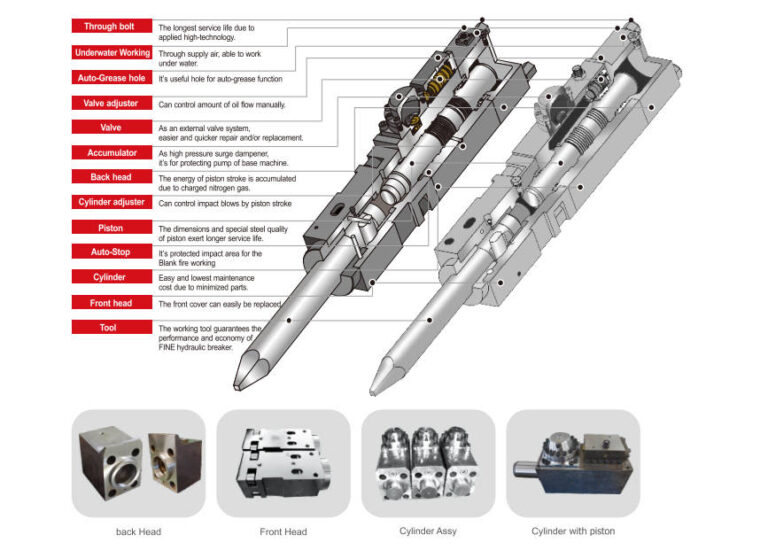
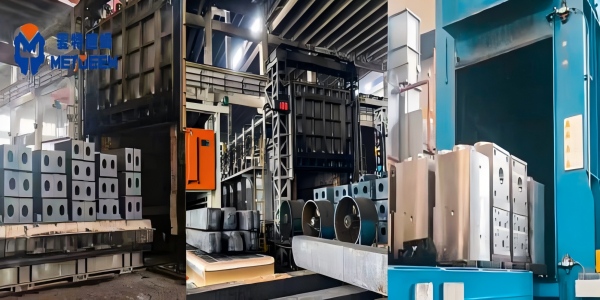
Pour les disjoncteurs hydrauliques, la technologie de traitement est au cœur du travail fiable dans les endroits difficiles. Prenons le cylindre, par exemple. Il se forme à travers plusieurs étapes de forgeage. Ce processus raffine la structure du grain et améliore la densité interne, améliorant la résistance globale et la résistance à la fatigue. Ensuite, il y a un usinage et un traitement thermique précis pour renforcer la résistance durable et atteindre des tailles adaptées.
Le lien entre technologie et durabilité
Pourquoi la durabilité est importante dans les interrupteurs hydrauliques
Les disjoncteurs hydrauliques font face à des pressions énormes et à des environnements difficiles jour après jour. Si elles manquent de puissance de maintien, les pannes se produisent souvent. Les réparations coûtent beaucoup, et les machines restent au ralenti pendant de longues distances. À METDEEMnos interrupteurs hydrauliques commencent avec de l'acier allié dur. Ils utilisent également des configurations hydrauliques intelligentes. Cela leur donne une puissance de rupture solide, une rupture rapide et une bonne sortie. En fin de compte, il allonge le temps qu'ils durent et réduit l'argent dépensé au fil des ans.
Le rôle de la précision dans la réduction de l'usure
L'usinage exact permet à tous les bits mobiles dans une coulisse de disjoncteur hydraulique avec peu de frottement. Pensez au disjoncteur’ cylindre s. À l'intérieur, il est travaillé sur une broyeuse CNC en une seule tenue. Cela maintient la forme intérieure serrée, s'aligne parfaitement et lisse la surface. Ce genre de soins réduit les dommages aux joints et aux pistons. Il repousse les temps de service. De plus, le piston passe par le polissage pour rendre sa surface aussi lisse que possible. Cela abaisse la traînée entre le piston et l'étanchéité. En conséquence, le sceau dure plus longtemps.
Au-delà des matériaux : le pouvoir de l’artisanat
Limitations du recours aux seules matières premières
Les alliages de haut niveau comme 20CrMo ou 42CrNiMo posent une bonne base pour une résistance durable. Mais ce n'est que le début’ t suffisant. Sans la bonne manipulation et la mise en forme, même les alliages primaires peuvent donner sous charge. Regardez le piston, par exemple. Il’ s construit en acier allié fin 40CrNiMo, traité à la chaleur. Sa surface atteint une dureté Rockwell de HRC 60. Le piston atteint une dureté de surface élevée tout en maintenant un noyau résistant, assurant une résistance à la déformation et à la fatigue sous des charges d'impact répétées. Cela le rend mieux tenu. Il prouve comment le travail qualifié soulève ce que le matériel peut faire.
Comment METDEEM améliore les performances grâce au traitement
Chez METDEEM, nous investissons beaucoup dans des méthodes de traitement modernes pour fournir une puissance et un taux de travail de qualité supérieure et durables. Chaque article est manipulé sur des outils CNC pour des résultats stables. Ils font face à la carbonitrure pour durcir l'extérieur. Les travailleurs les ajustent également avec des modèles thermiques pour une précision réelle. Ces actions s’assurent que nos disjoncteurs hydrauliques gèrent bien les travaux, de l’excavation de minerai à la démolition de structures.
Intérieur au système de traitement de METDEEM
Approche intégrée de la fabrication
Nous gérons tout en interne, du premier croquis à l’expédition finale. Les pièces clés sont toutes forgées, traitées thermiquement, formées exactement et contrôlées ici. Avant de sortir, chaque produit est soumis à des tests hydrauliques rigoureux. Cela assure que tout le monde travaille au sommet. Garder tout sous un même toit nous permet de surveiller la qualité à chaque étape du chemin.
Technologies clés utilisées par METDEEM
Notre configuration pour le traitement couvre ces outils principaux:
- Broyage CNC & Usinage: Pour cylindres et pistons.
- Traitement thermique : tel que carbonitrure pour les surfaces durcis.
- Broyage à configuration unique: Assurer une concentricité précise.
- Simulation thermique: Pour optimiser l'ajustement des composants pendant le fonctionnement réel.
- Shot Blasting: Pour éliminer le stress post-traitement.
Le cylindre commence par un travail dur sur une machine CNC. Sa couche extérieure est durcie par carbonitrure. Cela crée une couche superficielle durcie d'environ 2 mm de profondeur. La dureté de Rockwell atteint HRC 60-62. Ces étapes en couches maintiennent les différences de taille minuscules et renforcent une véritable endurance. En pratique, cela signifie que les disjoncteurs tiennent plus longtemps sur des sites comme des carrières rocheuses, où le battement constant teste chaque pièce.
Avantages du traitement avancé
Moins de réparations et moins de coûts
Nos disjoncteurs hydrauliques sont construits avec une attention particulière à la résistance et au travail minutieux. Ils ont donc besoin d'entretien moins souvent. Grâce à des étapes de chaleur précises et à des contrôles de qualité fermes, nos briseurs et ciseaux résistent au frottement, à la fatigue et aux ruptures. Cela diminue la fréquence à laquelle vous échangez des pièces. Cela permet d'économiser de l'argent sur les courses quotidiennes. Pour une équipe qui brise le béton sur un travail en ville, cela pourrait signifier des semaines sans problème, garder les projets sur la bonne voie et les budgets intacts.
Amélioration des performances et de la fiabilité
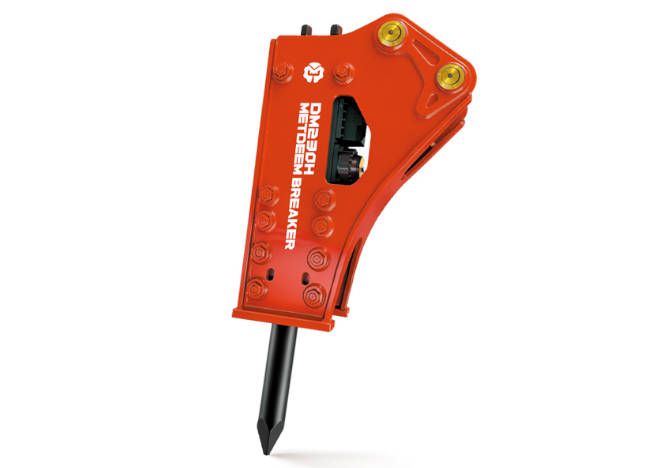
Le traitement avant-gardiste de METDEEM maintient la stabilité même en cas de mauvais temps ou d'utilisation intensive. Avec les mêmes paramètres de pression et de débit, l'efficacité interne optimisée permet un transfert d'énergie plus efficace et une performance d'impact constante. Ces étapes augmentent la sortie, ralentissent les dégâts et raccourcissent chaque tour de tâche. Prenez le Type de boîte d'interrupteur hydraulique DM53construit pour les pelles de 3,5 à 4,5 tonnes. Il offre un taux d'impact de 500 à 1100 bpm en fonction de la pression de fonctionnement et du débit avec des moyens de régler la vitesse. Ou vérifier les plus grands comme Type latéral d'interrupteur hydraulique DM230Dans toute notre gamme, vous obtenez un travail stable quel que soit le travail, que ce soit en écrasant la pierre dure dans une mine ou en éclatant les vieilles fondations dans la construction.
Choisir le bon interrupteur hydraulique
Que chercher dans un disjoncteur durable
Lorsque vous choisissez un interrupteur hydraulique, concentrez-vous sur ces points:
- Composants forgés avec des alliages de haute qualité.
- Pistons traités thermiquement avec une dureté Rockwell élevée.
- Cylindres usinés CNC.
- Fréquence réglable pour une flexibilité opérationnelle.
- Certification CE pour la conformité mondiale.
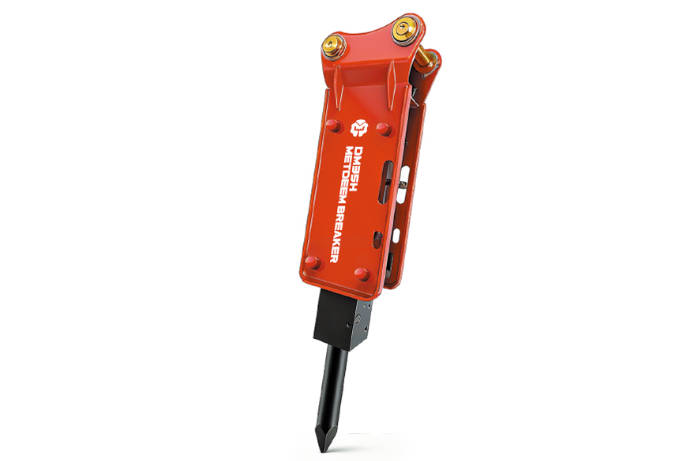
Le Type de haut hydraulique DM35 apporte la vitesse, la production solide, l'entretien bon marché et une vie de travail prolongée. Sa construction robuste convient aux travaux avec la pierre ou le béton. Dans une configuration réelle, comme la fixation à une petite pelleuse sur un site urbain serré, elle brise rapidement les dalles sans brouillage supplémentaire.
Pourquoi METDEEM se distingue
Chez METDEEM, nous soutenons notre équipement avec un véritable savoir-faire en ingénierie et une aide ferme après la vente. La qualité reste serrée de la première coupe à la dernière boîte. Grâce à des ajustements constants et à des idées nouvelles, la société a obtenu ISO 9001, des certifications CE et des brevets technologiques les uns après les autres. Nos disjoncteurs hydrauliques sont compatibles avec les pelles de grande renommée dans le monde entier, telles que CAT®, Komatsu®, Volvo®, SANY®, Hyundai®, et plus encore. Cela en fait des outils pratiques dans les domaines de la construction à la fouille lourde. Contactez-nous via notre site officiel ou laissez une ligne à Metdeem108@126.com pour des questions ou une aide.
FAQ (questions fréquentes)
Q: Quels matériaux sont utilisés dans les disjoncteurs hydrauliques METDEEM?
A: Nous utilisons l'acier allié 20CrMo pour les cylindres et l'acier 42CrNiMo pour les pistons, forgés et traités thermiquement pour la durabilité.
Q: Combien de temps est votre garantie?
R: Les disjoncteurs hydrauliques d'excavatrice METDEEM sont garantis contre la défaillance due à une conception, à des matériaux ou à une fabrication défectueuses pendant une période d'un an ou de 2000 heures. Au cours des 6 premiers mois, nous offrons un service de remplacement gratuit.
Q: Qu'est-ce qui rend METDEEM’ technologie de traitement unique?
R: Nous simulons l'expansion thermique lors d'une utilisation normale pour obtenir un ajustement piston-cylindre parfait - minimisant la perte de pression tout en augmentant la force de frappe.