Vue d'ensemble du disjoncteur hydraulique de type latéral
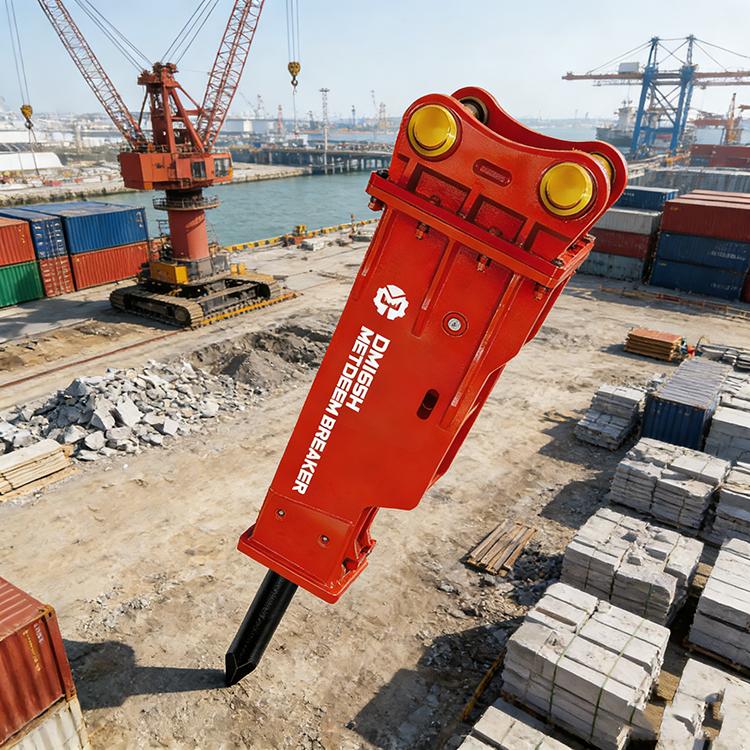
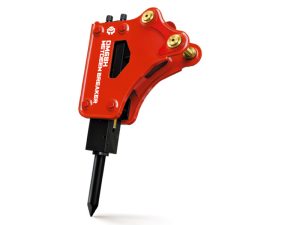
Un briseur hydraulique, également appelé briseur de roches ou marteau hydraulique, est un outil à fort impact attaché à une pelle. Les interrupteurs hydrauliques de type latéral ont une configuration où la partie frappante s'aligne avec l'excavatrice’ boom et bras. Cette conception simple fournit une force d'impact directe. Il évite la taille supplémentaire trouvée dans les modèles haut ou silencieux.
Modèles de type latéral METDEEM
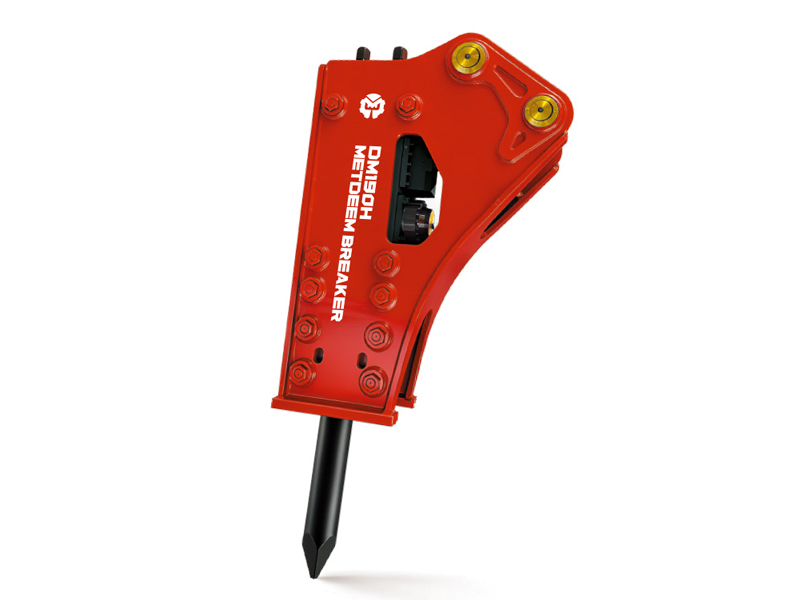
À METDEEMNous fabriquons le type latéral d'interrupteur hydraulique DM68 et le type latéral d'interrupteur hydraulique DM195 pour gérer divers besoins de travail. Nos interrupteurs de type latéral se concentrent sur la conception de base, la production solide et le faible coût. DM68 convient parfaitement pour les travaux de construction urbaine, DM195 convient pour les tâches minières et de démolition. Par exemple, dans un centre-ville fréquenté, ces outils aident les équipes à démolir rapidement les vieux murs et à miner diverses mines sans ajouter trop de poids à la machine.
Composants clés et structure
Matériel de boîtier et de cadre
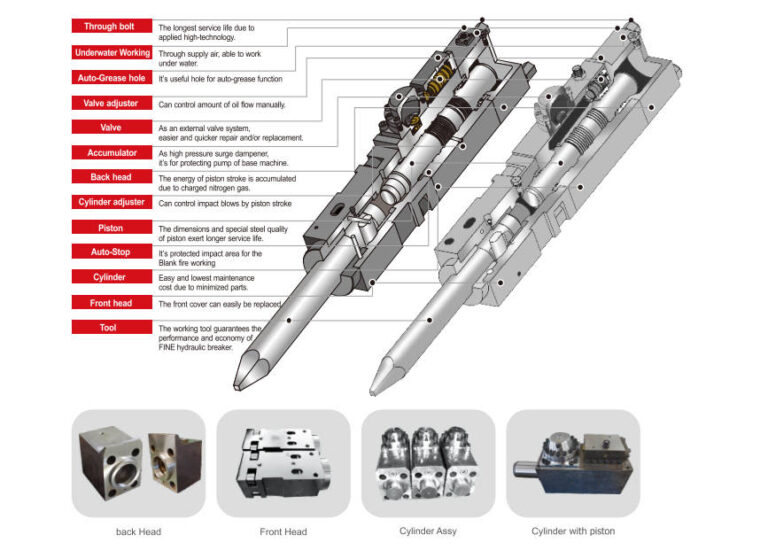
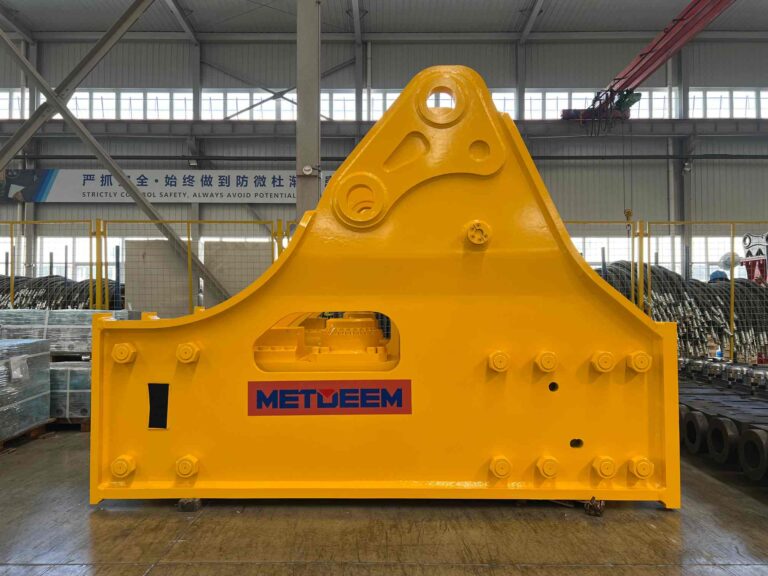
Le boîtier et le cadre des disjoncteurs METDEEM utilisent une plaque Q335Mn. Ce matériau résiste à l'usure, reste exempt de fissures et conserve sa forme. Même lors de coups durs, le cadre reste fort. Les travailleurs sur un site peuvent compter sur lui pour ne pas se plier ou se casser après de longues journées d'utilisation.
Montage de piston et de chisel
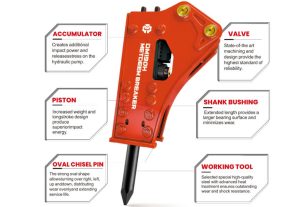
Le piston provient d'acier allié CrNiMo. Il passe par plusieurs étapes pour construire la ténacité et durer plus longtemps. Cette pièce frappe directement le psiton. Le ciseau ou l'outil provient généralement d'acier 42Cr à haute dureté. Il résiste à l'usure et supporte les coups constants contre la roche ou le béton. Dans les vrais emplois, comme la rupture d'une colline rocheuse, cette configuration continue sans pannes rapides.
Intégration hydraulique et essais de débit
Les disjoncteurs METDEEM se connectent en douceur à l'excavatrice’ lignes pétrolières. Avant l'expédition, chaque unité obtient un contrôle complet de son flux de pétrole. Cette étape assure que chaque interrupteur fonctionne au niveau supérieur. Il convient également bien avec de nombreux types d'excavatrices. Imaginez un raccordement à un Komatsu® machine; l'ajustement est serré, et il commence à fonctionner tout de suite.
Principe de fonctionnement hydraulique
Comment l'énergie hydraulique est convertie
Les interrupteurs hydrauliques prennent l'huile de la machine’ système pour pousser un piston intérieur. Le piston frappe ensuite le ciseau. À son tour, le ciseau fissure le matériau de sol.
Rôle du piston dans la livraison d'impact
Le piston doit gérer les petits changements de forme, combattre l'usure et résister à la rouille. Elle reste entière sous pression. Cette partie porte la force principale, changeant la poussée d'huile en mouvement rapide. Sans elle, le disjoncteur pourrait’ t donner ces coups pointus.
Transfert d'énergie au ciseau
Après l'accélération du piston, il transmet la puissance au ciseau. Le ciseau creuse ou divise la roche ou le béton avec des coups rapides. Ils peuvent atteindre jusqu'à 600 bpm dans des modèles comme le DM68 interrupteur de type latéral hydrauliqueSur un site de carrière, cela signifie casser de grands rochers en petits morceaux en quelques minutes, accélérant l'ensemble de l'opération.
Avantages de la conception de type latéral
Avantages de la structure compacte
Les disjoncteurs de type latéral ont une construction de base. Cela réduit le poids et facilite l'installation et les réparations. Ils fonctionnent parfaitement pour les petites et moyennes machines. Un entrepreneur pourrait choisir DM68 pour une pelle de 5 tonnes parce qu'il ne’ t ajouter du gros qui ralentit les choses.
Efficacité de rupture supérieure
Les interrupteurs hydrauliques de type latéral fournissent plus d'énergie d'impact direct grâce à leur structure de cadre simplifiée. Avec moins de composants absorbant la force, ils obtiennent une efficacité de rupture plus élevée et une usure interne réduite. Cela les rend particulièrement efficaces pour les travaux lourds continus où une puissance forte et constante est nécessaire.
Facilité d'entretien et de service
Nos produits fonctionnent plus vite et frappent plus fort. Cela augmente la vitesse de travail, réduit les dommages et raccourcit les temps de travail. En fin de compte, il économise de l'argent sur les courses. De plus, avec moins de pièces dans les compilations de type latéral, les vérifications et les échanges prennent moins de temps. Un mécanicien peut souvent réparer une douille usée en moins d'une heure, ramenant l'équipe au travail rapidement.
Compatibilité avec les équipements de construction
Montage sur pelles
Les disjoncteurs hydrauliques latéraux METDEEM s'adaptent à de nombreuses marques de pelles comme CAT®, Komatsu®, Volvo®, Sany®, XCMG®, et d'autres. Nous avons des unités comme DM68 pour les pelles de 5 tonnes et DM140 pour les pelles de 19 à 24 tonnes. Cette large correspondance signifie que les équipes peuvent échanger des outils entre des machines sur le même site.
Exigences du système hydraulique
Différents modèles nécessitent différents débits et paramètres de pression. Par exemple, le DM53 nécessite un débit d'huile de 25 à 50 L/min et fonctionne à une pression de travail de 12 à 15 MPa. Cette gamme leur permet de travailler avec plusieurs types. Il garde les choses flexibles, de sorte que la société de construction peut les stocker pour les besoins différents des clients.
Modèles METDEEM recommandés par tonnage
- DM40 : Pour les pelles de 1,5 à 1,7 tonnes.
- DM53 : Pour les pelles de 3,5 à 4,5 tonnes.
- DM100 : Pour les pelles de 11 à 16 tonnes.
- DM135 : Pour les pelles de 16 à 18 tonnes.
- DM190 : Pour les pelles de 50 à 60 tonnes.
- DM230 : Pour les pelles de 75 à 100 tonnes.
Ces unités sont livrées avec des vitesses variables, des choix de stockage de gaz et différents ciseaux pour des tâches variées. Un petit entrepreneur peut choisir le DM40 pour des applications légères, tandis qu'une grande mine va pour le DM190 pour affronter le rock lourd.
Applications dans la construction et l'exploitation minière
Utilisation dans les projets de démolition urbaine
Les disjoncteurs hydrauliques de type latéral conviennent à des tâches telles que la fixation des trottoirs, l'extraction des bases et les coups de main prudents dans les villes. Leur contrôle et leur manipulation en font un bon choix. Imaginez une équipe dans une rue étroite; ils utilisent le disjoncteur pour découpage sur le vieux trottoir sans endommager les bâtiments voisins.
Rôle dans les opérations minières et carrières
Dans l'exploitation minière, les coupures routières et les secteurs similaires, les interrupteurs hydrauliques agissent comme compléments clés pour les grandes machines. Leur production affecte directement la vitesse et les coûts du travail. Les modèles de type latéral de METDEEM sont équipés de systèmes de coup robustes qui brisent bien les roches. Dans une carrière, par exemple, ils divisent efficacement les blocs de granit, aidant les camions à charger plus rapidement et à atteindre les objectifs quotidiens.
Performance sur le béton armé et la roche
Nos disjoncteurs hydrauliques utilisent de l'acier allié haute résistance et des plans de système d'huile intelligents. Cela leur donne des coups forts, une entrée rapide et une bonne vitesse. Ils manipulent des couches épaisses de béton et des faces de pierre dures sans faille. Prendre un travail de réparation de pont; le disjoncteur pousse à travers des dalles renforcées, ouvrant la voie à de nouveaux versements dans la moitié du temps habituel.
Conclusion
Les disjoncteurs hydrauliques latéraux METDEEM combinent une construction durable, des systèmes hydrauliques efficaces et une maintenance facile pour offrir des performances fiables dans un large éventail de tâches de construction et d'exploitation minière. Leur design compact, leur efficacité de rupture supérieure et leur compatibilité avec diverses pelles les rendent idéales pour la démolition urbaine, les carrières et les projets lourds. En choisissant le bon modèle pour le travail, les opérateurs peuvent obtenir des résultats plus rapides, plus sûrs et plus économiques sur chaque site.
FAQ (questions fréquentes)
Q: Les interrupteurs latéraux sont-ils moins puissants que les types supérieurs?
R : Pas nécessairement. Ils sont conçus différemment, mais peuvent offrir des performances égales lorsqu'ils sont correctement assortis de machines porteuses.
Q: Les disjoncteurs latéraux METDEEM peuvent-ils être utilisés pour le travail sous-marin?
R: Bien que principalement conçu pour l'utilisation du sol, des solutions d'étanchéité personnalisées peuvent être explorées sur demande.
Q: À quelle fréquence dois-je entretenir mon disjoncteur METDEEM?
R: L'inspection de base doit être effectuée quotidiennement. L'entretien complet, y compris les contrôles d'étanchéité, doit être effectué toutes les 500 à 800 heures, selon l'utilisation.
Q: Offrez-vous une garantie sur vos produits?
R: Les marteaux hydrauliques d'excavatrice METDEEM sont garantis contre les défaillances dues à une conception, à des matériaux ou à une fabrication défectueuses pendant une période d'un an ou de 2000 heures.