Choosing an excavator breaker is not a matter of picking the largest hammer or the lowest quoted price. The right attachment must match the excavator, the material, the working position, the hydraulic circuit, and the planned workload. A breaker that is too small may waste fuel usage and time. One that is too heavy can overload the carrier, pins, boom, and hydraulic system.
This guide explains the main points buyers should check before purchasing breaking equipment. It covers excavator capacity in tons, hydraulic flow, operating pressure, breaker type, chisel diameter, jobsite challenges, maintenance, and total operating cost. It also shows how a breaker can work alongside other attachments in construction, demolition, quarrying, rear mining, and utility projects.
Start with the Excavator and the Work
The carrier is the foundation of the selection. Before comparing breaker brands or impact claims, record the excavator’s operating weight, auxiliary flow, working pressure, mounting dimensions, and available attachment control. The material and work position matter just as much. Concrete walls, road slabs, quarry rock, frozen ground, and foundation blocks place different loads on the hammer.
Check Excavator Capacity in Tons
Manufacturers normally group breakers by the excavator capacity in tons they can safely serve. METDEEM models range from small units for compact excavators to large hammers for heavy carriers. For example, the published range includes models for approximately 0.8 ton to 100 tons, with chisel diameters from about 30 mm to 230 mm. The carrier class is only a starting point, but it prevents the most common mismatch: mounting a breaker that is too heavy or too powerful for the excavator.
A small breaker can be a practical choice for indoor work, utility repairs, landscaping, and light concrete. A medium model may suit road repair and building demolition. Large quarry or mining work usually needs a heavier breaker, stronger boom structure, and higher hydraulic flow.
Match Hydraulic Flow and Pressure
Hydraulic matching decides whether the breaker can deliver its designed impact cycle. The attachment needs enough oil flow to move the piston at the correct speed, while the circuit must stay within the specified pressure range. Too little flow creates weak impact. Too much flow can raise oil temperature and damage seals. Excess pressure can stress the valve, cylinder, accumulator, and carrier.
Read the L/min and MPa Requirements
Published specifications may range from approximately 15-20 L/min for small models to 300-330 L/min for heavy units. Working pressure may range from 8-12 MPa to 34-36 MPa. These numbers should be compared with the excavator’s actual auxiliary circuit, not only the brochure for the base machine.
Ask the supplier to confirm the complete hydraulic match, including return-line requirements, hose size, valve configuration, nitrogen pressure, and accumulator pressure. This step helps avoid a breaker that starts slowly, strikes irregularly, overheats, or needs repeated seal replacement.
Choose the Right Breaker Structure
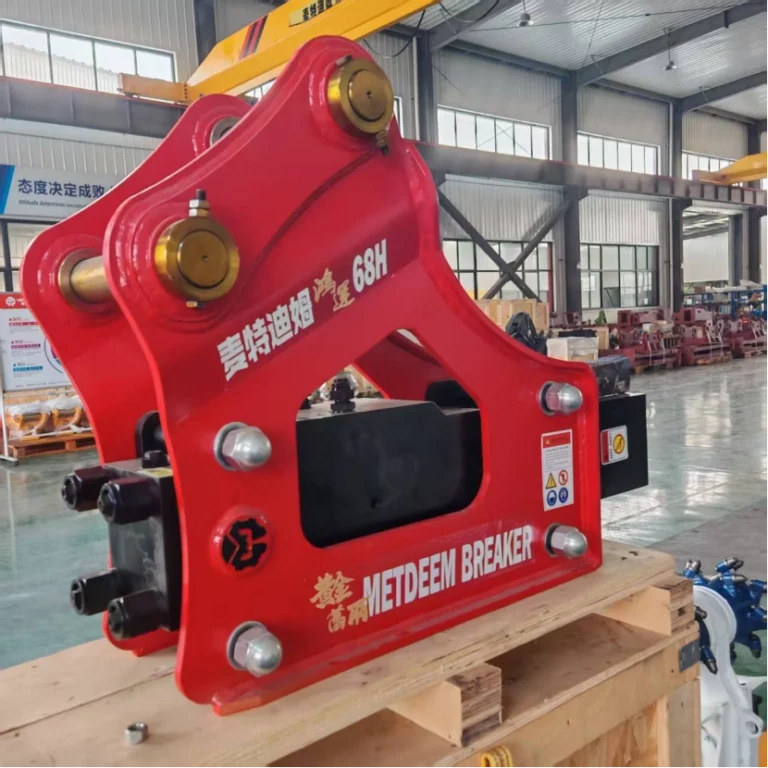
Hydraulic hammers are available in different external structures because jobsites place the tool at different angles. The three common forms are box type, side type, and top type. The choice should follow the working surface and access conditions rather than appearance alone. A good structure makes positioning easier and reduces unnecessary side force.
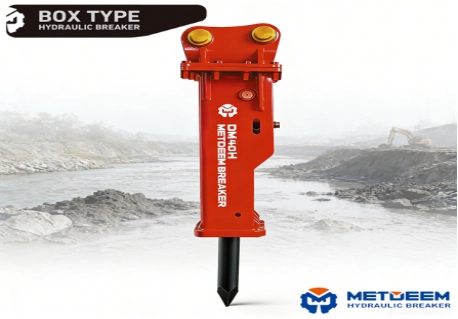
Box Type for Noise-Sensitive Sites
A box type breaker has an enclosed housing around the hammer body. It is often selected for urban demolition, road maintenance, residential work, and sites where noise and outside impact need better control. The housing also protects some internal components from dust and accidental contact. It does not make impact work silent, but it can support a more controlled work environment.
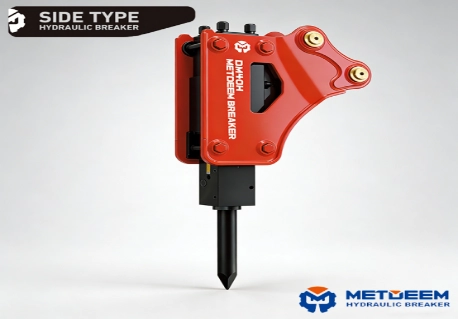
Side Type for Horizontal Breaking
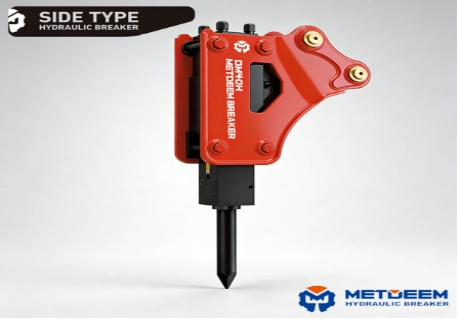
Sebuah side type breaker is commonly used for horizontal surfaces, including road work, quarry faces, and some mining tasks. Its layout can give the operator a clear view of the working point and a useful position for breaking along a surface. It is a strong option when the job involves broad slabs, hard layers, or material that must be opened from the side.
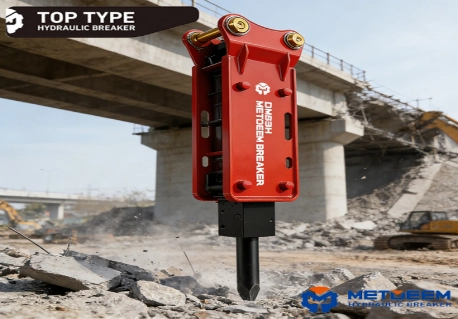
Top Type for Demolition and Non-Horizontal Work
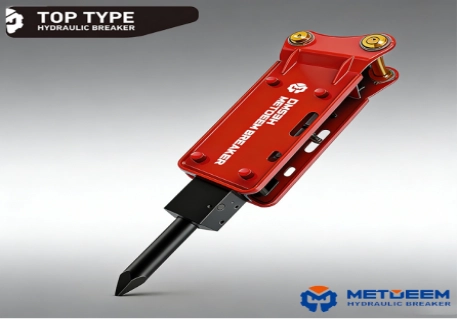
Sebuah top type breaker is often used for demolition, tunnels, foundations, and non-horizontal breaking. Its form can help the operator work against walls, structural sections, or hard material that is not lying flat. The breaker still needs straight contact with the chisel. Using it as a pry bar or applying strong side force can damage the chisel, bushings, front head, and piston.
Compare the Material and the Breaking Method
The same excavator may face several materials during one project. A light jack hammer excavator application for thin concrete is different from quarry rock or reinforced foundation work. Before buying, describe the material, thickness, hardness, work angle, and expected hours per day. This gives the supplier enough information to recommend a model instead of relying on a generic size label.
Concrete, Asphalt, and Foundations
For concrete and asphalt, the breaker should deliver consistent impact without being too heavy for the carrier. Operators should keep the chisel aligned, apply steady down pressure, and move the tool when one point does not crack. Continuous striking in one place should not exceed about 30 seconds. If the material does not open, change the position or begin from an edge.
Quarry, Mining, and Hard Rock
Quarry and rear mining work demand stronger wear parts, stable nitrogen pressure, and a maintenance plan that can be followed away from the workshop. The piston, valve, cylinder, chisel, seals, and bushings must work as one system. A low failure rate hammer is valuable because one breakdown can delay drilling, loading, hauling, and sorting.
Consider Fuel Usage and Total Cost
Purchase price is only one part of the decision. A breaker that needs excessive flow may increase fuel usage through higher hydraulic demand. A poor match may also create heat, downtime, seal damage, and faster bushing wear. The better comparison is total operating cost over the expected working hours.
Ask about grease intervals, seal replacement, chisel availability, bushing life, nitrogen checks, and service access. METDEEM recommends greasing during use every 2-3 hours, checking bolts before daily work, and replacing seals according to model size and operating conditions. For models below MD175, seals are commonly changed after 500-600 working hours; larger models may require replacement after 300-500 working hours.
Plan the Breaker with Other Attachments
An excavator often stays on a project after the breaking stage. Planning the attachment fleet together can reduce transport and idle time. A quick hitch can help the operator move from one task to another, while the breaker handles hard material and other tools manage the result.
Common Attachment Combinations
After breaking concrete, a hydraulic pulverizer can reduce reinforced sections, a mechanical grapple bucket can sort loose material, and a steel grab can handle structural metal. An excavator timber grab can move wood and branches, while a hydraulic magnet can collect ferrous debris.
METDEEM supplies hydraulic hammers and related excavator attachments for construction, demolition, quarrying, mining, agriculture, and material handling. Our company profile describes our manufacturing focus, ISO 9001 and CE qualifications, and service for global customers. We also use customer and exhibition feedback to improve product details for different jobsite challenges.
Inspect and Maintain the Breaker
Picking the right tool keeps the breaker safe. However, everyday use truly decides the lifespan of your investment. Always check the equipment before starting any task. Look closely at the bolts and hoses. You should also examine the chisel condition, bushing clearance, seals, and all mounting points. Pay close attention while working. You must stop the machine if a hose shakes too heavily. Also, halt work if the hitting rhythm gets uneven or if the oil gets too hot.
Never use the chisel to pry things. Do not push large rocks with the breaker body. Avoid lifting heavy items or firing the tool without a target. Winter weather requires extra care. You need to run the excavator to warm it up. Do this for roughly 5 to 20 minutes before breaking rock. Sometimes you have to store the tool for a long time. When this happens, take out the chisel first. Coat the piston and bushing with thick grease or a rust blocker. Seal the hose fittings tightly. Finally, put the breaker in a clean, dry spot.
Kesimpulan
Finding the best excavator breaker involves many real-world choices. You must look at the base carrier size, hydraulic flow, and system pressure. Other key factors include the breaker weight, chisel diameter, and the target material. Working angles, upkeep needs, and overall budget matter too. A box type breaker often works well in busy city areas. Meanwhile, a side type breaker is usually great for flat road projects or stone quarries. On the other hand, a top type breaker is often ideal for tearing down buildings and working on steep slopes. The smartest buy always matches both the machine and the exact task. It is not just about picking the unit with the biggest power numbers.
Many shoppers look at various breaking equipment, hydraulic hammers, or a jack hammer excavator. These buyers need to review a few final details. They should check the supply of spare parts and the required grease schedule. Nitrogen gas needs and factory support are also very important. A well-matched tool combined with careful driving brings great results. The excavator will easily crush, sort, and move heavy materials. This approach leads to fewer delays and gives the operator much better handling.
FAQs
Pertanyaan: What is the first factor when choosing an excavator breaker?
A: Start with excavator capacity in tons, hydraulic flow, and working pressure.
Pertanyaan: Is a box type breaker good for urban work?
A: Yes. Its enclosed housing can help control noise and protect the hammer body.
Pertanyaan: How often should a breaker receive grease?
A: Grease the breaker every 2-3 hours during operation.