Construction sites are getting tighter, closer to people, and more closely watched. A breaker may need to remove old concrete beside an apartment block in the morning, work near a school in the afternoon, and help with road repair at night. Power still matters. But noise, vibration, operator comfort, and public complaints now matter just as much.
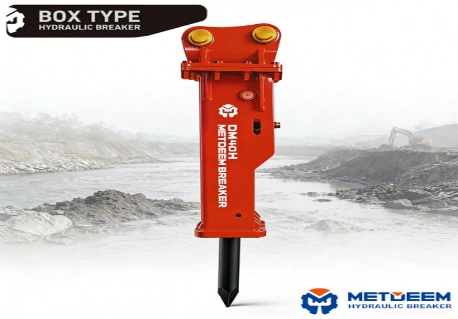
A silenced type hydraulic breaker, also called a box type hydraulic breaker, is built for that reality. It keeps the impact power contractors need while using an enclosed outer housing to lower jobsite noise and vibration. For urban demolition, road repair, tunnel work, municipal maintenance, and rental fleets, this type of breaker can make daily work cleaner, safer, and easier to manage.
What Is a Silenced Type Hydraulic Breaker?
A silenced type hydraulic breaker is an excavator attachment that breaks concrete, rock, asphalt, and other hard materials through repeated piston impact. The key difference is the outer box-style shell. Unlike an open or side-mounted frame, the silenced type wraps the hammer body inside a closed housing.
This housing helps reduce noise from the impact core. It also helps control vibration, protects inner parts from outside damage, and gives the attachment a neat, compact look. On many jobsites, that enclosed body is the reason contractors choose it over other hydraulic breaker styles.
In general, hydraulic breakers can be grouped in two common ways:
- By valve position: built-in valve or external valve
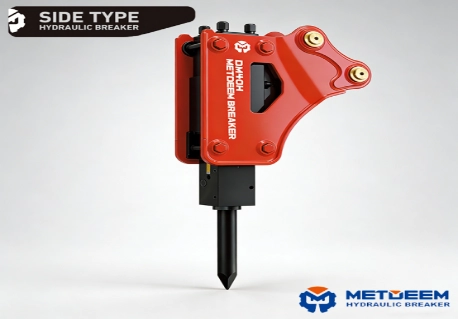
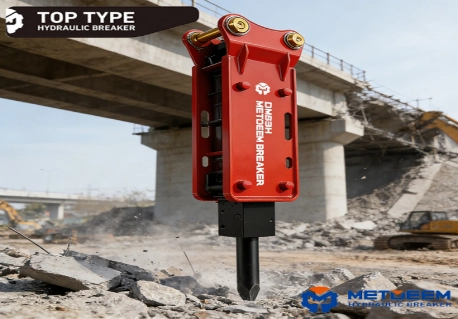
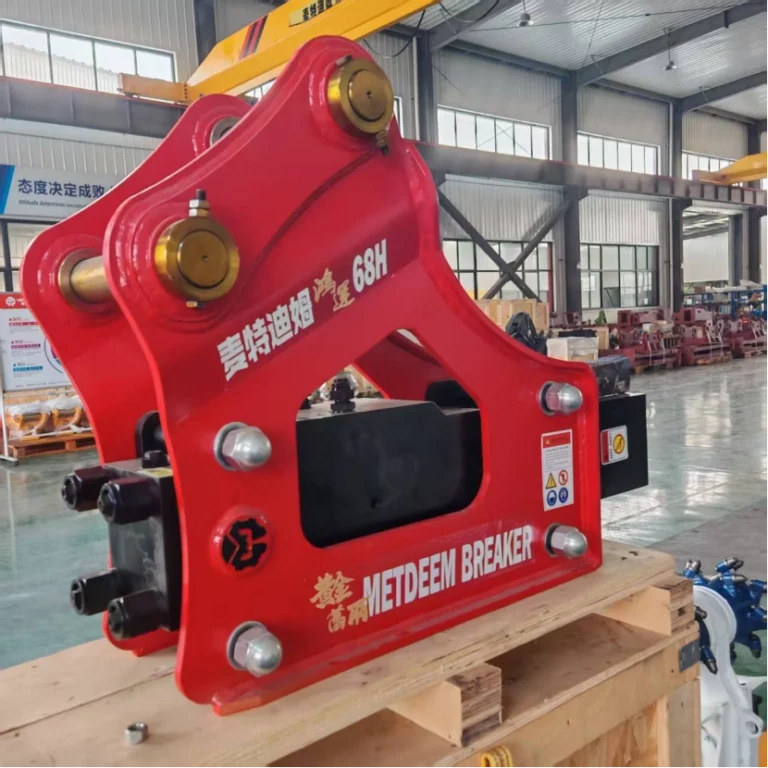
- By appearance: side type, silenced box type, and top type
The side type is often used for horizontal breaking on roads, quarries, and mining work. The top type is useful for demolition, tunnels, and non-horizontal breaking. The silenced type is the practical choice when noise control, enclosed protection, and smoother operation are important.
Al Interruttori idraulici METDEEM, we offer box type, top type, and side type models for different carriers and working conditions. Our products are designed for real site use, from compact excavators to large demolition machines.
Why Noise Reduction Has Become a Bigger Buying Factor
Noise is no longer just an operator comfort issue. It affects worker health, neighborhood relations, project schedules, and site permits. According to CDC construction noise statistics, a large share of construction workers are exposed to hazardous noise, and many noise-exposed workers do not always wear hearing protection. That is a serious long-term risk.
The industry is also moving toward quieter and cleaner sites. Recent construction equipment trends point to more compact machines, more electric equipment in urban areas, and more attention to noise-sensitive work zones. Contractors are not only asking, “Can this tool break the material?” They are asking, “Can it help us work near people without causing unnecessary conflict?”
Noise-Sensitive Jobsites Need Better Tools
Many modern projects happen beside people who are trying to live, study, recover, or work. Hospitals, schools, business districts, residential blocks, railway stations, and indoor renovation sites all create pressure for lower noise. A traditional breaker may finish the job, but it can also trigger complaints, stop-work discussions, or limits on working hours.
A silenced type hydraulic breaker helps reduce that pressure. It cannot make breaking silent, because impact work always creates sound. But it can lower the sharp, exposed mechanical noise from the hammer body. That difference matters when work continues for many hours.
Typical use cases include:
- Urban building demolition
- Sidewalk and road repair
- Basement and indoor concrete removal
- Tunnel maintenance
- Utility trench work
- Residential area renovation
- School, hospital, and commercial zone projects
Worker Health Is Part of Productivity
Lower noise also supports the crew. The OSHA noise guidance explains that high noise exposure can damage hearing and that noise control should include quieter machines, isolation, barriers, distance, and proper hearing protection. A quieter breaker is one useful part of that wider control plan.
When operators are less tired, they stay more focused. Communication becomes easier. Site supervisors can give signals with less shouting. That helps safety, especially when excavators, loaders, trucks, and ground workers are all moving in the same space.
How a Silenced Type Hydraulic Breaker Works
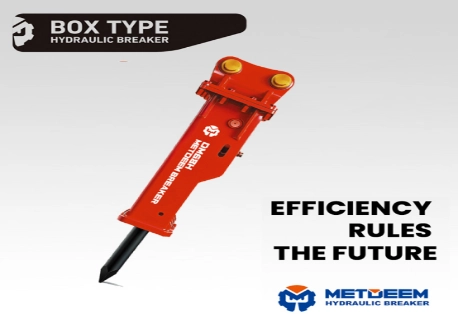
A silenced type breaker has the same main working principle as other hydraulic breakers. Hydraulic oil from the carrier drives the piston. Nitrogen pressure helps return and accelerate the piston. The piston strikes the chisel, and the chisel transfers impact energy into concrete or rock.
The design is simple in concept, but every part must be made and matched well. Poor fit, wrong oil flow, low nitrogen pressure, or worn seals can quickly reduce power.
Main Components Inside the Breaker
Inside a hydraulic breaker, several parts work together under high stress. The most important include:
- Back head: holds nitrogen and supports impact energy return
- Cylinder: guides piston movement and keeps hydraulic pressure stable
- Directional valve: controls oil intake and return
- Piston: delivers the striking force
- Chisel: contacts and breaks the material
- Oil seals and dust seals: prevent leakage and block dirt
- Front head and bushings: support the tool and resist wear
- Accumulator: helps smooth pressure changes on larger models
A quality breaker depends on both material strength and machining accuracy. Common heavy-duty material choices include forged alloy steel for the chisel and head parts, strong alloy steel for the piston, and wear-resistant steel for the cylinder and bushings.
At METDEEM, we build our hydraulic breaker parts with strict production control from processing to delivery. Our box type hydraulic breakers are made for contractors who need steady impact power, practical maintenance, and strong service life.
The Role of the Box Housing
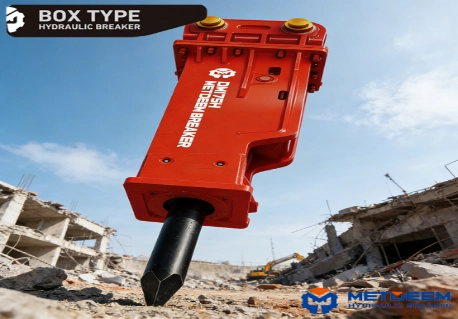
The box housing is what gives the silenced type its main advantage. It covers the hammer body and helps block some of the impact sound before it spreads across the site. The housing can also hold damping elements that reduce vibration transfer between the hammer body and carrier.
This design brings several benefits:
- Lower perceived jobsite noise
- Better protection for the breaker body
- Less direct impact damage from flying debris
- Cleaner appearance for rental and fleet use
- Better comfort during long working hours
The enclosed shell also makes the breaker suitable for sites where open-frame tools may feel too loud or too exposed.
How to Choose the Right Silenced Type Hydraulic Breaker
Choosing a breaker by appearance alone is risky. A box type body can help with noise, but the breaker must also match the excavator’s weight, hydraulic flow, oil pressure, and working material. The wrong match can lead to weak breaking, high oil temperature, seal failure, hose shaking, or damage to the carrier.
Before buying, check the carrier class first. Then compare chisel diameter, oil flow, working pressure, nitrogen pressure, and attachment bracket size.
Match the Breaker to Excavator Tonnage
Carrier weight is the first filter. Small breakers are used with mini excavators for light demolition, garden work, indoor repair, and narrow spaces. Larger breakers are used for road breaking, quarry work, foundations, and heavy concrete.
For example, a compact breaker may use a 30 mm to 45 mm chisel for excavators around 0.8 ton to 2.5 tons. Medium models may use 68 mm to 100 mm chisels for machines around 4.5 tons to 16 tons. Heavy models can use 140 mm, 175 mm, 200 mm, or larger chisels for much bigger excavators.
Al METDEEM box type hydraulic breakers, our product range covers many carrier sizes, so customers can select by excavator class and working demand.
Check Hydraulic Flow and Pressure
Oil flow controls striking frequency and energy delivery. Too little flow makes the breaker weak. Too much flow creates heat, fast wear, and possible seal damage. Pressure is equally important. If line pressure is too low, the breaker may not start well. If it is too high, parts face extra stress.
A proper selection should check:
- Excavator operating weight
- Pump flow in L/min
- Working pressure in MPa
- Chisel diameter in mm
- Back head nitrogen pressure in kg/cm2
- Accumulator pressure when required
- Bracket and pin size
- Hose and pipeline condition
For larger breakers, accumulator pressure is often part of stable operation. Many heavy models use accumulator pressure around 60-65 kg/cm2. The exact value depends on the model and application.
Installation and Daily Use Tips
Even the best hydraulic breaker can fail early if installation is poor. Many breaker issues begin with simple problems: closed stop valves, wrong hose connection, low pipeline pressure, overcharged nitrogen, or a frequency screw that is not properly adjusted.
Before first use, the team should inspect the pipeline, flush oil passages when needed, connect hoses correctly, open stop valves, and check pressure. After mounting, start slowly. Listen to the impact sound. Watch the hose movement. A breaker that shakes badly or hits unevenly is telling you something is wrong.
Good Operating Habits
A silenced type hydraulic breaker is powerful, but it should not be used like a pry bar or lifting tool. The chisel must stay aligned with the breaking direction. Side force can damage the chisel, bushings, piston, and front head.
Use these habits on site:
- Keep the chisel pressed firmly against the material before striking
- Stop if hoses vibrate violently
- Avoid blank firing
- Do not use the chisel to move rocks
- Do not pry with the breaker
- Do not work underwater or in deep mud unless the breaker is prepared for it
- Do not lift objects with the breaker
- Break large hard rocks from an edge or end
- Avoid continuous striking in one place for more than 30 seconds
- Warm the machine for 5-20 minutes in cold weather
These rules sound basic, but they save real money. Most premature wear comes from poor alignment, blank firing, weak lubrication, and pushing the tool beyond its intended job.
Maintenance That Protects Service Life
A breaker works in dust, shock, heat, and high pressure. Maintenance must be regular. Grease should be added during use, often every 2-3 hours, depending on conditions. Bolts should be checked before daily work. Seals should be replaced based on model size, work hours, and material severity.
Pay close attention to:
- Chisel and bushing wear
- Loose bolts
- Oil leakage around seals
- Dust seal damage
- Nitrogen pressure drop
- Abnormal impact sound
- Slow or weak striking
- Hydraulic oil temperature
- Hose damage
If bushings wear far beyond the original diameter, they should be replaced before they damage the chisel and front head. If a breaker will be stored for a long time, keep it in a dry place, remove the chisel, release internal nitrogen as instructed, coat the piston end and chisel with grease or rust inhibitor, cap the hose joints, and store it upright when possible.
Where Silenced Type Breakers Fit in 2026 Construction Trends
The market is moving toward flexible fleets. Compact machines are widely used because they can enter small spaces and carry different attachments. Rental companies also need durable tools that many customers can use across different jobs. In this environment, low-noise breakers are not a niche accessory. They are becoming a practical fleet choice.
Industry reports on 2026 construction equipment trends point to compact equipment, smarter fleet control, and changing jobsite needs. Separate coverage of electric construction equipment in 2026 also shows that urban, indoor, and noise-sensitive work is a key use case for cleaner machines.
That same logic supports silenced breakers. If a contractor is already choosing compact excavators, electric carriers, or low-emission machines for sensitive locations, the attachment should match that goal. A loud open-frame breaker can weaken the value of a quieter carrier. A silenced type breaker keeps the whole equipment package better aligned with the job.
METDEEM serves OEMs, dealers, rental companies, and end users through a product range that includes hydraulic breakers, quick hitches, buckets, shears, grapples, and other attachments. As shown on our A proposito di noi page, our products are used in construction, mining, agriculture, quarry, and other industries, and exported to many global markets. We also meet customers directly through international events listed on our exhibition page, where jobsite feedback helps guide our product work.
Conclusione
A silenced type hydraulic breaker is not only a quieter hammer. It is a better fit for modern jobsites where power, noise control, maintenance, and public impact must be balanced. Its enclosed box housing reduces sound and vibration while protecting the hammer body from damage. For contractors working in cities, near sensitive buildings, or inside tight areas, that can mean fewer complaints, better operator comfort, and smoother project flow. The best results come from choosing the right model, matching hydraulic flow and pressure, using the breaker correctly, and keeping maintenance on schedule.
FAQs
Domanda: What is a silenced type hydraulic breaker?
A: A silenced type hydraulic breaker is a box type breaker with an enclosed housing for lower site noise.
Domanda: How much oil flow does a hydraulic breaker need?
A: It depends on model size, from 15-20 L/min to 300-330 L/min.
Domanda: What nitrogen pressure is common in hydraulic breakers?
A: Small models may use 12 kg/cm2; large models can reach 35-37 kg/cm2.