Construction work rarely stays the same throughout the day. An excavator may dig a trench in the morning, break concrete after lunch, and load scrap before the shift ends. Traditionally, each attachment change required manual pin removal, heavy tools, and extra workers. That process took time and created avoidable safety risks.
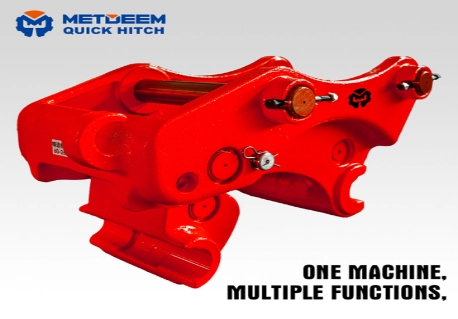
A quick hitch, also called a quick coupler, changes the way excavators work. It connects the machine to different attachments and allows operators to switch tools much faster. With the right system, one excavator can handle buckets, hydraulic breakers, grapples, compactors, and other breaking equipment with less idle time.
For contractors, rental companies, demolition teams, and municipal crews, a quick hitch is not simply a convenience. It can improve machine use, reduce changeover delays, and make a single excavator more useful across different projects.
What Is a Quick Hitch?
A quick hitch is an attachment coupler installed between an excavator arm and a working tool. It uses locking hooks, pins, or hydraulic jaws to hold the attachment securely. Instead of removing and reinstalling connection pins by hand, the operator can connect or release compatible attachments through a designed locking mechanism.
The main purpose is simple:
- Reduce attachment change time
- Lower manual handling work
- Improve excavator flexibility
- Support safer tool changes
- Allow one machine to perform more tasks
A quick hitch does not replace the excavator’s hydraulic system. It works with the carrier and attachment interface. For hydraulic tools such as a breaker, shear, compactor, or hydraulic magnet, the machine may also need auxiliary hydraulic lines and the correct flow and pressure.
В МЕТДИМ, we offer quick hitches for different excavator sizes and working conditions. Our product range includes mechanical, hydraulic, casting, welding, and tilting quick hitch solutions.
How Does an Excavator Quick Hitch Work?
The exact operation depends on the design, but the basic process is similar. The operator positions the coupler over the attachment, engages the first connection point, closes the locking mechanism, and verifies that the second pin or hook is fully secured.
A hydraulic quick hitch uses the excavator’s auxiliary hydraulic circuit. The operator controls the lock from the cab, while the coupler’s safety mechanism holds the attachment in position. A mechanical quick hitch uses a manual lever, wrench, or pin system. It may require the operator to leave the cab, but it often has a simpler structure.
Before comparing each type, remember one important point: speed is valuable only when the attachment is locked correctly. A fast change without visual and mechanical confirmation can create serious danger. Correct positioning, locking, and final inspection must remain part of every changeover.
The Basic Changeover Process
A safe attachment change normally includes these steps:
- Park the excavator on stable ground.
- Lower the current attachment safely.
- Release the locking mechanism.
- Align the quick hitch with the new attachment.
- Engage the first pin or hook.
- Close the main locking system.
- Activate the secondary safety lock.
- Test the connection at low height.
- Check the lock indicator before work starts.
The operator should never assume that a hydraulic switch alone proves the attachment is secure. A visual check from the cab and, when required, a ground-level inspection are still important.
Main Types of Quick Hitch
Quick hitches can be divided by operating method and added function. The most common choices are hydraulic quick hitches, mechanical quick hitches, and tilting or rotating quick hitches. The right choice depends on attachment change frequency, machine size, jobsite risk, budget, and the type of work.
These choices are especially important for mixed fleets. A rental excavator may work with several attachments across different sites. A demolition contractor may change between a hydraulic breaker, pulverizer, steel grab, and bucket in one shift. In both cases, compatibility and safe locking matter as much as speed.
Гидравлический быстрый Hitch
A hydraulic quick hitch allows the operator to change compatible attachments from inside the cab. It is useful when attachments are changed frequently or when the tools are too heavy for repeated manual handling.
Key benefits include:
- Faster attachment replacement
- Less climbing in and out of the cab
- Better support for large excavators
- Higher machine utilization
- Easier use in busy demolition and recycling work
В METDEEM DM06 casting type quick hitch uses a double safety locking design and supports different excavator tonnages. Its published specifications cover excavators from about 1.5 tons to 45 tons, with working pressure listed from 40-380 kg/cm2 and necessary flow of 10-20 L/min. Always confirm final specifications for the selected model and carrier.
Механический быстрый Hitch
A mechanical quick hitch uses a manual locking method. The operator may need a wrench, lever, or locking pin to secure the attachment. This design is often suitable for small excavators, light work, and projects where tools are not changed many times per day.
Its main strengths are:
- Simple structure
- Lower purchase cost
- Easy inspection
- Straightforward maintenance
- Less dependence on auxiliary hydraulics
Mechanical models can be a practical choice for landscaping, small trenching, farm work, and occasional attachment changes. They are not automatically less safe, but they require careful manual locking and a complete connection check.
Tilting and Rotating Quick Hitch
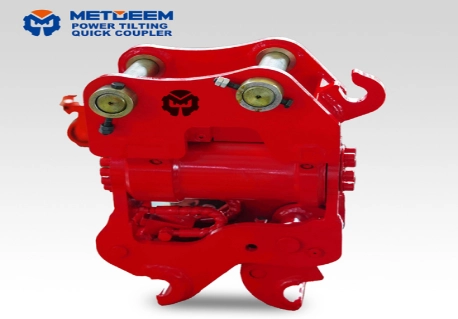
A tilting quick hitch adds another function. It can angle the attachment to the left or right, helping the operator work on slopes, ditches, wall edges, and other difficult areas without moving the whole excavator.
В METDEEM DM02 tilting quick hitch is designed for multi-angle attachment control. Depending on the model, the tilt function can reach 140 or 180 degrees, while the quick coupler mechanism supports rapid attachment replacement. This type can be especially useful when a contractor needs both fast tool changes and better working angles.
Why Quick Hitches Improve Jobsite Efficiency
The value of a quick hitch becomes clearer when we look at the full work cycle. On many sites, the excavator does not lose productivity while digging. It loses productivity while waiting for a new tool, moving to a safe change area, or relying on several workers to remove and reinstall pins.
A quick hitch reduces these interruptions. The excavator can change from a bucket to a breaker, then from the breaker to a grapple or compactor, with less downtime. This supports a more flexible workflow and helps contractors use one machine for more stages of a project.
One Excavator, More Applications
A quick hitch allows an excavator to connect tools such as:
- Standard and trenching buckets
- Tilt buckets
- Hydraulic breakers
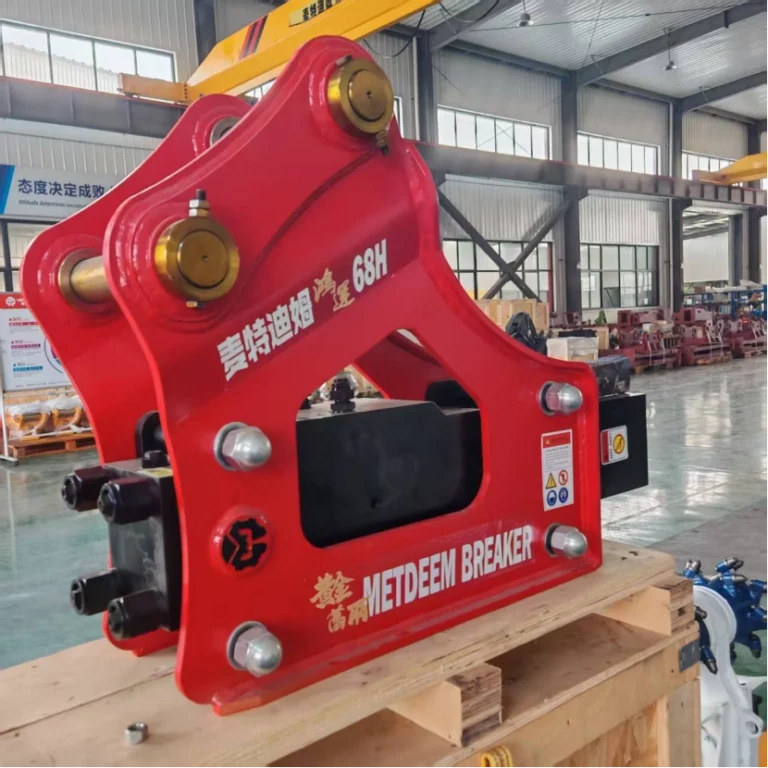
- Side breaker and top type breaker models
- Pulverizers
- Hydraulic shears
- Excavator timber grab
- Steel grab
- Hydraulic magnet
- Plate compactors
- Rippers and augers
For example, a demolition crew may use a top type breaker to remove concrete, switch to a pulverizer to process material, and then connect a hydraulic magnet to collect steel. A forestry team may use an excavator timber grab for handling logs, while a road contractor may change between a bucket and compactor during site preparation.
METDEEM manufactures construction machines and attachments for construction, mining, agriculture, quarry, forestry, and material handling applications. Our product lines include buckets, quick hitches, hydraulic breakers, grapples, compactors, and other tools, helping customers build a more flexible equipment package.
Compatibility: The Step Many Buyers Miss
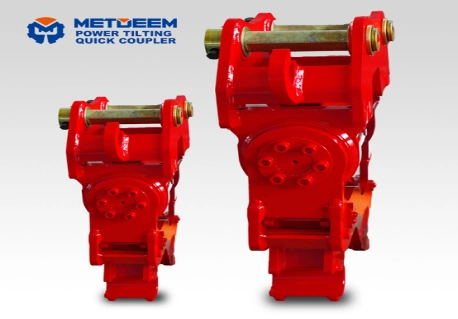
A quick hitch can look correct and still be a poor match. Physical connection is only one part of compatibility. The excavator and attachment must also work together in terms of pin dimensions, machine weight, auxiliary hydraulic flow, pressure, attachment weight, and locking design.
When checking a quick hitch, confirm:
- Excavator operating weight in tons
- Pin diameter in mm
- Pin center distance in mm
- Arm width in mm
- Coupler weight in kg
- Hydraulic working pressure in bar or kg/cm2
- Required hydraulic flow in L/min
- Attachment connection style
- Safety lock and indicator design
В METDEEM DM04 welding type quick hitch is presented as a customizable solution for different excavator tonnages. This product highlights welded high-strength steel construction, double safety locking, and compatibility with common attachments such as buckets, breakers, wood grabbers, and steel grabbers.
Do not select a coupler only by excavator brand or model name. Share the actual pin measurements and attachment details with the supplier. This is especially important for older machines, mixed fleets, and customized tools.
Quick Hitch Safety on the Job Site
Safety must come before changeover speed. A dropped attachment can damage the machine, destroy the tool, or injure workers nearby. Operators should follow the manufacturer’s instructions and local safety rules every time.
Important safety habits include:
- Keep workers away from the attachment during locking.
- Never stand beneath a suspended tool.
- Confirm both primary and secondary locks.
- Use the lock indicator where available.
- Test the attachment close to the ground.
- Stop work if the coupler moves abnormally.
- Inspect pins, hooks, cylinders, and hoses regularly.
- Do not use damaged or heavily worn locking parts.
Hydraulic quick hitches reduce manual handling, but they do not remove the need for inspection. Dirt, oil leakage, worn pins, and poor hydraulic pressure can affect locking performance. A short check before work can prevent a long and expensive interruption later.
Maintenance Tips for Longer Service Life
A quick hitch works in dust, vibration, impact, and changing weather. Maintenance does not need to be complicated, but it must be consistent. Keep the locking area clean, lubricate pins where required, and inspect hydraulic components before heavy work.
Check these areas regularly:
- Main lock pin
- Secondary safety lock
- Hooks and contact surfaces
- Hydraulic cylinder
- Hydraulic hoses
- Grease points
- Welds and casting surfaces
- Pin and bushing wear
- Lock indicator
When a quick hitch works with heavy breaking equipment, vibration can accelerate wear. A breaker, side breaker, or top type breaker transfers strong impact through the coupler and excavator arm. The coupler should be inspected more often in demolition, quarry, rear mining support work, and recycling conditions.
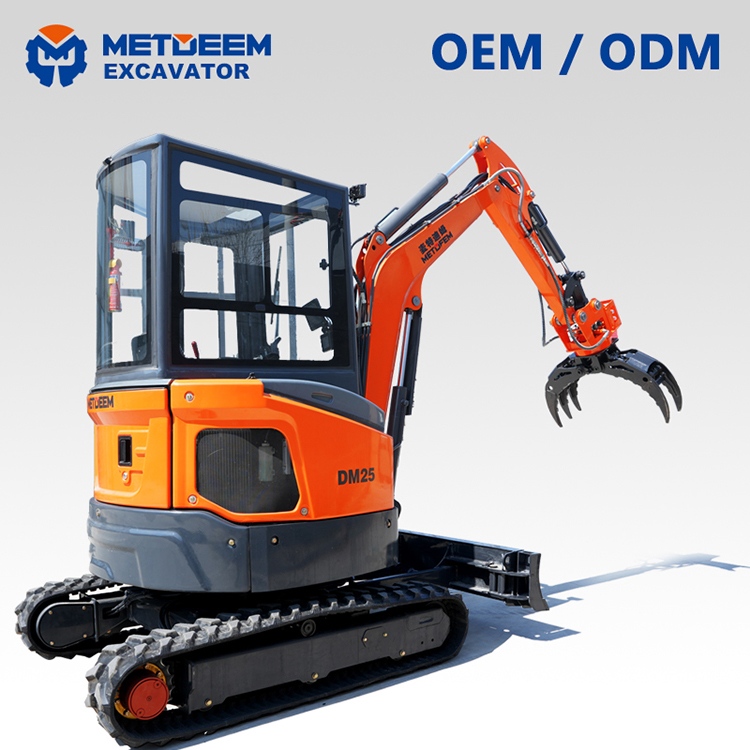
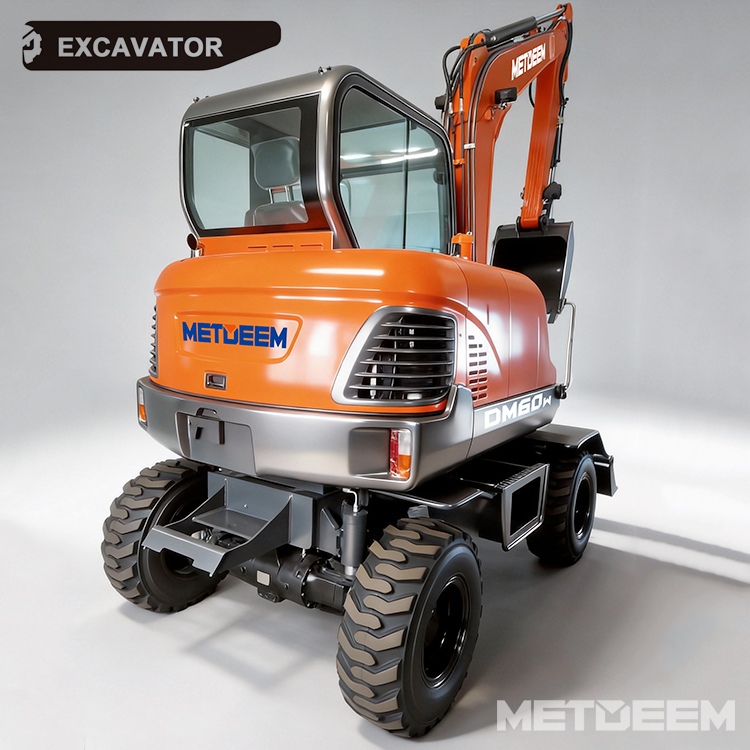
METDEEM focuses on controlled production, attachment compatibility, and long-term service. Our company profile describes our work in construction machinery and parts, including mini excavators from 0.8 tons to 6 tons, loaders, bulldozers, and excavator attachments.
Вывод
A quick hitch turns an excavator into a more flexible working platform. It helps operators change between buckets, hydraulic breakers, grabs, compactors, and other attachments with less downtime. Hydraulic models are well suited to frequent changes and heavy tools, while mechanical models offer a simple and cost-conscious solution for lighter work. Tilting quick hitches add better control in slopes, ditches, corners, and narrow spaces. The right choice depends on machine tonnage, pin dimensions, attachment weight, hydraulic pressure, flow, and safety design. A quick hitch is valuable when it fits correctly, locks securely, and receives regular inspection.
FAQs
Вопрос: What is a quick hitch?
A: A quick hitch is an excavator coupler for changing attachments faster and securing them with locking mechanisms.
Вопрос: How much flow does a hydraulic quick hitch need?
A: The required hydraulic flow rate varies depending on the model, please refer to the product parameter table
Вопрос: What excavator sizes can use a quick hitch?
A: METDEEM models cover excavators from about 0.8 tons to 70 tons.