A tilt bucket is one of the most practical excavator attachments for contractors who need more control without constantly moving the machine. It looks simple at first: a bucket that can tilt left and right. On a busy job site, however, that movement can save time, reduce machine wear, improve grading accuracy, and help one excavator handle more tasks in tight areas.
In 2026, job sites are asking machines to do more with less. Contractors face labor shortages, narrower working areas, tighter schedules, higher fuel costs, and stronger pressure to reduce rework. Recent equipment trends show growing demand for compact machines, smarter attachments, and tools that help operators finish grading, trenching, drainage, and cleanup with fewer passes. A hydraulic tilt bucket fits that shift very well.
What Is a Tilt Bucket?
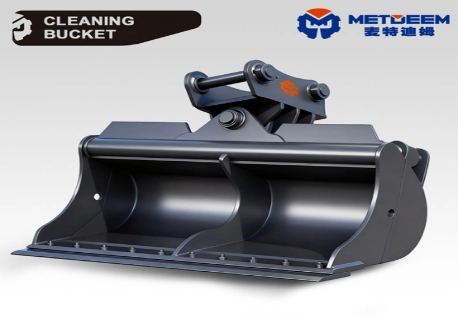
A tilt bucket is an excavator bucket that can swing sideways through a hydraulic cylinder or tilt mechanism. Unlike a standard bucket, which mainly moves with the boom, arm, and bucket linkage, a tilt bucket can angle itself to match the ground surface. This makes it useful for slopes, ditches, banks, trenches, road shoulders, and fine leveling work.
The main idea is simple: the excavator body can stay in place while the bucket changes angle. That means less repositioning, less tracking back and forth, and better control at the cutting edge.
Common tilt bucket applications include:
- Slope trimming
- River channel shaping
- Pipe trench cleaning
- Roadside ditch work
- Fine grading
- Landscaping
- Backfilling
- Drainage finishing
- Work in narrow or irregular spaces
В МЕТДИМ, we manufacture construction machines and attachments for real job site use, including buckets, hydraulic breakers, quick hitches, grapples, compactors, and other tools. Our products are made for contractors, dealers, rental companies, and end users who need durable equipment with practical support.
Why Tilt Buckets Are Gaining Attention Now
A tilt bucket is not new, but the demand behind it is stronger today. Many contractors are no longer buying attachments only for single tasks. They want each machine to stay busy across more stages of a project. That is why compact excavators, grading tools, hydraulic attachments, and quick-change systems are becoming more important.
Recent construction equipment reports show that compact machines and attachment versatility remain strong industry themes in 2026. Contractors are looking for tools that reduce idle time, help fewer workers finish more work, and make smaller machines useful on larger scopes. The tilt bucket answers these challenges because it improves control without adding another machine to the site.
Less Repositioning, More Productive Movement
Every time an excavator has to reposition, the operator loses time. The tracks move. The machine turns. The operator checks the angle again. On a slope or narrow trench, that process may happen again and again. A tilt bucket reduces those movements because the bucket itself can follow the working surface.
This matters most in jobs that require smooth shape rather than raw digging force. For example, when trimming a ditch, the operator can tilt the bucket to match the side wall. When cleaning a drainage channel, the bucket can follow the angle of the bank. When grading near a wall, the machine may stay in a safer and more stable position.
The result is not only faster work. It is cleaner work.
Better Finish with Fewer Passes
A standard bucket can move material, but it often needs more passes to create the right slope or surface. A tilt bucket gives the operator more freedom to shape the ground. This helps reduce high spots, low spots, and rough edges.
Fewer passes can bring several gains:
- Lower fuel use
- Less undercarriage wear
- Less operator fatigue
- Fewer manual corrections
- Cleaner grade lines
- Faster handover to the next crew
On sites where labor is tight, this can make a real difference. The operator can do more shaping from the cab, while ground workers spend less time with shovels and rakes.
How a Hydraulic Tilt Bucket Works
A hydraulic tilt bucket connects to the excavator’s auxiliary hydraulic system. The oil flow powers one or more cylinders, allowing the bucket to swing left and right. The operator controls the tilt from the cab, adjusting the bucket angle while digging, grading, or cleaning.
Before choosing a tilt bucket, it is important to match the attachment to the excavator. The wrong match may cause slow movement, weak control, hydraulic stress, or poor balance. A good match should consider machine tonnage, oil pressure, operating flow, pin size, bucket width, bucket weight, and the main job type.
Key Selection Points
В METDEEM DM02 tilt bucket is designed for flexible multi-angle operation and is suitable for slope trimming, river channel trimming, pipe trench excavation, and fine site leveling. Its standard tilt angle is ±26 degrees, and special angles can be customized for certain job needs.
When selecting a tilt bucket, check:
- Excavator weight class
- Hydraulic oil pressure
- Operating flow in L/min
- Bucket width and capacity
- Pin and bracket dimensions
- Material type
- Working space
- Required tilt angle
- Need for quick hitch connection
Typical METDEEM tilt bucket parameters include oil pressure from 80-120 bar on smaller models up to 160-180 bar on larger models. Operating flow can range from 25-40 L/min to 100-140 L/min, with model weights from 120 kg to 1260 kg depending on excavator size.
Where a Tilt Bucket Brings the Most Value
A tilt bucket is not the best tool for every job. It is not made to replace a hydraulic breaker for hard concrete, or a steel grab for scrap handling. Its strength is controlled shaping. If the work needs angle, reach, and surface finish, a tilt bucket can become one of the most used attachments in the fleet.
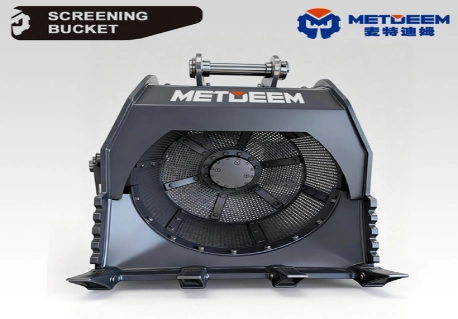
METDEEM offers a wide attachment range through our construction machine and attachment categories. Along with tilt buckets, our products cover hydraulic breakers, buckets, grapples, quick couplers, pulverizers, compactors, and handling tools for construction, mining, agriculture, quarry, and road work.
Roadwork and Drainage
Road shoulders and drainage ditches often need clean slopes. A tilt bucket helps the operator cut, shape, and clean the side of the ditch while the machine stays on stable ground. This is useful for roadside repairs, rural roads, utility trenches, and water flow correction.
A standard bucket can do some of this work, but it often needs more machine movement and more hand finishing. A tilt bucket gives a cleaner angle from the cab.
Landscaping and Site Finishing
Landscaping needs smooth transitions. Small errors are easy to see when the final surface is exposed. A tilt bucket helps shape lawns, embankments, ponds, garden slopes, and building pads with better control.
For contractors who work on residential or commercial sites, this can reduce rework. It also makes compact excavators more useful in confined areas where larger grading machines cannot easily enter.
Trenching and Pipe Work
Pipe trenches are rarely just straight cuts. Many require shaping, backfilling, side trimming, and cleanup around edges. A tilt bucket helps the operator reach angles that would otherwise require machine repositioning or manual labor.
The same value appears in utility work, where tight streets, existing walls, and nearby structures limit movement.
How Tilt Buckets Fit with Other Excavator Attachments
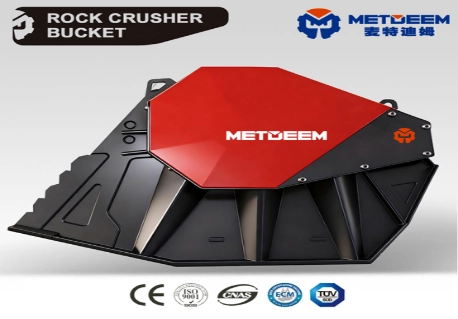
Modern excavators often work as attachment platforms. A contractor may use a tilt bucket in the morning, a side breaker in the afternoon, and a hydraulic magnet during cleanup. This is why attachment planning has become part of equipment buying, not an afterthought.
In demolition, a top type breaker or side breaker may handle concrete breaking first. Then a hydraulic pulverizer can process broken concrete, while a hydraulic magnet helps collect rebar and metal waste. For material handling, a steel grab can load scrap, and an excavator timber grab can move logs, brush, or timber. In quarry, road, or rear mining support areas, buckets and breakers may work together depending on ground conditions.
A tilt bucket supports this mixed-attachment workflow by taking care of finishing tasks:
- Clean the work area after breaking
- Shape the ground after trenching
- Finish slopes after bulk excavation
- Prepare surfaces before compaction
- Improve drainage around access roads
- Reduce manual cleanup after material handling
With a quick hitch system, operators can change attachments faster from the cab. That keeps the excavator working instead of waiting.
Maintenance Tips for Longer Service Life
A tilt bucket has fewer impact stresses than a breaker, but it still needs regular care. Dirt, side load, poor lubrication, and hydraulic leaks can shorten its working life. Simple daily checks help keep the attachment smooth and safe.
Operators should inspect:
- Tilt cylinder condition
- Hydraulic hoses and fittings
- Pin and bushing wear
- Weld areas
- Cutting edge wear
- Loose bolts
- Oil leakage
- Bucket side plates
- Quick hitch connection
Grease the pins as recommended and keep the tilt movement smooth. Do not overload the bucket beyond its rated size. When working at full extension, tilt slowly to reduce stress on joints. If the bucket tilts unevenly or feels weak, stop and check the hydraulic system before damage spreads.
Наши О нас page explains that METDEEM focuses on controlled production, ISO 9001, CE certification, technical patents, and global service. We also keep key wear parts available to help customers reduce waiting time and keep equipment in service.
Choosing the Right Tilt Bucket Supplier
A tilt bucket should not be selected by price alone. The lowest price may look good at purchase, but poor fit and weak structure can create higher costs later. A strong tilt bucket should match the machine, work smoothly under load, and come with clear support.
When comparing suppliers, look for:
- Clear model matching by excavator tonnage
- Oil pressure and flow information
- Strong steel and reliable welding
- Replaceable wear parts
- Custom size options
- Installation guidance
- Export and after-sales support
- Real product range for related attachments
METDEEM participates in global industry events and customer meetings shown on our exhibition page. These conversations help us hear field problems directly, from grading accuracy to attachment change time, and improve our products for practical use.
Вывод
A tilt bucket helps an excavator work with more angle, control, and accuracy. It can reduce machine repositioning, lower manual finishing work, and make compact or mid-size excavators more useful on roadwork, trenching, landscaping, drainage, and site preparation jobs. For contractors facing labor pressure, tight spaces, and rising operating costs, this attachment is a practical way to get more value from one machine. The best results come from choosing the right model, matching hydraulic flow and pressure, using the bucket within its rated capacity, and keeping pins, hoses, and cylinders in good condition.
FAQs
Q: What is a tilt bucket used for?
A: A tilt bucket is used for grading, ditch cleaning, slope trimming, and fine leveling.
Q: How much oil flow does a tilt bucket need?
A: METDEEM tilt bucket models use 25-40 L/min to 100-140 L/min.
Q: How heavy is a tilt bucket?
A: METDEEM tilt bucket models range from 120 kg to 1260 kg.