Moving broken concrete, logs, rocks, scrap, or demolition debris with a standard bucket is often slow and difficult. Materials can roll out, irregular objects are hard to control, and repeated loading raises fuel use and labor costs. A mechanical grapple gives an excavator a more secure way to grab, lift, move, and sort these materials.
The attachment is especially useful for contractors who need a strong, simple tool without adding a separate hydraulic circuit. Yet not every grapple fits every excavator or job. Machine weight, linkage design, opening width, attachment weight, steel grade, and working conditions must all be checked before purchase.
This guide explains how a mechanical grapple works, where it performs well, and how to choose a suitable model.
What Is a Mechanical Grapple?
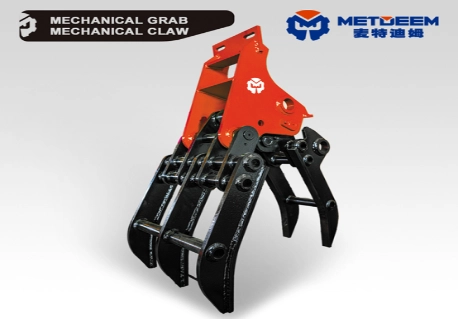
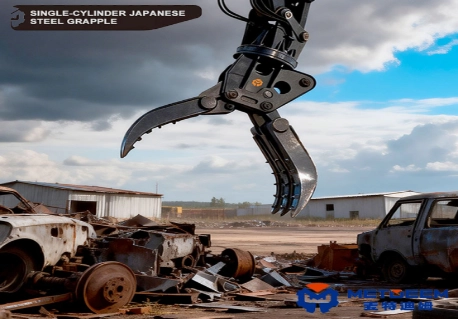
A mechanical grapple is an excavator attachment with two opposing jaws. One side is normally linked to the excavator arm or bucket cylinder, while the other responds through a fixed linkage. As the operator moves the bucket cylinder, the jaws open or close around the material.
Unlike many hydraulic grapples, a basic mechanical grapple does not need a dedicated hydraulic motor, extra valve, or separate oil hoses. This simple structure brings several practical benefits:
- Lower initial cost
- Fewer hydraulic parts to maintain
- Fast installation on a compatible excavator
- Strong holding force for irregular materials
- Reliable work in dusty or harsh environments
A mechanical grapple is not simply a bucket with extra teeth. Its jaw shape, pivot points, opening range, and weight distribution are designed for gripping rather than digging. Contractors can explore METDEEM’s broader range of phụ kiện máy xúc to compare grapples with buckets, shears, compactors, and other jobsite tools.
How Does an Excavator Mechanical Grapple Work?
The grapple uses the movement already available from the excavator’s bucket linkage. When the bucket cylinder extends or retracts, the linkage changes the distance between the jaws. The operator positions the open grapple over the load, closes it around the material, and then lifts or sorts the load.
Because the system is mechanically linked, jaw movement follows the excavator arm rather than an independent hydraulic control. This makes the attachment simple and durable. However, it usually provides less positioning freedom than a hydraulic rotating grapple.
The main parts commonly include:
- Main frame
- Fixed and moving jaws
- Pins and bushings
- Connecting link
- Wear plates
- Replaceable teeth or jaw tips
- Mounting brackets
Pins and bushings carry repeated loads and must be greased regularly. Jaw tips need high wear resistance, while the frame must combine strength with resistance to cracking. Material quality matters because excessive hardness can make a part brittle, while soft steel may wear or deform too quickly.
Main Types of Excavator Grapples
Grapples are grouped by their jaw shape, operating system, and intended material. Buyers should begin with the actual load they need to handle. A tool built for logs may not safely hold flat scrap, while a demolition grapple may be unnecessarily heavy for light brush work.
Grapple cơ khí
A mechanical grapple uses the excavator’s existing linkage and bucket cylinder. It is a practical choice for general material handling, land clearing, stone moving, and basic demolition work.
Its main advantages are low maintenance and straightforward operation. There are no rotation motors or grapple cylinders to service. The trade-off is limited independent jaw control and, in most cases, no powered rotation.
Hydraulic Grapple
A hydraulic grapple uses one or more hydraulic cylinders to control the jaws. Some models also provide 360-degree rotation. This gives the operator greater control when sorting mixed debris, loading trucks, or positioning long objects.
However, the excavator must have suitable auxiliary hydraulic lines, pressure, and oil flow. More hoses, seals, valves, and moving parts also mean more maintenance points. METDEEM offers both mechanical and hydraulic options within our grapple attachment range, allowing buyers to compare simple grabbing tools with rotating models.
Log, Rock, and Sorting Grapples
A log grapple often has curved, narrow jaws that wrap around timber. Rock grapples use stronger teeth and frames for uneven stone. Sorting grapples have wider jaw surfaces and more precise movement for separating concrete, metal, wood, and other demolition materials.
Orange-peel grapples use several tines and are commonly chosen for loose scrap or bulk waste. Clamp buckets combine digging and gripping functions, making them useful when excavation and material handling take place during the same shift.
Where Is a Mechanical Grapple Used?
The growing demand for versatile machines has made grapples valuable across construction, demolition, forestry, quarrying, and recycling. One excavator can complete several tasks by changing its attachment, reducing the need to transport an additional machine.
Common applications include:
- Picking and loading broken concrete
- Moving rocks during site preparation
- Handling logs, branches, and roots
- Clearing storm or land-development debris
- Sorting reusable material after demolition
- Loading scrap and bulky waste
- Placing large stones in landscaping work
- Handling pipes and long structural pieces
Mechanical grapples work particularly well when the material is large, irregular, and easy to secure between the jaws. They are less suitable when the operator needs continuous rotation, very precise sorting, or independent jaw movement.
For projects that combine material handling with digging, grading, or loading, buyers should also review the available construction machines and confirm that the carrier has enough stability and lifting capacity.
Mechanical Grapple vs Hydraulic Grapple
The correct choice depends on job frequency and required control. A mechanical model may deliver better value for occasional land clearing, rock handling, or general loading. A hydraulic grapple is often better for continuous waste sorting, precision demolition, and high-volume recycling.
Consider the following differences:
- Installation: Mechanical grapples normally need fewer hydraulic connections.
- Purchase cost: Their simpler structure generally reduces the initial price.
- Maintenance: Mechanical models have fewer hoses, seals, and valves.
- Control: Hydraulic jaws provide more independent and precise movement.
- Rotation: Powered rotation is mainly found on hydraulic models.
- Productivity: Hydraulic rotation can shorten cycle times in intensive sorting work.
- Carrier requirements: Hydraulic models must match the machine’s oil flow and pressure.
Do not judge the two types only by purchase price. Calculate installation work, daily cycle time, maintenance needs, expected service hours, and the value of better load control.
How to Choose the Right Mechanical Grapple
A grapple that is too heavy can reduce lifting capacity and make the excavator unstable. A model that is too small may not close around the load or may suffer structural damage. A correct match begins with the carrier, followed by the material and working environment.
Check Excavator Compatibility
Confirm the excavator’s operating weight, lifting chart, arm type, pin diameter, pin-center distance, dipper width, and quick-coupler specification. Attachment weight must be included when calculating the remaining lifting capacity.
The excavator should stay stable when the grapple is fully extended and carrying the expected load. Never select a grapple based only on the machine’s marketing tonnage. Two excavators in the same weight class may have different linkage dimensions and lifting limits.
METDEEM supplies products for different excavator classes. When buyers contact us, we recommend sharing the machine model, arm measurements, working material, and required opening width before production.
Match the Jaw to the Material
Jaw design has a direct effect on grip and load control. Curved jaws are suitable for logs and rounded objects. Wide sorting jaws provide more surface contact with demolition debris. Strong pointed teeth can enter piles of rock or mixed waste more easily.
Ask these questions:
- What is the largest object the grapple must hold?
- Is the material round, flat, loose, or irregular?
- Does it have sharp edges?
- Is sorting precision more important than maximum grip?
- Will the grapple handle abrasive stone every day?
The maximum jaw opening should exceed the normal load size, but an extremely wide grapple may add unnecessary weight.
Examine Materials and Wear Parts
The main frame needs structural strength and good weld quality. Pins, bushings, jaw tips, and wear plates face concentrated friction and impact. Forged or heat-treated alloy parts are valuable at these points because they can provide a hard wearing surface with a tougher core.
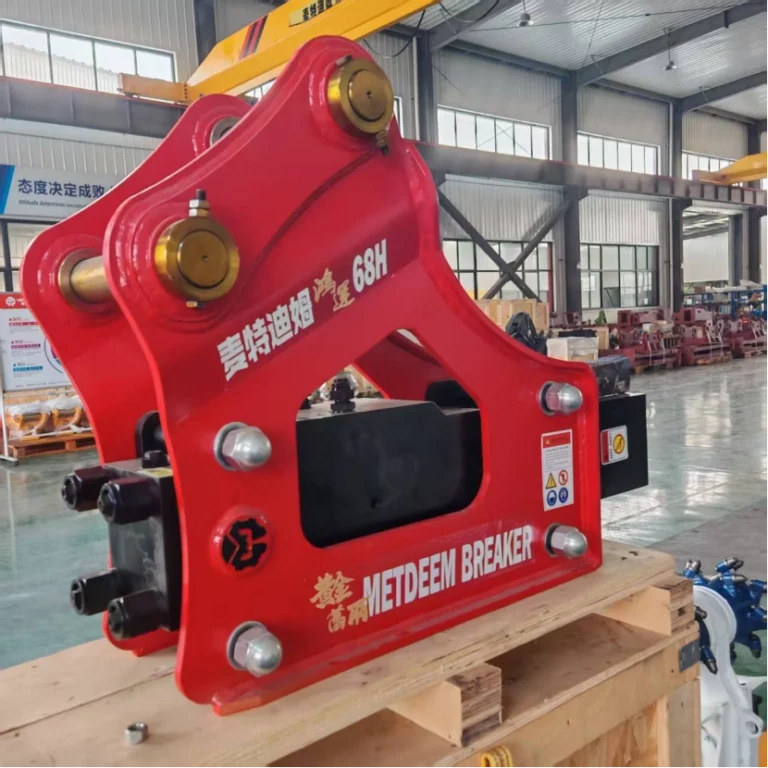
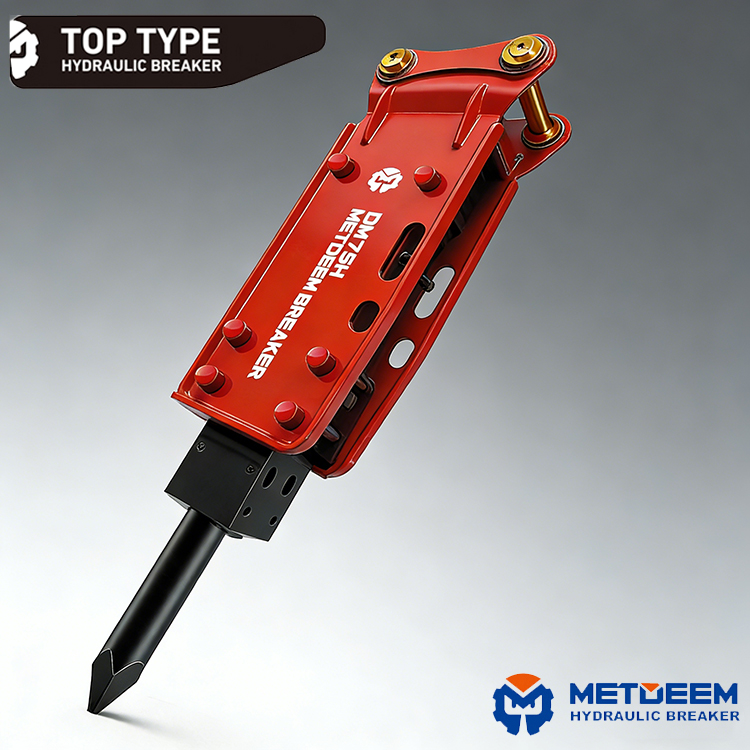
The same principle is used in demanding impact equipment such as máy phá thủy lực, where pistons, valves, cylinders, bushings, and chisels require different steel grades and heat-treatment methods. One material is rarely suitable for every component.
Check whether teeth, bushings, and pins are replaceable. A lower purchase price offers little benefit if a worn tip requires replacement of the complete jaw.
Consider Service and Future Attachments
Before ordering, confirm the availability of drawings, spare parts, installation guidance, and technical support. For fleets using several attachments, a suitable quick hitch can reduce changeover time, but the coupler and grapple must be checked as one system.
At METDEEM, we manufacture construction machinery and attachments for contractors, dealers, rental companies, and equipment owners. Our role is not limited to supplying the tool; we also help customers match the attachment to the carrier and application.
Mechanical Grapple Maintenance and Safety
Inspect the grapple before every shift. Small amounts of pin movement can become serious wear if ignored, while a damaged tooth or cracked weld may release material without warning.
A basic maintenance routine should include:
- Grease all specified pivot points
- Check pins, retainers, and bushings
- Inspect welds and high-stress corners
- Measure excessive jaw movement
- Replace damaged teeth and wear plates
- Remove trapped wire and debris
- Confirm the mounting connection is locked
Operators must keep people outside the working radius and avoid carrying loads over workers or occupied vehicles. The load should remain close to the ground during travel. Never use the grapple’s side to push material unless the manufacturer approves that action.
Kết luận
A mechanical grapple turns an excavator into a capable material-handling machine without requiring a complex hydraulic system. Its simple linkage, low maintenance needs, and strong gripping action make it suitable for rocks, logs, demolition debris, and general site clearing. The best model is not always the largest or heaviest one. It must match the excavator’s linkage, lifting capacity, working material, jaw opening, and expected duty cycle. Buyers should also examine steel quality, replaceable wear parts, pin design, and technical support. When more precise movement or powered rotation is needed, a hydraulic grapple may be the better choice. Careful matching protects the carrier, reduces downtime, and gives the operator safer control of every load.
FAQs
Q: What excavator size can use a mechanical grapple?
A: Models are commonly available for 5,000–25,000 kg excavators; always verify the carrier’s lifting chart.
Q: Does a mechanical grapple need hydraulic oil flow?
A: No. It normally works through the excavator’s bucket cylinder and mechanical linkage.
Q: How often should mechanical grapple pins be greased?
A: Grease them daily or at the interval stated in the manufacturer’s maintenance guide.