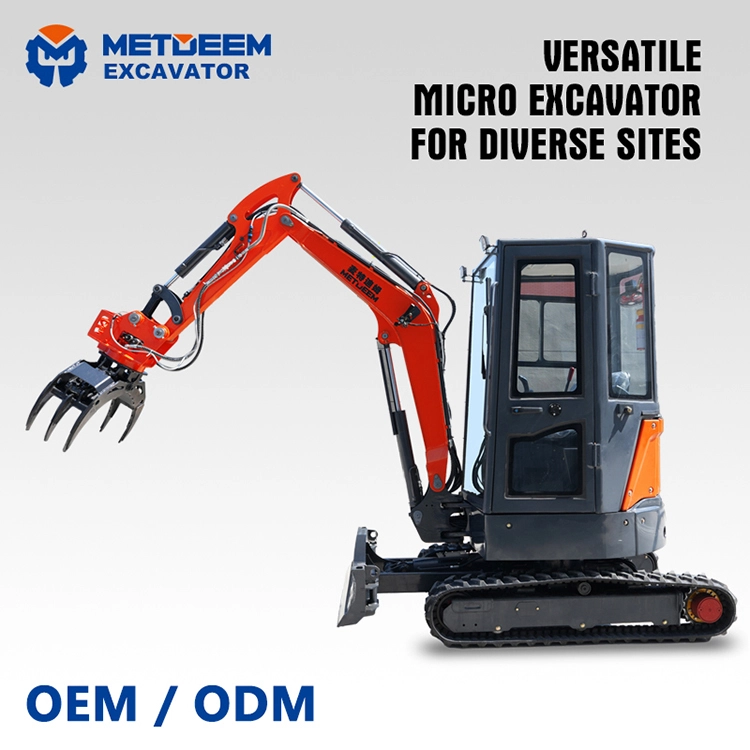
An excavator usually digs. However, the right attachment lets it pick, sort, stack, and load various materials. This versatility makes an excavator grapple highly valuable. You will often see them on demolition sites and recycling yards. They also work well in timber operations, farms, quarries, and general material-handling projects.
The ideal grapple depends on your daily tasks. For instance, logs require a completely different grip compared to scrap steel. Mixed demolition debris demands precise control and good sorting ability. On the other hand, light yard work might not require a powered rotating attachment. You should choose based on your excavator size and the specific material. Do not pick an attachment just by its appearance. This careful selection prevents poor handling, reduces excess wear, and stops wasted investment.
What Is an Excavator Grapple?
An excavator grapple is a special attachment featuring two or more jaws. These jaws open and close to secure material. The unit connects directly to the excavator arm. It grabs loads using either the machine’s standard movement or extra hydraulic power. Certain models can rotate. This feature allows the operator to place material perfectly without moving the whole machine again and again.
The industry currently focuses heavily on demolition-waste recovery and better equipment utilization. This trend makes proper grapple selection very practical. Separating materials directly at the worksite supports better reuse and recycling efforts. Meanwhile, rental fleets base their purchasing decisions on overall equipment productivity.
Main Grapple Types
Product names often vary among different suppliers. However, most excavator grapples fit into a few main working categories:
Mechanical grapple: Opens and closes using the standard excavator linkage or the bucket cylinder. It normally operates without a separate hydraulic circuit.
Hydraulic grapple: Uses one or more internal cylinders to move the jaws. It might also include a hydraulic rotator for extra flexibility.
Wood or log grapple: Features specially curved jaws. These are perfect for grabbing logs, thick branches, and similar long items.
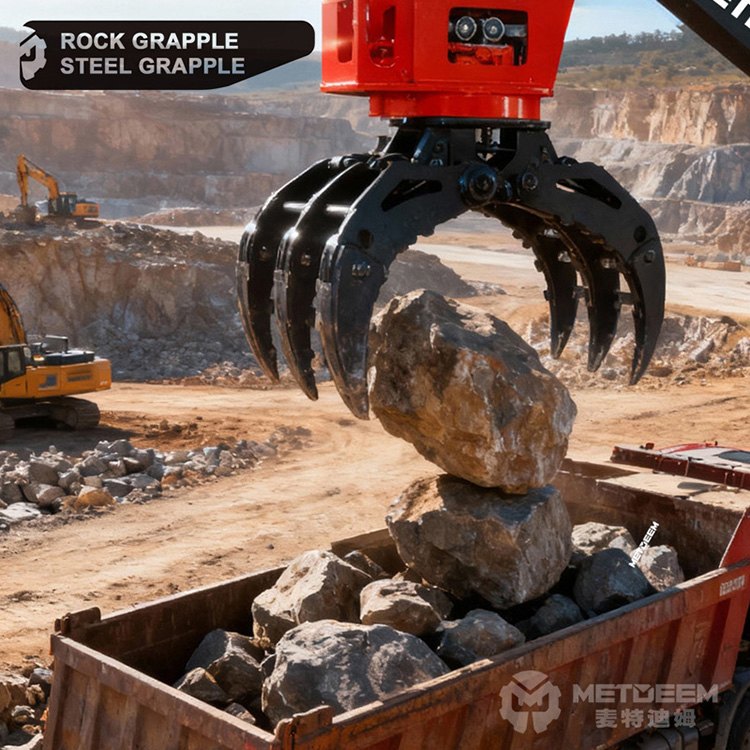
Rock grapple: Built with a unique shape and a strong jaw layout. It handles heavy stones and oddly shaped loads very well.
Steel grab: Specifically built for moving scrap steel and heavy metal pieces safely.
Sorting or demolition grapple: Helps operators pick up and separate mixed debris easily during demolition and recycling jobs.
Orange peel grapple: Employs multiple curved jaws to grab loose, broken materials. It works great for scrap metal, wood chips, or bulk waste.
METDEEM offers mechanical grapples, steel grabs, rock/log grapples, orange peel grapples, and sorting grapples within its grapple attachment range. Your final choice relies heavily on the specific load and the daily work cycle. You must also consider the available hydraulic system on your excavator.
Where Excavator Grapples Are Used
A grapple proves highly valuable when a standard bucket fails to hold a load securely. It is also perfect when workers must separate different materials on site. The tool greatly reduces dangerous manual handling. Furthermore, it lets the excavator keep working long after the initial digging or breaking tasks finish.
Demolition and Recycling
During complex demolition tasks, a sorting grapple easily picks out structural pieces, timber, concrete chunks, and mixed trash from a large pile. The operator can quickly separate these items before dropping them into specific containers or processing zones. This capability is incredibly useful when material recovery and neat site organization form a major part of the project plan.
A rotating sorting grapple can position oddly shaped pieces much more precisely than a standard fixed jaw. METDEEM’s hydraulic demolition sorting grapple handles tough demolition and material sorting tasks. Buyers select this product based on the excavator tonnage, required hydraulic flow, and working pressure. The specific material being handled also plays a big role in the final choice.
Forestry, Timber, and Yard Work
Wood grapples frequently collect, stack, and load heavy logs, branches, and thick brush. In busy timber yards, they easily move wood bundles toward a waiting truck or a processing line. On large farms and land-clearing jobs, these tools help remove fallen branches and tall vegetation right after the initial cutting process.
The actual jaw opening and the tine shape matter a lot. A grapple that is too narrow will likely struggle with large wood bundles. Conversely, a unit that is too heavy will reduce the overall lifting capacity of the excavator. For mixed wood and stone jobs, a METDEEM hydraulic rock/log grapple serves as an excellent multi-material option. It is available with either a single-cylinder rotary system or a double-cylinder rotary system to meet different working requirements.
Scrap Steel and Heavy Material Handling
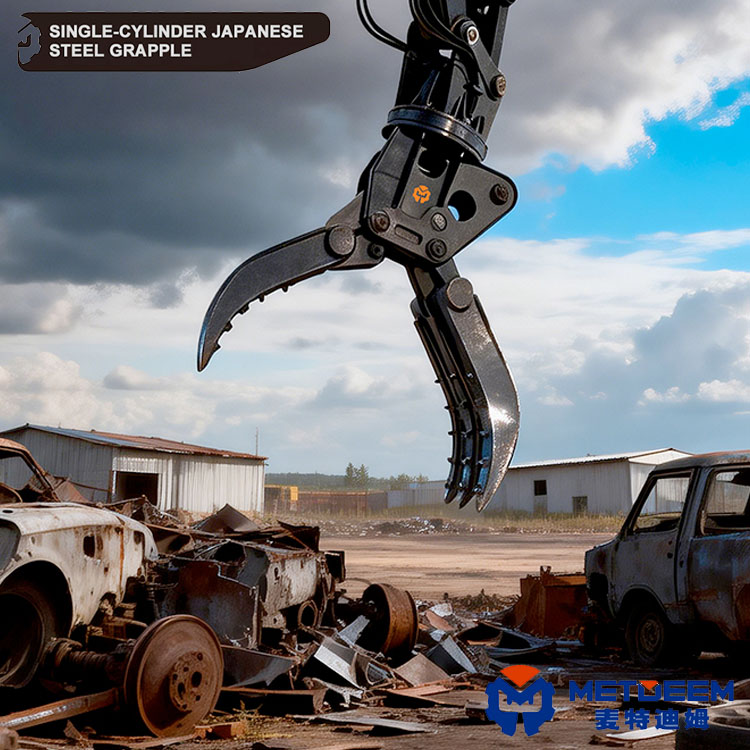
Scrap steel is typically dense, highly irregular, and very sharp. Therefore, a steel grab requires a proper jaw shape and immense strength to match the tough material and heavy duty cycle. A rotating design often helps the operator align awkward pieces during the loading process. However, adding rotation also introduces extra hydraulic needs and more routine service checks.
METDEEM’s hydraulic rotation steel grab comes in both single-cylinder and dual-cylinder types for efficient steel handling. Still, buyers must always confirm the exact load limits of the excavator. They should also check the rated capacity of the grapple before trying to lift any heavy metal pieces.
Mechanical or Hydraulic: Which Type Fits?
The primary choice comes down to whether simple operation or powered control matters more for your daily work. A basic mechanical unit suits simple gripping tasks perfectly. In these cases, the standard linkage of the excavator provides plenty of movement. Alternatively, a hydraulic grapple offers much more direct jaw control. It can also support full rotation. However, this type requires fully compatible hydraulics and usually involves more internal components to maintain over time.
When a Mechanical Grapple Makes Sense
A mechanical grapple often makes perfect sense when:
The required work is occasional or quite simple.
The chosen excavator lacks a proper auxiliary hydraulic circuit.
The buyer prefers to maintain fewer hydraulic parts.
The tool will only handle wood, yard waste, or general materials strictly within its safe design limits.
METDEEM’s mechanical grapple uses the normal arm or bucket-cylinder movement of the excavator to operate the strong jaws. The official product information advises buyers to check a few details carefully. You should verify the excavator tonnage, exact pin dimensions, and total opening width. You must also consider the specific material type before making a final selection.
When to Choose a Hydraulic Grapple
Hydraulic models prove incredibly useful when operators require tightly controlled jaw movement. They also help with faster repeated work cycles or necessary rotation for exact positioning. These attachments are perfectly suited for careful sorting, heavy scrap handling, and busy timber yards. They excel in any job where the operator must place the load very accurately.
This extra control definitely requires some additional technical checks. You must confirm the auxiliary flow, safe working pressure, and proper hose connections. It is also vital to check the rotator requirements and the total weight of the attachment itself. A grapple that exceeds the hydraulic or lifting limits of the carrier machine will likely perform poorly. It can even create highly unsafe loading conditions on the site.
How to Select the Right Grapple
Please describe in your price request the type of material you process and the typical job cycles for processing that material. “General handling” is far too general to be useful in establishing an appropriate jaw configuration and opening width. Materials like short logs, long timber, loose scrap metal, heavy concrete, etc. all process very differently.
Match the Attachment to the Excavator
Please verify these important points with your chosen supplier:
Exact operating weight of the excavator.
The total weight of the grapple and its maximum safe load
The specific pin diameter, exact pin spacing, and correct mounting width.
The maximum jaw opening size and the overall tine configuration.
The required hydraulic flow and safe working pressure for a powered model.
Any special rotation requirements for the job
Average density of the material and typical size of objects made of it.
The number of daily work hours · The degree of impact on equipment
Don’t just choose by Ton of the excavator. Two models of the same weight can have totally different auxiliary circuits, different pins and also different lifting capabilities. Request written confirmation of compatibility from the supplier before ordering.
Before moving the attachment for storage, carry out equipment checks on all items such as pins, bushings, hoses etc. Check for any signs of leakage from the cylinders, and insp Productivity, Maintenance, and Total Cost
A good grapple is so important to increase the tasks that one single excavator is able to carry out. But, in order to achieve true productivity, the right grapple has to be matched with the right task. If the grapple jaw is too small for the size of the material to be moved then further cycles will be required. The weight of the tool could also reduce the lifting power of the carrier machine. Additionally, a rotating hydraulic grapple has to be suited to the current circuit, otherwise operation may be slow or even fail.
ect the jaw faces for wear. Check all welds for any signs of breakage. If the unit is fitted with a rotator, inspect this area also. Ensure that the attachment is left on the ground safely before clearing round any tangled wires or brushing off any stuck debris. Ensure the machine is fully switched off before leaving the site. It is also the fleets rental responsibility to log any damage or wear on the grapple between each hire to ensure it is left in good condition for the next user.
METDEEM manufactures durable excavators and dependable attachments. These tools serve construction, mining, forestry, farming, and general material handling. We advise sharing your specific excavator model with our team. Please provide accurate pin sizes and complete hydraulic specs too. You should explain the working material clearly before picking a grapple. Such details allow us to suggest the best setup for your daily tasks. We avoid relying merely on general product labels.
Conclusion
Contractors use excavator grapples to handle difficult to manage materials which normal buckets cannot dig or move safely. Simple mechanical grapples are available for basic gripping tasks. More complex hydraulic grapples provide powerful jaw action and can also be used to rotate items such as trees for easy sorting and placement. Wood/log, rock, steel, orange peel and demolition grapples are available to handle specific types of loads and the chosen grapple must match the material to be moved with the intended method of work.
Check the actual capacity of your excavator, and the maximum lifting capacity in peak situations, before buying any attachment. Check also for the specific mounting dimensions and weight of the grapple. It is also important to check for the maximum opening of the grapple jaws and the specific hydraulic requirements of the grapple. We must also take into account the long-term costs for maintenance and spare parts instead of just buying something for low price “on the spot” only. The right matching of equipment will enable one single excavator to perform not only digging but also sorting, stacking and loading of material in an efficient manner. This will also save a lot of manual work and increase the overall productivity of the machine.
FAQs
Q: What is an excavator grapple used for?
A: This attachment securely grips, sorts, stacks, and loads various difficult materials. Common examples include heavy logs, large rocks, metal scrap, and mixed demolition debris.
Q: Is a hydraulic grapple better than a mechanical grapple?
A: Hydraulic grapples offer very precise, powered jaw control for complex tasks. Mechanical models are much simpler overall. They usually do not need extra auxiliary hydraulics to function well.
Q: How do I choose the right excavator grapple?
A: You must carefully match the chosen grapple to your specific excavator capacity and exact pin dimensions. Always consider the target material, required jaw opening, total weight, and detailed hydraulic specifications.