Demolition is no longer just about knocking a building down. Today, contractors require faster concrete processing. They also need cleaner material separation and safer work zones. Better control over waste disposal costs is essential as well. In crowded cities, this pressure grows even heavier. Job sites are getting smaller, while timelines grow much tighter. Furthermore, rules for handling waste are becoming far more strict.
A hydraulic pulverizer solves many of these exact problems. It mounts directly onto an excavator. Once attached, it crushes concrete and pulls apart rebar. It also shrinks down large debris chunks. This helps prepare demolition waste for proper recycling. For contractors, equipment rental companies, and site owners, this tool is highly valuable. It can easily change a chaotic demolition site into a neat, highly productive workspace.
What Is a Hydraulic Pulverizer?
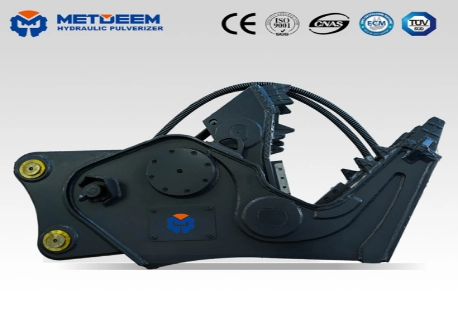
A hydraulic pulverizer is a heavy-duty excavator attachment. Workers use it to crush hard concrete and manage heavy demolition debris. The tool relies on the excavator’s hydraulic power. This power pushes a strong moving jaw against a solid fixed jaw. As these jaws shut tightly, they shatter concrete into tiny fragments. This action also uncovers or removes the steel hidden inside.
This function makes it quite different from a standard hydraulic breaker. A breaker provides constant, heavy impacts to split tough material. In contrast, a pulverizer uses immense crushing force. This force shrinks the material size and strips concrete away from the rebar. Both attachments are incredibly helpful. However, they handle totally different tasks on the job site.
A hydraulic pulverizer is commonly used for:
- Secondary demolition after a structure has been brought down
- Ground-level concrete processing
- Rebar separation
- Bridge, floor slab, column, and foundation crushing
- Construction and demolition waste recycling
- Site cleanup before loading and transport
À METDEEM construction machine, we supply customers with tough machines and reliable attachments. These tools match actual demolition, construction, mining, farming, and quarry tasks. We build our products specifically for contractors. These professionals demand real, practical performance rather than just fancy specifications.
Why Hydraulic Pulverizers Are Becoming More Important
Recent construction trends all point toward one clear goal. Contractors desire more flexible equipment and fewer machines on the site. They also want quicker attachment swaps and improved waste recovery. Recent industry reports on 2026 construction equipment trends focus heavily on this shift. They highlight the need for compact machines, smarter fleets, and highly adaptable jobsite tools.
At the same time, managing construction and demolition waste remains a massive challenge. The EPA notes that C&D materials contain very heavy waste. This includes items like concrete, asphalt, scrap metals, bricks, scrap wood, and gypsum. Fortunately, crews can process many of these materials for new, useful purposes. They do this through sustainable construction and demolition material management.
Faster Concrete Processing
After the primary demolition phase ends, massive concrete chunks slow every task down. These huge blocks are tough to load and difficult to transport. They are also very hard to sort properly. A hydraulic pulverizer shatters those massive chunks into much smaller, manageable fragments.
This helps crews:
- Reduce oversized debris
- Load trucks faster
- Make stockpiles cleaner
- Prepare concrete for crushing or reuse
- Lower the time spent on manual breaking
Working speed is crucial, but precise control matters just as much. A high-quality pulverizer grants the operator direct control over exactly where the concrete fractures. Consequently, this creates less random impact and prevents scattered debris. It also ensures a much smoother workflow around the main excavator.
Cleaner Rebar Separation
Reinforced concrete causes major headaches during any demolition project. Concrete and steel react very differently, yet they stay tightly bound together. If crews fail to separate them properly, the recycling process turns slow and highly expensive.
A hydraulic pulverizer crushes the hard concrete while uncovering the embedded rebar. Many units feature sharp cutter blades or tough, wear-resistant knife blocks. These parts easily cut through smaller steel sections. Ultimately, this creates a much cleaner material separation right at ground level.
This is useful for:
- Recycling yards
- Bridge demolition
- Factory renovation
- Road and foundation removal
- Large building teardown
- Scrap recovery work
METDEEM hydraulic pulverizers are built to shrink debris size effectively. They also clear job sites quickly and separate concrete from rebar right after the main demolition. Our products allow contractors to shift from rough breaking to neat material handling in far fewer steps.
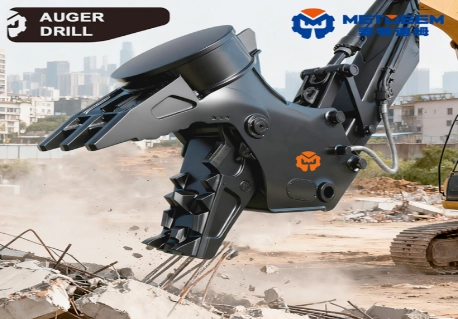
Main Parts of a Hydraulic Pulverizer
Before buying a pulverizer, users must understand its basic structure. Looking only at the price is never enough. The jaw design, cylinder protection, pins, and teeth all matter greatly. In addition, the oil flow and overall material strength directly affect the tool’s service life and daily output.
The most important parts include:
- Fixed jaw and moving jaw: grip and crush concrete
- Hydraulic cylinder: provides closing force
- Main frame: carries stress during crushing
- Replaceable teeth: bite into concrete and reduce wear cost
- Cutter blade or knife block: helps cut rebar and steel pieces
- Pins and bushings: support jaw movement
- Rotation motor, optional: allows multi-angle positioning
- Lubrication channel: helps protect moving points under heavy use
Jaw Design and Crushing Force
The jaw is where the primary action takes place. A broad jaw opening lets the tool grip bulky materials. High crushing power helps break down thick slabs. It also handles beams and reinforced concrete effectively. Swap-out teeth are crucial too. This is because site rubble causes heavy wear. When operators can change these parts quickly, repair times go down.
As an example, METDEEM hydraulic pulverizer models feature maximum jaw openings from 420 mm to 1100 mm. They deliver a crushing force from 170 kN to 1350 kN. This broad selection lets buyers pick the right tool. They can perfectly match it to light, medium, or heavy site projects.
Cylinder Protection and Frame Strength
The hydraulic cylinder on a pulverizer operates under intense pressure. Sometimes the piston rod gets hit by flying rubble. When this happens, scratches can cause fluid leaks. These leaks often lead to costly repairs. To prevent this, an inverted cylinder layout shields this vital component. It stays safe during dusty and harsh operations.
The main frame is equally crucial. Tough demolition tasks generate twisting forces. They also create side loads and constant impacts. To handle this, builders use high-strength manganese steel and reinforced welds. Special alloy pins and built-in grease channels add extra durability. These features ensure the attachment survives very long working shifts.
À METDEEM hydraulic pulverizer, we rely on rigid structures and replaceable wear components. We offer optional rotation features. We also match our models to various excavator sizes. Our main goal is to help buyers reduce machine downtime. This keeps the attachment running smoothly in tough environments.
How It Transforms a Demolition Site
A hydraulic pulverizer improves more than just a single job. It impacts the entire workflow of the site. This ranges from the driver in the cab down to the scrap pile. Processing concrete early makes the material much cleaner. As a result, loading and sorting become quite simple. Transport and recycling get much easier too.
For lots of contractors, this efficiency makes the tool a smart investment. The attachment does much more than simply break stuff apart. It cuts down waiting periods between different work crews. It also lowers the need for manual rework. Overall, it keeps the entire job site neat and orderly.
Less Manual Labor
Breaking things by hand is a slow and exhausting process. It carries many safety risks as well. Ground workers often deal with flying rock chips and loose rubble. They also face heavy dust and loud noises. A pulverizer changes this dynamic completely. It allows the operator to sit safely inside the excavator cab. From there, they can crush and sort materials at a secure distance.
This supports:
- Lower worker exposure to broken concrete
- Fewer hand-held tool hours
- Better control around unstable debris
- Reduced physical fatigue
- Fewer people needed in the immediate danger zone
No attachment removes every risk. But it can reduce the need for people to stand close to heavy debris.
Better Material Flow
A clean demolition site is easier to manage. When oversized concrete is quickly reduced, trucks can be loaded more evenly. Rebar can be separated into a clearer pile. Crushed material can be moved to recycling or reused as fill, depending on local rules and project requirements.
Hydraulic pulverizers are especially helpful when paired with other Annexes METDEEM, such as quick hitches, buckets, grapples, and compactors. With the right attachment mix, one excavator can break, crush, sort, load, and clean the area with fewer machine changes.
How to Choose the Right Hydraulic Pulverizer
The right pulverizer should match the excavator and the job. A tool that is too small will work slowly and wear fast. A tool that is too large can overload the carrier, reduce control, and increase fuel use.
Start with the excavator’s operating weight, then compare oil flow, pressure, attachment weight, jaw opening, and material type. Ask what the tool will process most often: slabs, walls, bridge decks, columns, foundations, or mixed debris.
Facteurs clés de sélection
Check these points before ordering:
- Carrier class: METDEEM models cover 3-5t to 30-40t excavators
- Oil flow: model needs range from 80-120 L/min to 200-300 L/min
- Working pressure: common range is 24 MPa to 32 MPa
- Weight: model weight ranges from 270 kg to 2700 kg
- Jaw opening: larger material needs wider opening
- Rotation: useful for narrow or complex sites
- Wear parts: teeth and blades should be replaceable
- Maintenance access: lubrication points should be easy to reach
For indoor demolition, narrow urban sites, and structural work with many angles, rotation can save time. The operator can position the jaw without moving the excavator again and again.
Practical Maintenance for Longer Life
A hydraulic pulverizer works in dust, steel, concrete, shock, and pressure. Maintenance is not optional. It is the difference between steady work and sudden failure.
Daily checks should include hoses, pins, bolts, teeth, blades, grease points, and hydraulic leaks. If the jaw teeth are badly worn, crushing efficiency drops. If pins lack grease, wear spreads quickly. If oil flow is wrong, the cylinder and hydraulic system may suffer.
Good maintenance habits include:
- Grease pivot points every working day
- Check hoses for cracks or rubbing
- Inspect teeth and cutter blades
- Tighten loose bolts
- Watch for oil leaks around the cylinder
- Replace worn pins and bushings on time
- Keep concrete dust away from exposed moving parts
- Store the attachment in a dry area when not in use
METDEEM supports OEMs, dealers, rental companies, and end users through manufacturing, parts supply, and after-sales service. On our À propos de nous page, we share our focus on durability, quality, parts supply, and service, and our products are used across many global jobsite conditions. We also meet customers through industry events shown on our exhibition page, where real project feedback helps guide our product work.
Conclusion
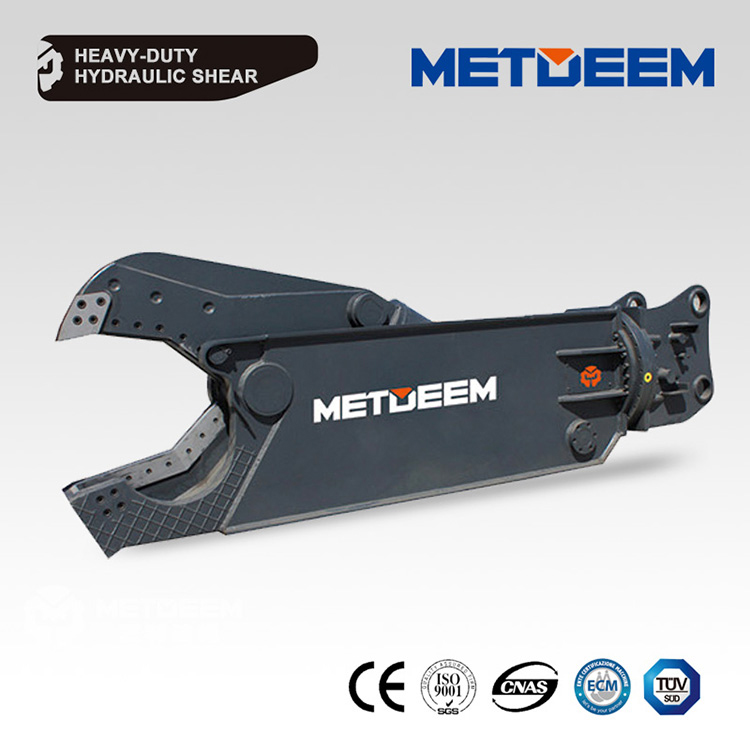
A hydraulic pulverizer can transform a demolition site by turning large, mixed concrete debris into smaller, cleaner, easier-to-handle material. It improves concrete processing, helps separate rebar, reduces manual labor, and supports recycling-focused demolition. For contractors facing tighter schedules, labor pressure, urban work limits, and rising waste-handling costs, it is more than an attachment. It is a production tool. The best result comes from correct model matching, proper oil flow, regular maintenance, and a clear jobsite plan. Choose the right hydraulic pulverizer, and demolition becomes faster, safer, and cleaner.
FAQs
Q: What is a hydraulic pulverizer used for?
A: A hydraulic pulverizer crushes concrete, separates rebar, and reduces demolition debris size.
Q: What oil flow does a hydraulic pulverizer need?
A: METDEEM models require 80-120 L/min to 200-300 L/min.
Q: How heavy is a hydraulic pulverizer?
A: METDEEM hydraulic pulverizer models range from 270 kg to 2700 kg.