Urban construction keeps changing quickly. Contractors now handle projects beyond wide open areas that offer easy truck access, plenty of turning space, and large storage zones. Instead, many jobs occur in tight streets, residential yards, road repair sections, utility corridors, small demolition areas, farms close to town, and indoor or semi-indoor locations. In these spots, the wrong machine can delay the entire project.
For contractors, municipal teams, rental companies, landscapers, and small project owners, the aim stays clear. They seek to complete more tasks in limited space. This approach reduces idle time and avoids frequent repair issues. This guide offers practical steps to select compact equipment for narrow urban job sites.
Urban Sites Reward Multi-Purpose Machines
In open construction, several large machines often work together. A contractor may require one machine to dig, lift, backfill, grade, break concrete, clean debris, and load a small truck. For this reason, compact machines with strong attachment support gain more value.
A mini excavator equipped with the proper bucket, breaker, or grapple can handle numerous tasks that once required separate machines. A mini skid steer loader moves soil, sand, gravel, bricks, and waste efficiently through narrow spaces. A backhoe loader offers real value when a project demands both loading and digging functions. However, it requires more space for turning than a compact excavator does.
For readers comparing machine families, METDEEM’s construction machine range provides a helpful starting point across excavators, loaders, backhoe loaders, and bulldozers.
Match the Machine Type to the Main Job
Before you consider price, engine power, or attachments, define the job you perform most often. Many buyers make the mistake of selecting a machine for the hardest project they can imagine. They then use it every day on smaller tasks. In those cases, the machine becomes too heavy, too wide, or too costly to move.
Mini Excavator for Digging, Trenching, and Utility Work
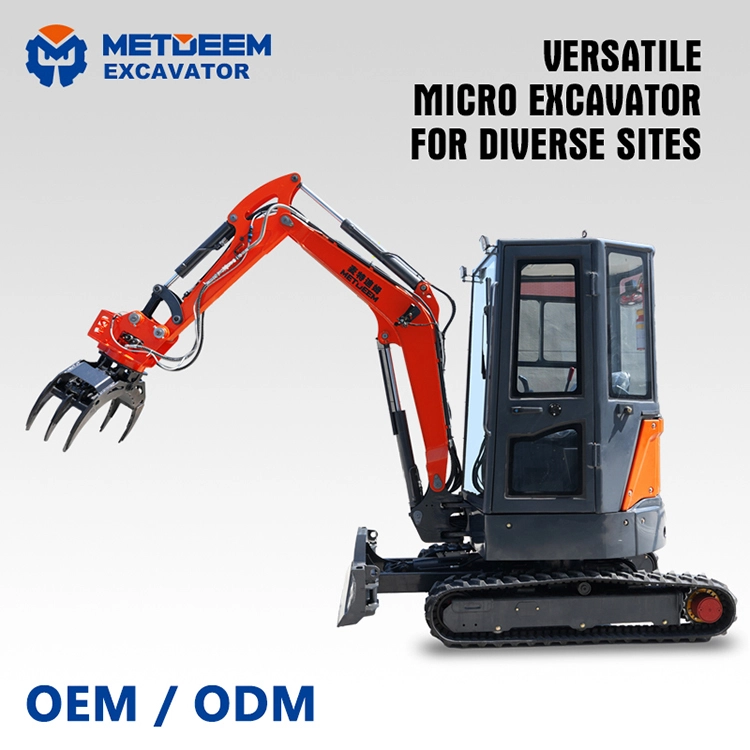
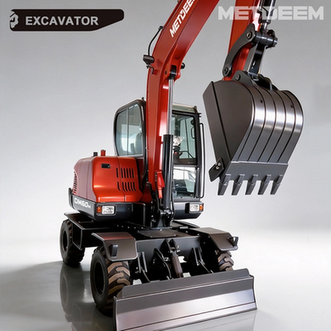
A mini excavator often serves as the first choice for narrow urban job sites. It is built for digging, trenching, foundation repair, drainage work, landscaping, small demolition, and precise soil removal. Its upper structure can rotate. This feature allows the operator to work without moving the undercarriage too often. As a result, it saves time in tight spaces.
For narrow access, width matters. A machine that is under 1.9 meters wide can enter many residential and municipal areas where larger equipment cannot pass. Our 6-ton small crawler excavator is designed for courtyard construction, landscaping, municipal maintenance, agricultural water work, and narrow space operations. It balances digging ability with a compact body. Therefore, the operator can work where larger machines would cause trouble.
Mini Skid Steer Loader for Material Handling and Fast Site Movement
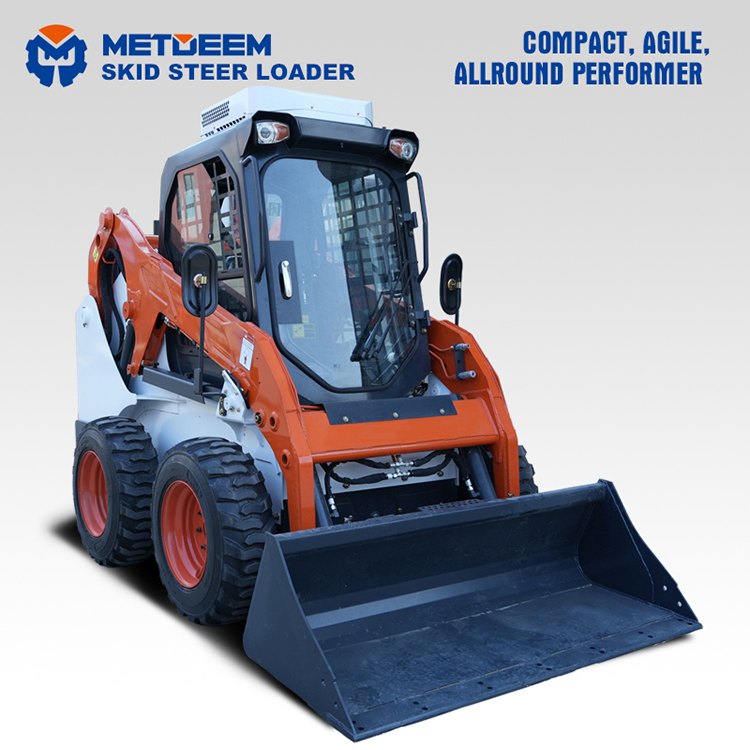
A mini skid steer loader offers a smart option when the job involves moving materials more than deep digging. It can carry soil, sand, gravel, blocks, tools, and waste through narrow paths. It also helps with landscaping, small road repair, farm work, site cleaning, and backfilling.
Kami DM08 mini skid steer loader has 50.1 kW gross power, 705 kg rated operating capacity, and 2653 kg operating weight. These figures make it suitable for many compact jobs where a full-size loader would be too large. In narrow job sites, a loader like this can reduce manual labor.
Key Specifications Buyers Should Check Before Purchase
Once you know the machine type, specifications can guide your final choice. Do not read them as isolated numbers. A compact machine is a system. Weight affects stability and transport. Hydraulic flow affects attachment use. Width affects access. Bucket capacity affects cycle time. Maintenance design affects long-term cost.
Operating Weight and Ground Pressure
Operating weight influences stability, lifting capacity, fuel consumption, transport requirements, and ground pressure. A heavier compact excavator often delivers superior digging performance and feels more stable during operation. However, it may cause damage to soft surfaces and call for a larger trailer. In contrast, a lighter machine proves easier to transport. Yet it can lose stability when handling heavy loads.
Compact construction equipment should match both the job and the surface. On soft soil, wide tracks can reduce sinking. On paved streets, rubber tracks may reduce surface damage. In mixed conditions, track choice can affect both safety and repair cost.
Width, Turning Radius, and Working Range
Width decides access. Turning radius decides movement. Working range decides whether the operator can finish the task without constant repositioning. Many buyers focus on digging depth but forget side clearance. In a narrow street, a machine with enough digging depth may still be hard to use if it cannot swing safely.
A compact excavator with a narrow body and small turning radius can work near walls and fences with better control. For trenching along buildings or drainage repair beside roads, this can make a big difference.
Hydraulic System and Attachment Compatibility
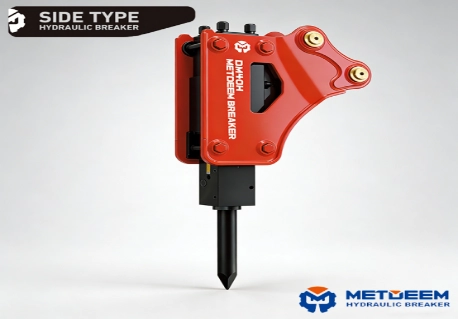
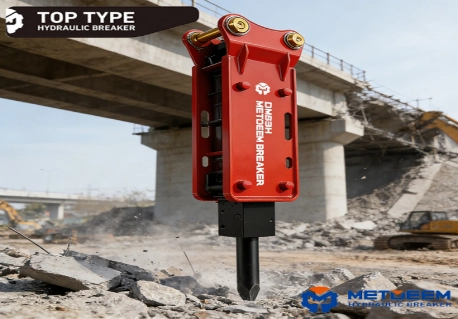
Hydraulic performance matters because many compact machines depend on attachments. If the hydraulic system cannot supply the needed pressure and flow, then a breaker, auger, grapple, or crusher bucket will not perform well. Poor matching can also increase oil temperature and reduce the service life of components. A strong hydraulic system is not only about power. It must stay stable during repeated work cycles. If the oil temperature climbs too high, the machine may slow down. In addition, seals may wear out faster, and internal leakage may rise. Good daily checks and correct oil selection remain important for long service life.
Operator Comfort and Safety Affect Productivity
A compact machine may stay small in size, yet the operator often works long hours inside the cab or right behind it. Limited visibility, constant vibration, loud noise, and stiff controls can lower precision and increase operator tiredness. In tight urban spaces, even one small error may harm nearby walls, underground pipes, passing vehicles, or other public assets.
Look for safety and comfort features such as:
Clear sight lines to the bucket and tracks
Stable cab or operator station
Good control response
Low vibration
Easy-to-read instrument panel
Rear-view support where needed
Strong protective structure
Safe entry and exit points
Operator skill also matters. Compact construction equipment works close to people and buildings. The crew should mark underground utilities, plan travel paths, separate pedestrians, and use spotters when visibility is poor. Safety is not only a machine feature. It is a job site habit.
Buying for Total Cost, Not Just Purchase Price
The cheapest machine on the first invoice may become costly after months of use. Buyers should think about fuel, parts supply, attachment cost, transport, maintenance time, resale value, and support. A machine with lower downtime can be more valuable than one with a lower purchase price.
A narrow urban site gives little room for delays. If a machine stops in a small street or residential yard, the whole crew may stop with it. This is why technical support and parts planning should be part of the buying decision.
At METDEEM, we focus on practical equipment support, spare parts response, and technical guidance for users who need stable performance in real working conditions.
Kesimpulan
Choosing the right compact construction equipment for narrow urban job sites is a practical balance between size, power, access, attachments, maintenance, and support. A mini excavator may be best for trenching and precise digging. A mini skid steer loader may be better for fast material handling. A backhoe loader can serve mixed tasks when there is enough operating space. The right choice starts with the job site, not the catalog. Measure access, study the soil, list daily tasks, and think about long-term service before buying. With the right machine and attachments, contractors can work faster, reduce manual labor, avoid costly downtime, and handle tight urban projects with more confidence.
FAQs
Q: What is compact construction equipment used for?
A: Compact construction equipment is used for digging, loading, grading, trenching, landscaping, and small demolition.
Q:How much fuel can a small crawler excavator use?
A:About 5 L/h under normal digging work, depending on soil and operator habits.
Q:What mini skid steer size suits narrow sites?
A:A 705 kg rated capacity and 2653 kg operating weight suit many small urban jobs.