How to Choose Excavator Forestry Attachments for Harsh Working Conditions
Shifting damp logs following a huge rainstorm is quite different from organizing dry wood in a flat yard. Mud impacts your machine’s grip. Rocks will quickly harm grapple teeth. Tree limbs might hit bare hoses. At the same time, severe weather alters how hydraulic fluid acts and changes seal function.
Picking excavator forestry attachments must start with your real jobsite surroundings. First, figure out the exact material and the specific chore. After that, inspect the base machine and the hydraulic setup. You also need to look at the tool’s frame and its upkeep demands. This method allows builders, timber workers, machinery sellers, and hire firms to filter their choices. They can do this without just trusting a basic “heavy-duty” sticker.
Define Your Forestry Tasks and Working Conditions
A forestry attachment works best only if its shape fits the wood, the moving style, and the location. Before you look at different types, write down what the digger needs to pick up. Note how frequently it will run. Also, mark down where every action will happen. These details change a vague job idea into exact technical rules for the seller.
Identify the Materials and Handling Tasks
Begin by looking at the wood itself. Tall, straight trees need a distinct jaw shape compared to scattered twigs or messy storm rubbish. Big logs demand a tight grip to stay put. On the other hand, brush, stumps, and jagged scrap might need a bigger mouth. They also need a design that drops the load without getting it stuck.
Common forestry tasks include:
· Putting logs on and taking them off trucks
· Grouping wood by size or quality
· Making solid wood piles
· Clearing dropped trees following bad weather
· Gathering limbs, stumps, and scrub
· Splitting timber away from rocks or building trash
· Preparing ground for streets, crops, or pipe laying
Write down the normal log width, length, rough weight, and planned daily effort. Also, think about whether the driver has to turn every item before setting it down. A basic hoist job might not demand a motorized spinner. However, precise piling usually requires one.
Assess Mud, Rocks, Temperature, and Site Access
Tough settings need to become exact buying questions. In damp or dirty spots, check how simply dirt washes off the main body, the metal pegs, and the bending parts. Question the dealer about rust defense and lube spots. You should also ask about seals and where the fluid parts sit.
Stony ground speeds up damage to the grabber teeth, jaw borders, pegs, and sleeves. Cold weather changes fluid thickness and makes seals less bendable. Meanwhile, hot weather can push up fluid warmth during extended work hours. At distant camps, a tiny broken pipe or snapped peg might halt work for days. This happens if spare bits are not nearby.
The floor state also alters the base machine’s balance. Bumpy earth, mushy dirt, sharp hills, and tight entryways can lower the safe weight that an excavator can manage.
Match the Attachment Type to the Job
You will not find one perfect grabber for every timber job. Mechanical, hydraulic, and spinning versions use varied steering styles. They also put distinct strains on the base unit. Shoppers ought to weigh them based on item grip and task speed. They must also look at placement needs, fluid power, repair ease, and the full tool mass.
Mechanical Grapples for Simpler Handling
A mechanical grapple works well for plain hoisting, field clearing, and item shifting. It is good when motorized jaw steering is not highly needed. Its basic build can lower fluid power needs. This makes daily upkeep much more straightforward.
Even so, purchasers must still verify the spread width, the tooth layout, and the tool mass. They need to check the fitting sizes and the working style. A mechanical grapple is never a fix-all timber tool. It might give less grip power when the driver handles wood of highly mixed sizes. It also struggles when sorting costly timber or dropping items carefully.
METDEEM provides mechanical and hydraulic grapple options for various excavator scales and item-moving chores. We suggest picking the control style only after you review the exact chore and the base machine details.
Hydraulic Log Grapples for Controlled Handling
A hydraulic log grapple grants the driver direct command over the jaw action. It is highly fit for lifting wood, grabbing odd-shaped stuff, and making tall piles. It is also great for managing blended timber scrap.
Compare the following details:
· Widest jaw stretch
· Total tool mass
· Count and form of the teeth
· One- or two-cylinder build
· Needed fluid speed and running pressure
· Grip strength across the whole jaw sweep
· Spot of the pushers, pipes, and lube dots
A one-cylinder type might fit smaller timber and rapid lifting rounds. A two-cylinder setup offers a tougher and more even hold for big trunks, rocks, or mixed heavy scrap. Your final pick must match the real load bulk. It should not just come from a basic wish for extra power.
Rotating Grapples for Precise Positioning
Motorized spinning allows the driver to twist a log without moving the whole excavator again and again. This boosts control when grading wood or filling trucks. It also helps when dropping logs in tight gaps or pulling apart twisted limbs.
A grapple that turns 360 degrees is highly handy when the item’s angle changes every move. Still, spinning adds extra mass, fluid needs, and more pipes. It brings extra bearings, seals, and upkeep spots. Check if the base unit has the needed extra pipe loops. Also, see if the twisting power fits the planned weight.
Do not pick a spinning tool just because it looks modern. It needs to cut down on extra driving. It should also better your drops in the real daily routine.
Check Excavator and Hydraulic Compatibility
Base unit matching means looking past just the digger’s scale. Two machines in the exact same weight group might possess varied hoist limits. They could have distinct fluid flows, arm shapes, and extra pipe lines. The grabber, the hitch, the spinner, the lines, and the lifted stuff must act as a single working mass. This matters at your needed arm stretch.
Verify Weight, Mounting Dimensions, and Lift Capacity
Inspect the excavator brand, peg width, and the gap between pegs. Look at the arm width, the hitch sort, and the tool fitting sizes. Make sure the whole joint fits together mechanically before you buy.
Next, calculate the combined working load:
· Grabber mass
· Spinner mass
· Hitch or link mass
· Pipe and joint mass
· Heaviest planned item mass
Match that final sum against the machine’s lifting guide. Do this at the real arm angle and working distance. A grabber might be rated for a certain digger group. Yet, it can still lower balance when shifting a lengthy trunk over the track side.
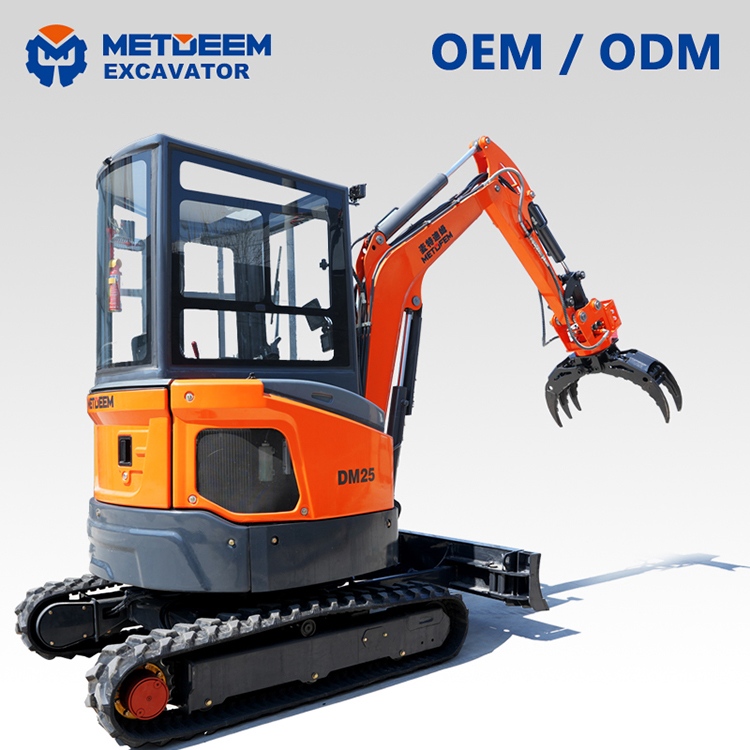
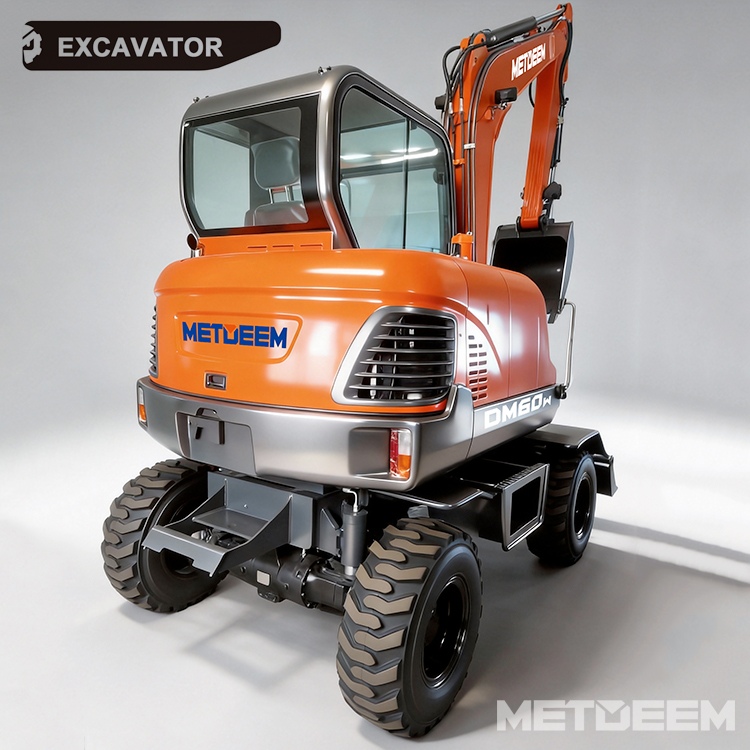
METDEEM’s construction machine range holds excavators and extra gear for diverse site chores. When pairing our goods, we treat the base machine and the tool as one total working unit.
Confirm Flow, Pressure, and Hydraulic Circuits
The digger’s extra fluid speed must sit inside the grabber’s stated limits. The push force must also satisfy the piston and the spinning group rules. Too much fluid speed creates high heat and rough jerks. It also ruins seals too early. Too little speed can cause sluggish jaw or turning actions.
A hydraulic grapple generally wants a loop for opening and shutting. A spinning model might demand an extra line or a proper steering valve. Inspect the joints, pipe width, and fluid return rules. Also, check the line paths and the free space during the arm’s full sweep.
Before requesting a quotation, provide:
· Digger brand and running mass
· Extra fluid speed in L/min
· Running and safety push force
· Peg and fitting sizes
· Normal wood sizes and masses
· Needed spinning action
· Camp pictures and weather limits
Forestry Grapple Selection Examples
Use the table to shortlist a grapple for the job. The figures are illustrative screening inputs, and each actual pairing requires the excavator and attachment manufacturers’ specifications.
| Job and site | Grapple to shortlist | Example checks |
| Move 300 kg logs in a firm, open yard | Mechanical grapple for simple moves | Check jaw grip on the smallest log, pin size and spacing, and lift capacity at the unloading reach. Check linkage fit on a linkage-driven model. |
| Clear wet logs and branches on rocky ground | Fixed hydraulic grapple with guarded hoses and replaceable wear parts | A jaw circuit delivering 80 L/min at 200 bar meets an example requirement of 60–90 L/min at 180–220 bar. Verify lift limits for the actual setup and ground conditions. |
| Align long logs when loading trucks in a tight yard | Rotating hydraulic grapple for frequent changes in log angle | Check the jaw and rotator separately. An example rotator requiring 20–30 L/min at 100–140 bar needs a compatible supply and return circuit as specified by the manufacturer. |
Worked Example for Wet Logs on Rocky Ground
Suppose a 15-tonne excavator with a 90 kW engine delivers 80 L/min across a 200 bar pressure difference at the grapple. That gives about 26.7 kW of hydraulic power at the attachment (80 × 200 ÷ 600). Both figures fall within the example jaw circuit’s range in the table. Use the machine’s auxiliary circuit data to confirm it can sustain that flow and pressure together. Check the manufacturer’s required relief setting and return backpressure separately.
A 650 kg grapple, 120 kg coupler, 20 kg of hoses and fittings, and a 900 kg wet log total 1,690 kg. If the excavator’s lift chart allows 1,500 kg over the side at a 6 m radius and the required height, with the listed components counted against that rating, the load exceeds the limit by 190 kg. Check whether a shorter reach, a lighter grapple, or a higher-capacity excavator works for the site. Confirm the lift chart applies to the actual ground conditions before lifting.
Prioritize Durability in Harsh Environments
Timber jobs put tools against hard hits, bending power, rough dirt, and wetness. They also face fast load shifts. Toughness must be graded by looking at clear frame parts and upkeep rules. Shoppers have to check the bits that hold the strain and friction. They should not just trust the tool’s mass or sales talk.
Inspect High-Wear and High-Stress Components
Look closely at the jaw ends, grabber limbs, main body, and hinge pegs. Check the sleeves, piston bases, spinning ring, and metal seams. These spots take constant strain. They usually decide how long the tool stays exact.
Question the maker about metal grades and brace spots. Ask about swap-out friction bits, peg locks, and sleeve changing. Thick metal by itself does not mean high strength. Force lines, seam goodness, hinge shapes, and guards against side bumps matter just as much.
Our hydraulic rock and log grapples pack boosted grabbing frames. They use tough metals for shifting timber, stone, and mixed debris. We also tell buyers to verify the digger’s limit, fluid speed, and push force. They must check fitting sizes prior to picking a unit.
Check Hose Protection, Sealing, and Temperature Suitability
Timber pipes might get hit by twigs. They can get stuck between items or scrape on the tool’s body. See if the pipes stay safe across the entire jaw and spinning sweep. They must not fold sharply, stretch tightly, or touch shifting bits.
Piston arms and rubber rings also demand guards against muck and rough trash. Ask if the chosen rings, lube, and fluid fit the planned weather. In freezing spots, heat up the fluid setup prior to lifting heavy stuff. In dirty spots, wash near the pegs, hinges, and pistons before the muck dries hard.
Simple reach is vital. If everyday washing and greasing eat up too much time, workers will likely skip them.
Compare Maintenance Needs and Lifetime Costs
The cheapest buying tag might not yield the lowest running expense. Weigh the setup fees, pipes, hitches, and friction parts. Look at greasing time, checking effort, fixing reach, and broken-down hours.
Lube spots must be simple to find. Pegs, sleeves, rings, teeth, and pipes ought to swap out without huge tear-downs. For far-off jobs, ask about spare parts stock and shipping speed. Also, check for guidebooks and distant tech help.
A smart test is the fee per running hour. You can also track the fee per cubic meter of shifted stuff. This path shows real output and broken hours. It avoids trusting empty gas-saving or lifespan boasts. Shoppers can also look at METDEEM’s manufacturing and service background and international exhibition activities before talking about buying and help.
Discuss Your Application with METDEEM
A solid tool tip needs exact job facts. Tell us your digger brand, fluid speed, and push force. Share the fitting sizes, item bulk, camp state, daily effort, and your liked shifting style.
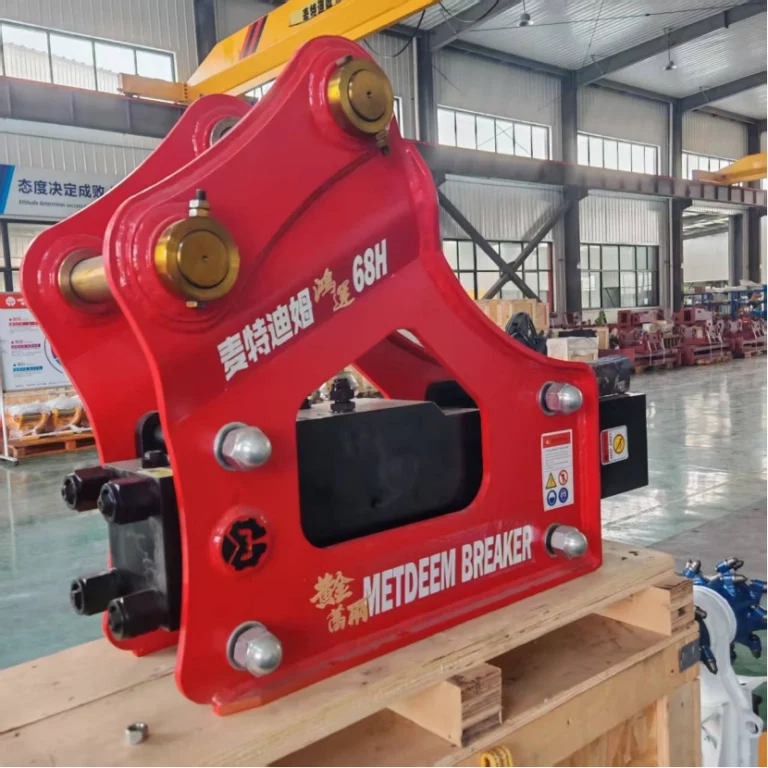
We can then talk about proper grabber sorts, spinning wants, joining rules, and item scales. Shoppers who also run hammers for ground prep or stone busting can check our hydraulic breaker range when mapping out a bigger tool bundle.
Conclusion
The best excavator forestry attachments are picked by match, toughness, and upkeep ease. Do not just look at a basic size tag. First, map out the timber, twigs, rocks, or blended trash. Next, check the tool mass and the machine’s hoisting limit. Verify fitting sizes, fluid speed, push force, and the needed line loops. For rugged camps, look closely at friction spots, pipe paths, and rubber rings. Check weather limits, washing ease, and spare parts backup. Mechanical grapples can manage plain moving chores. On the flip side, hydraulic and spinning types grant better command for lifting, grading, and exact drops. A smart pairing cuts down shaky lifts, early damage, and needless stops. Pass METDEEM your machine facts and site details to chat about a grabber built for your true chore.
Frequently Asked Questions
Q: What is the best excavator forestry attachment for handling logs?
A: Pick based on timber mass, jaw stretch, needed turning, machine limit, and fluid power.
Q: How much flow and weight may a hydraulic log grapple require?
A: METDEEM units span from 380 to 1,280 kg. They need roughly 50 to 140 L/min.
Q: What should I check in cold or muddy conditions?
A: Inspect the rings, fluid warmth, grease, pipe shape, hinge dirt, grip, and machine balance.