How to Match a Forestry Mulcher to the Right Excavator Size
Buying a forestry mulcher that fits the coupler but overwhelms the carrier can stop a land-clearing project before productive work begins. A sound match requires more than excavator tonnage. You must compare operating weight, complete attachment weight, auxiliary hydraulic flow and pressure, return-line needs, mounting dimensions, cooling capacity, and the material on site. Carrier size is a useful first filter; full compatibility determines whether the machine can work safely and steadily.
Start with Excavator Operating Weight and Carrier Compatibility
The excavator’s operating weight gives buyers a practical starting point, but it does not describe every machine configuration. Boom length, arm choice, counterweight, undercarriage, coupler, guarding, and working reach all affect how the carrier behaves with a heavy rotating attachment. Review the exact machine, not only a broad label such as mini, medium, or large.
Use the Recommended Carrier Range as Your First Filter
Begin with the carrier range stated for the mulcher model. Then compare it with the excavator’s actual operating weight and configuration. Do not create a universal rule that links one excavator tonnage to one cutting width. Two machines in the same weight class may have different lifting charts, hydraulic circuits, counterweights, and attachment limits.
The growth of compact equipment makes this check more important. Small carriers suit confined areas, yet their stability and cooling margins may be tighter. They need mulchers designed for their specific carrier ranges.
Check Boom Configuration and Working Reach
A mulcher held close to the machine creates a different load from the same head working far out or across a slope. Check the excavator manufacturer’s lifting information and attachment restrictions at the planned radius and working position. Include boom and arm configuration, counterweight, track width, and undercarriage condition.
The carrier must remain controlled while the rotor meets brush or wood. If the machine becomes light at the rear, unstable across the tracks, or difficult to position, a nominal tonnage match is not enough.
Verify Hydraulic Flow, Pressure, and Cooling Capacity
Hydraulic compatibility often decides whether a forestry mulcher on excavator works as intended. Engine power alone cannot answer this question. Buyers need the auxiliary circuit data for the exact carrier and must compare it with the mulcher motor requirements. At METDEEM, we recommend collecting these figures before discussing an attachment so that selection begins with measurable information.
Compare Auxiliary Flow and Operating Pressure
Record available auxiliary flow in litres per minute (L/min) and operating pressure in bar. Compare the working ranges, not just the carrier’s maximum figures. The machine should supply the required flow and pressure during real work, including combined movements when the boom, arm, or swing circuit is also active.
Too little flow may slow rotor recovery after it meets dense material. Incorrect pressure settings can also reduce performance or place unnecessary load on the circuit. Confirm whether the carrier offers adjustable attachment modes and whether those settings can be stored for the mulcher.
Confirm Return-Line and Case-Drain Requirements
Ask whether the hydraulic motor needs a low-back-pressure return line and a separate case-drain line. Check hose diameter, coupler size, routing, and the permitted return pressure. A case drain is not an optional spare hose when the motor design requires one; it carries internal leakage back to the tank and helps protect seals.
Inspect the complete path before installation. Sharp bends, undersized couplers, damaged hoses, or a restricted return can create heat and pressure even when the pump data looks suitable.
Assess Cooling for Continuous Mulching
Mulching can hold an auxiliary circuit under load for long periods. Review ambient temperature, radiator and oil-cooler condition, planned shift length, and the amount of debris likely to collect around cooling packs. A machine that runs a short demonstration without an alarm may still overheat during continuous summer work.
Clean coolers, correct oil, sensible work-rest cycles, and monitored temperatures support steady output. Telematics can reveal developing heat, but cannot correct a poor hydraulic match.
Match Attachment Weight, Cutting Width, and Mounting Dimensions
After the carrier and hydraulic circuit pass the first checks, assess the physical package. Buyers sometimes compare bare head weights and overlook the bracket, coupler, hoses, guards, and other fittings. The final installed system is what the excavator must lift, control, and carry across uneven ground.
Calculate the Complete Installed Weight
Add the mulcher head, mounting bracket, quick coupler, hydraulic connections, and required accessories. Compare that total with the carrier manufacturer’s attachment guidance and lifting data. Also consider dynamic forces from rotor contact. An attachment that can be lifted from the ground is not automatically suitable for controlled cutting at reach.
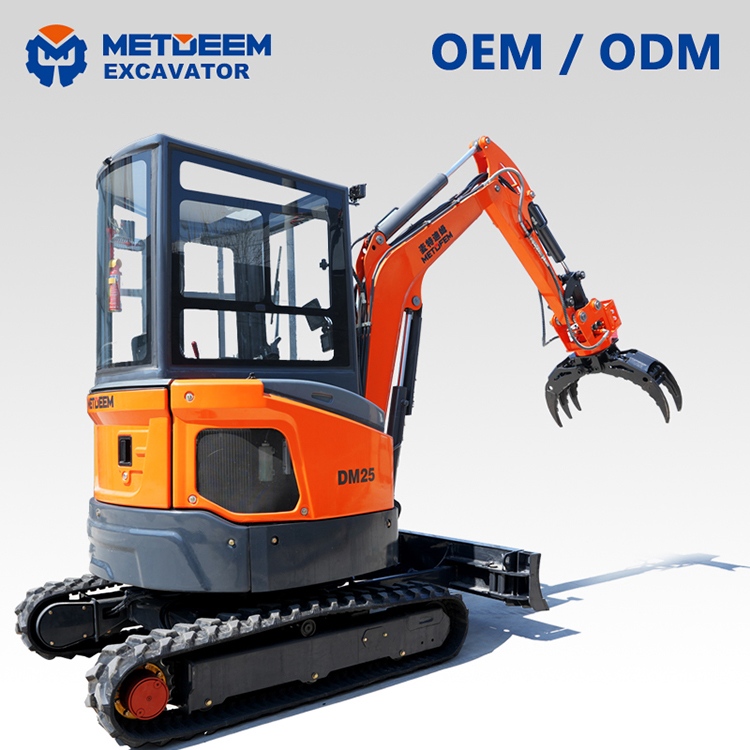
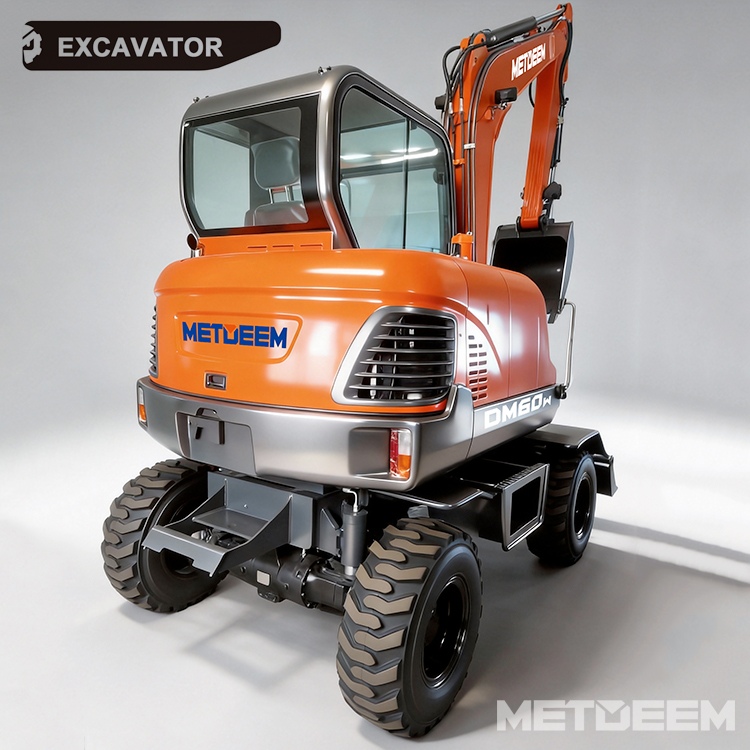
Our construction machine range shows why exact model details matter: operating weights and configurations vary across loaders, backhoes, bulldozers, and excavators. The same discipline applies when choosing a working attachment.
Choose a Practical Cutting Width
A wider head may cover more ground in one pass, but it also adds weight and can demand more hydraulic power. Match width to available flow, vegetation density, site access, transport limits, and the operator’s ability to keep the rotor fed evenly. In narrow rights-of-way or steep terrain, a smaller head may be easier to place and more productive over a full day.
Verify the Mechanical Interface
Confirm pin diameter, pin-centre distance, mounting width, or the full quick-coupler specification. Check that the attachment can move through the required arc without striking the boom, arm, coupler, or hoses. Hose length should allow full movement without rubbing, stretching, or hanging where debris can catch it.
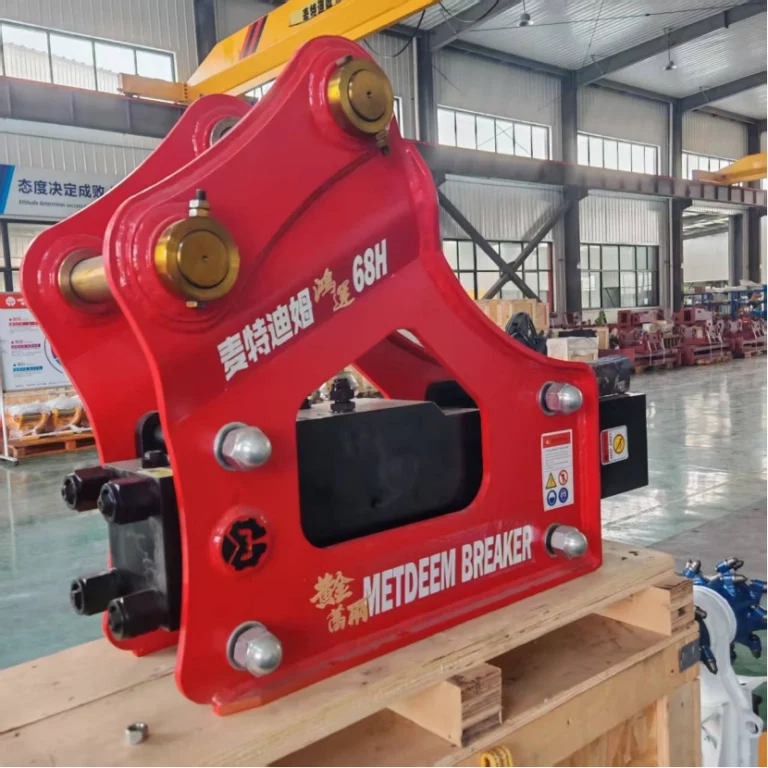
Compatibility checks used for other hydraulic tools remain useful here. Buyers reviewing our hydraulic breaker range will see the same need to connect a specific carrier, circuit, mounting interface, and task rather than choosing by appearance alone.
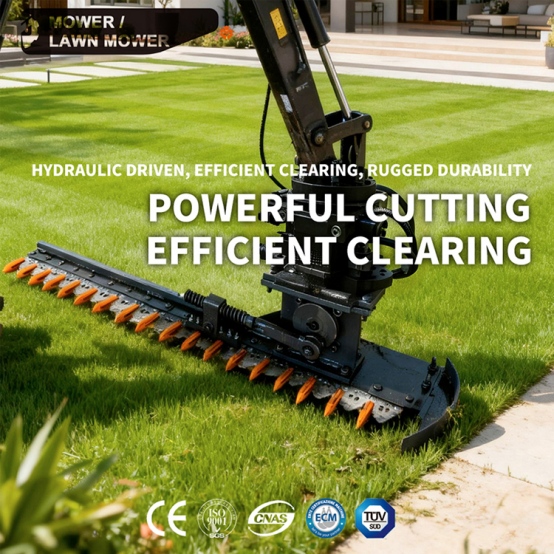
Choose the Mulcher Around Vegetation and Jobsite Demands
The right carrier-head match must also suit the work. Define whether the project involves grass, scrub, branches, standing woody growth, storm debris, firebreak maintenance, or utility right-of-way clearing. Record typical material diameter and density, but rely on the verified cutting limits of the selected model instead of a general industry claim.
Site access matters as much as vegetation. Note slopes, soft ground, narrow entrances, overhead hazards, traffic, and expected daily hours. Forestry work also calls for the cab, window, falling-object, and flying-debris protection specified by the manufacturers. Establish an exclusion zone and follow local rules.
Wildfire fuel reduction and storm cleanup are increasing interest in mechanised vegetation management. These jobs reward dependable daily output, yet they can expose machines to dust, heat, hidden wire, stones, and severe debris. Plan inspection intervals around the real environment, not only the normal excavator service schedule.
Excavator and Mulcher Matching Examples
Use this table to compare a carrier’s auxiliary output with a candidate head’s requirements. The figures are hypothetical and apply only to the three example heads. The job descriptions are screening examples. Check the selected head’s rated material diameter and the carrier manufacturer’s attachment limits before purchase.
| Carrier and job | Head carrier range | Head flow and pressure | Width and head weight |
| 6 t Brush and light saplings | 5–8 t | 60–90 L/min 180–230 bar | 0.90 m 480 kg |
| 12 t Dense scrub and saplings | 9–15 t | 100–150 L/min 200–260 bar | 1.20 m 850 kg |
| 23 t Woody regrowth and branches | 20–30 t | 150–220 L/min 230–300 bar | 1.50 m 1,550 kg |
Example 1: A 6 t Excavator Clearing Brush on a Narrow Trail
Assume the auxiliary circuit delivers 75 L/min at a working pressure differential of 200 bar across the head. Both values fall within the compact head’s ranges. The theoretical hydraulic input is about 25 kW (75 × 200 ÷ 600), before motor losses. The 0.90 m cutting width is a candidate for a narrow trail. Check the head’s overall width against the available clearance.
Adding a 120 kg bracket, coupler and hose package to the 480 kg head brings the installed weight to 600 kg. Keep this head on the shortlist if the carrier manufacturer permits that package at the planned reach and working position. Confirm the mounting, return pressure, case drain and cooling before purchase.
Example 2: A 23 t Excavator with Insufficient Auxiliary Flow
Assume the carrier can sustain 135 L/min at 250 bar for continuous clearing of woody regrowth. The 23 t operating weight and 250 bar pressure meet the heavy head’s example ranges, but the flow falls 15 L/min below the head’s 150 L/min minimum. Rule out this motor configuration at the available flow. Ask the supplier for a head or motor option rated for 135 L/min at the available working pressure and for the material diameter on site. Verify the full installed weight and cooling capacity for the planned duty cycle.
Use a Pre-Purchase Compatibility Checklist
Send one complete information package to the supplier. It reduces back-and-forth, exposes missing data, and gives the technical team a clearer basis for model selection.
- Excavator make, model, year, operating weight, and serial configuration
- Boom, arm, counterweight, undercarriage, and quick-coupler details
- Auxiliary flow in L/min and working pressure in bar
- Return-line back pressure and case-drain availability
- Pin dimensions or coupler drawing, plus clear interface photographs
- Total planned attachment package and required guarding
- Vegetation type, typical diameter, density, terrain, and daily hours
- Ambient temperature, cooling condition, and transport limits
Ask the supplier to confirm the proposed excavator mulcher sizing in writing for the named carrier and attachment models. Our company information describes METDEEM as a manufacturer of construction machines and parts serving construction, mining, farming, agriculture, and quarry applications. We use the machine and project details you provide to guide a more useful product discussion. You can also view our industry exhibition activity and contact our team with the completed checklist.
Conclusion
Excavator tonnage can narrow the search, but it cannot finish the selection. A dependable match combines carrier stability, full installed weight, auxiliary flow, working pressure, return and case-drain arrangements, cooling capacity, mounting geometry, guarding, and the actual vegetation. Measure these items before requesting a quotation, then ask for confirmation against the exact carrier and mulcher models. This approach helps buyers avoid weak rotor recovery, excess heat, unstable working positions, hose problems, and an attachment that cannot meet the daily workload. METDEEM supplies construction machines and related equipment for varied industries. Send us your carrier data, interface dimensions, photographs, and job description so our team can discuss suitable equipment and compatibility information for your project.
FAQs
Q: Can a Mini Excavator Run a Forestry Mulcher?
A: Yes, if the mulcher matches the exact carrier weight, hydraulic flow in L/min, mounting interface, cooling, and guarding requirements.
Q: Is Excavator Tonnage Enough to Choose a Mulcher?
A: No. Verify total weight in kg, flow in L/min, pressure in bar, mounting dimensions, cooling, and site conditions.
Q: What Information Should I Send Before Requesting a Quote?
A: Send the carrier model, weight in kg, flow in L/min, pressure in bar, coupler dimensions, vegetation, terrain, and daily hours.