Top Rock Drill Systems for Quarry, Mining, and Construction
What Is a Rock Drill System?
A rock drill system will generate a hole in rock by applying impact, rotation, feed and flushing via the drill string. The components of the system (in addition to the rock drill) are the feed, drill string, flush and energy supply.
The drill string comprises the shank, extensions (or tube), couplers and the drill bit. In the case of using extension rods, the drill bit will be removable. If integral steel is used, the bit will be a fixed part of the drill string. Excavation rock drills are intended for producing blast holes, so the aim is to achieve the desired hole geometry, i.e. axis, diameter and length.
Select Equipment Based on the Geological Conditions and Holes Required
Once the geology has been established, suitable rock drills and associated consumables can be identified based on the rock’s resistance to drilling. From the combination of rock type(s), geological configuration and possible drilling techniques, the range of viable hole sizes and lengths will become apparent. As noted above, the level of rock resistance and abrasion will influence the appropriate rock drill and bits.
Stoper and drifter rock drills will typically be employed on air leg(s) or chain feed to produce horizontal blastholes. Larger bore drill rigs are most often deployed for tunnel drilling, and where longer holes are required, there must be sufficient feed force to retrieve the string. The cuttings produced must also be lifted up and removed from the hole.
Drilling upwards will most commonly be carried out with a long-screw stoper drill or drifter on a feed unit.
Rock Drill and Mounting Considerations
Excavation drills may be mounted on a feed unit secured to a prop, or carried on a larger machine. Smaller bore rock drills can be free-standing for some horizontal and downward drilling, or for other purposes. Drifters will be carried on a permanent drill station or similar.
The function of the rock drill feed is to apply force to the drill string. This will typically be driven by an air or hydraulic powered unit rotating a screw or chain. Thrust will be regulated either by a separate air/hydraulic actuator, or directly by the feed drive.
Feeds can be mounted on a tube which may be actuated pneumatically or hydraulically, and can incorporate a swivel or further extension. In tunneling, the ‘carrier’ will be a crawler- or wheel-based rig, often carrying one or multiple feeds.
Considerations Regarding Percussive Force, Rotation and Feed
There are various styles of percussive rock drill depending on their mass and means of carriage, ranging from small light-weight stopers on screw feed through to larger stopers and drifters on varied feeds and free-standing units.
Regardless of the style of rock drill, the key principle is to convert the input air or hydraulic energy to a percussive action within the tool. The force generated by the piston will travel down the shank, extensions and drill bit to engage the formation. The drill and drill string will behave as a spring-mass system, requiring the drill string to maintain firm seating in the hole as the tool impacts.
Consequently, adequate feed must be provided to counter both the recoil of the impact and the self-weight of the drill and feed. A combination of the above parameters will enable efficient hole advancement. Increasing the rate of rotation will cause the bit to progress further between impacts. Note however that very high speeds can lead to accelerated degradation of the drill string and drill bit.
Select the Appropriate Drill String and Bit(s)
As described earlier, the drill string needs to perform the following functions: transmit the impact from the drill piston to the bit, conduct the rotational and feed actions and provide the flush to the base of the hole.
Key considerations to ensure optimal performance of the drill string will be:
- Characteristics of the steel employed
- Configuration of the steel
- Joint arrangement
- Length of individual pieces
- Bit state
- Degree of joint deterioration
Integrals and extension rod strings represent the primary options, both of which need to be compatible with the application, target hole length and degree of plant mobility required.
It is obvious that the final element of the drill string to interact with the formation is the drill bit. Clearly the bit is intended to fragment the rock to give the target hole size and orientation. Accordingly, it should be considered as an integral element of the complete system.
Provide an Effective Flush and Manage Dust
An adequate supply of flush is required to transport the cuttings from the hole and prevent overheating of the drill bit. While water is the predominant medium, cuttings can also be evacuated using the compressed air driving the rock drill.
The volume of flush will need to ensure that the cuttings are raised sufficiently in the hole and expelled from the top. There are a number of variables to consider, including hole diameter, angle of the hole, rate of drilling and concentration of cuttings.
If the flush is insufficient, fragments of rock may accumulate at the face of the drill bit, causing the tool to expend additional energy to dislodge these before continuing to drill. Penetration rates may therefore decline and the life of the drill bit reduced.
A further consideration is the generation of dust. Obvious steps should be taken to minimize exposure of personnel and adjacent areas to this. A high proportion of dust will be suspended in the water if wet drilling is utilized. Care will be needed to dispose of this appropriately. Alternatively, effective dust suppression and separation arrangements will be required when drilling dry.
Implement Plant Controls and Instrumentation
Depending on the specification of the rock drill, various functions may be operated from a suite of controls located on the tool, or via a dedicated control and instrumentation console. Mechanised rigs may incorporate automatic collar, drill and string lift functions, and be instrumented at a higher level.
Where multiple feeds are mounted on a carrier, the individual controls and displays will allow precise targeting of each blasthole. There is currently a growing trend towards mechanization, digitization and remotely-controlled plant in the quarry and mineral extraction sector. However, any such initiative should respond to a specific requirement. Effective instrumentation will allow the drilling team to observe the progress and characteristics of the drill operations, manage hole spread, schedule plant interventions and flag potential issues.
As with all of the preceding points, the selection of rock drill(s) will be governed by the target hole parameters, rock, site conditions etc.
Assess the Total Running Costs of the System
Given the high levels of shock and abrasive exposure experienced by rock drills, frequent checks and plant interventions will be needed. A list of likely consumables is shown below:
- Shanks
- Extensions and couplers
- Drill bits
- Centralizers
- Rock drill guides
As discussed previously, the drill will need to be correctly aligned with the target hole, and the feed force set to an optimum value. Insufficient feed will result in sub-optimal utilization of the available energy, whereas too high a level could induce detrimental loading of the drill and joints.
Similarly, the pressure and quantity of the flush must be adequate to evacuate the cuttings. Any residual will lead to reduced penetration and elevated temperatures and consumable usage.
Clearly, the initial capital expenditure to acquire a system of rock drills is just one aspect to evaluate. Further points to bear in mind are: rate of consumption of spares, power required, duration and ease of servicing, quality of holes and downtime incurred.
The system will only be cost-competitive if the interaction between the drill, string, feed, flush and energy source can be optimized for the given rock.
Further METDEEM Products and Services
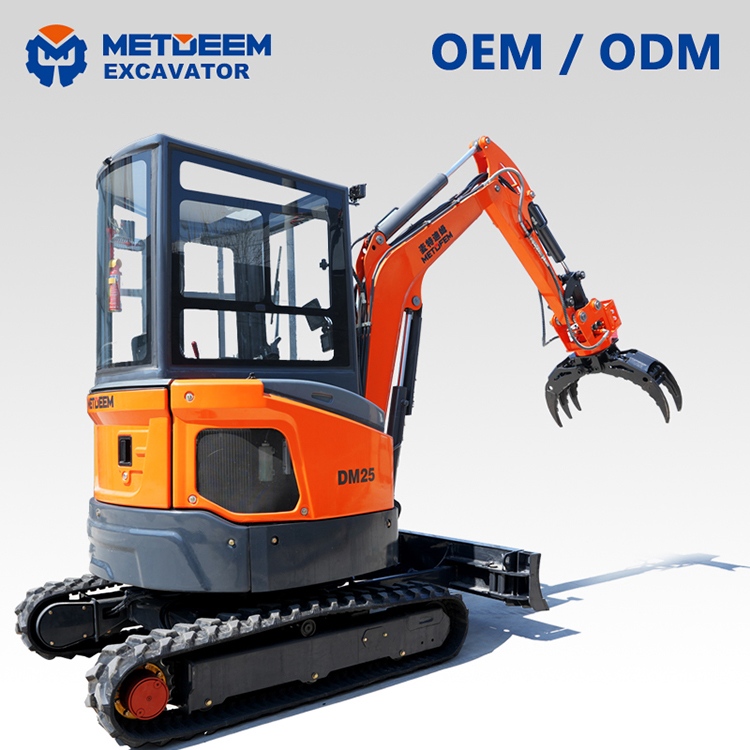
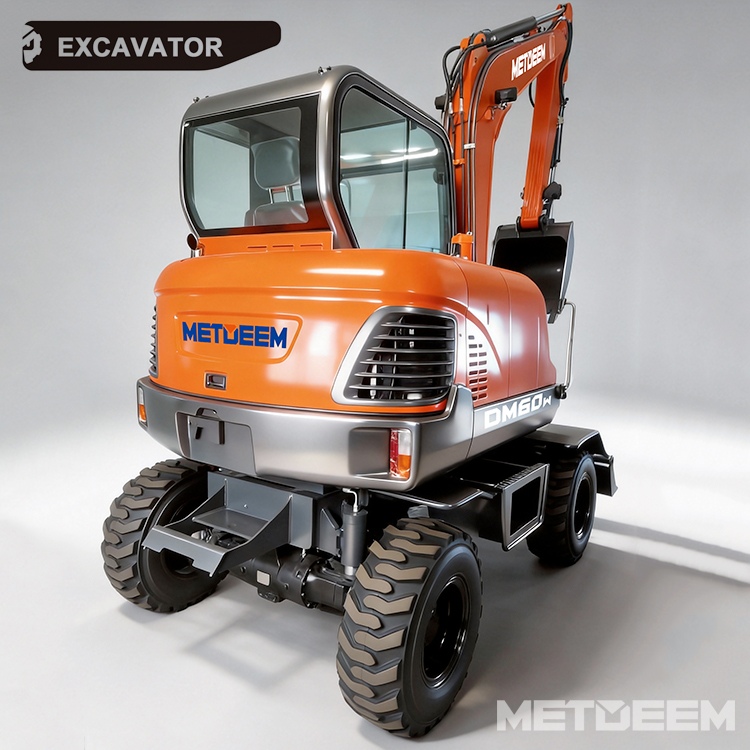
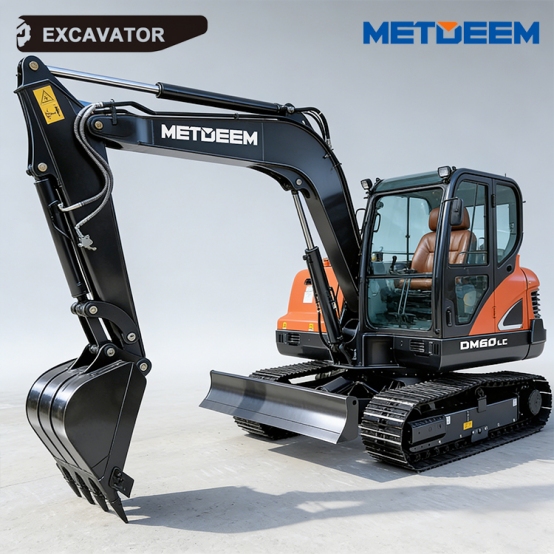
METDEEM produces a wide variety of plant and components for use in quarry, mine and construction environments. Principal examples are our line of excavator, dozer and loader models.
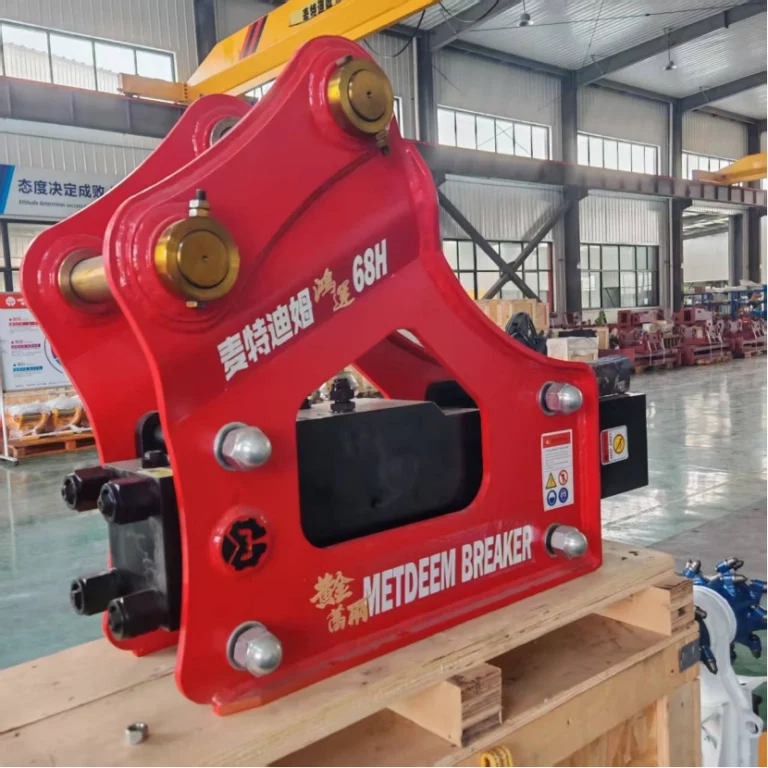
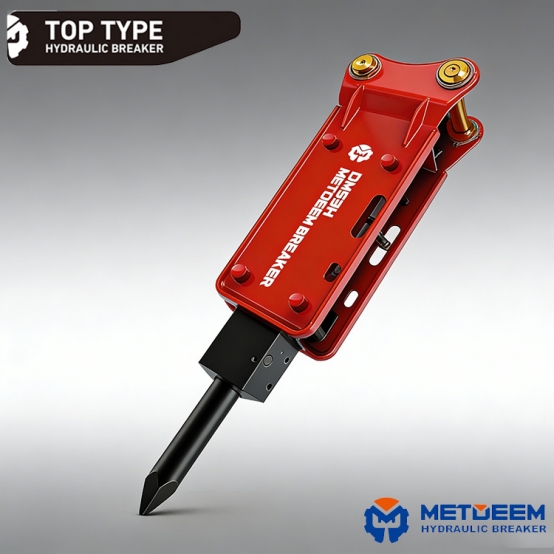
Our fleet of hydraulic breakers is deployed for secondary rock fragmentation following the drilling process or where explosive charging is precluded. We oversee the manufacturing and distribution of our products to OEMs, stockists, hire firms and direct customers.
You can learn more about our production facilities and associated services via our About Us section, and see the breadth of plant, sites and events that we attend on our Exhibitions page.
Summary
There are many elements to establish when looking to implement a system of rock drills to achieve maximum output. Of course, the first step is to assess the rock and desired hole length and direction, and select the appropriate carrier, feed, string and flush.
Failure to adequately seat the drill and clear the cuttings will inevitably incur losses in tool life. Likewise, instrumented and automated systems are only justified if they can help drive down these variables.
Finally, prospective customers should take a holistic view of the system, factoring in the running costs associated. It is likely that a ‘lesser’ package in terms of raw figures will prove to yield superior hole quality, rate of advance and cost per meter.
FAQ
Q: What criteria should I consider to choose a system of rock drills for my quarry?
A: Target hole diameter, rock hardness, flush requirements, plant geometry and m3 (or equivalent) achievable per shift.
Q: What volume of water will be required to drive a rock drill?
A: Refer to the manufacturer’s data for the relevant hole diameter and anticipated cuttings.
Q: How can I assess the amount of fuel consumed by my rock drills?
A: Log the liters of diesel consumed per meter of hole in comparable rock and at similar hole depths.