An excavator hydraulic breaker is built for hard work, but it is not built for careless continuous impact. Many operators ask a simple question: how long can I keep breaking before I should stop? The short answer is this: do not keep striking the same point for more than 30 seconds. If the material does not crack, move the tool, change the angle, or attack the edge.
This rule sounds small, but it protects the breaker, the excavator, and the job schedule. A breaker that is used correctly can serve for many working hours. A breaker that is forced, pried, or run without grease can fail far too early. For contractors, rental companies, quarry teams, and demolition crews, good breaker habits are not theory. They are daily cost control.
Why Working Time Matters for Hydraulic Breakers
A hydraulic breaker turns oil pressure and nitrogen energy into repeated piston impact. That impact travels through the chisel and into rock, concrete, asphalt, or frozen ground. Every strike creates heat, vibration, and wear. When the tool is used within the right time limit, the energy goes into breaking material. When the tool is forced too long in one spot, energy starts moving back into the breaker.
This is where many problems begin. The piston may strike without useful material resistance. The chisel can overheat. Bushings wear faster. Seals face more stress. Hydraulic oil temperature rises. The excavator also suffers because vibration travels through the boom, arm, pins, hoses, and hydraulic circuit.
On modern jobsites, this issue is becoming more important. Recent industry coverage shows strong demand for compact equipment, excavator attachments, and rental fleets. More machines are working in smaller areas, with more attachment changes and longer daily use. That means breaker operation must be more disciplined, not more aggressive.
The 30-Second Rule for One Breaking Point
The most practical answer is clear: an operator should avoid continuous impact on one point for more than 30 seconds. If the concrete, stone, or asphalt has not broken after that time, the point is not working well. Continuing to hit the same place does not usually solve the problem. It only adds heat and stress.
Before looking at the details, it helps to see the breaker as a precision impact tool, not a battering ram. The operator’s job is to find the weak point in the material and let repeated impact open a crack. That takes pressure, angle, timing, and patience. It does not require forcing the chisel through one impossible spot.
Move, Reposition, and Break from the Edge
If the material does not break within 30 seconds, stop and move. Break large hard stones from the tail end or outer edge. For concrete slabs, start near a corner or crack line. For thick foundations, work in smaller sections instead of trying to split the whole mass at once.
Good operating habits include:
- Keep the chisel straight in the breaking direction.
- Apply steady down pressure before striking.
- Stop if the breaker sound changes sharply.
- Move the tool when no crack appears.
- Break large pieces step by step.
- Avoid hitting the same point until the tool overheats.
A good operator listens to the tool. A clear, steady impact sound usually means the breaker is working against material. A hollow or sharp sound may point to blank firing, poor contact, or a bad angle.
Do Not Use the Breaker as a Pry Bar
One of the fastest ways to damage an excavator hydraulic breaker is to use the chisel for prying. The chisel is made for impact, not side force. If the operator twists, pulls, or lifts material with the breaker, the stress can damage the tool, bushings, front head, and piston alignment.
A hydraulic breaker should also not be used to move stones, lift objects, or drop onto material by gravity. Let the hydraulic system and piston do the work. Using machine weight or falling force may look faster for a moment, but it shortens service life and raises repair cost.
How Long Can You Use a Breaker in a Working Day?
A breaker can work across a full shift if it is used in proper cycles and maintained during the day. The key is not the total number of hours alone. The key is how the time is used. Short controlled impact, regular repositioning, correct grease, and normal oil temperature are what keep the breaker healthy.
Em METDEEM quebradores hidráulicos, we supply box type, side type, and top type hydraulic breakers for different excavation and demolition conditions. Our products are built for real work on construction sites, quarries, mines, farms, and road projects. We also design our product range to serve OEMs, dealers, rental companies, and end users.
Grease Every 2-3 Hours During Use
During operation, grease should be added every 2-3 hours. This is one of the most important service habits for a hydraulic breaker. The chisel and bushings work under heavy friction. Without grease, the contact area gets hot and dry. Wear becomes faster, and the chisel may seize or damage the front head.
Daily checks should also include:
- Loose bolts
- Oil leakage
- Hose damage
- Chisel wear
- Bushing clearance
- Unusual vibration
- Abnormal impact sound
- Nitrogen pressure condition
For heavy daily use, operators should not wait until the breaker “feels wrong.” By that time, wear may already be expensive.
Watch Oil Temperature and Hose Movement
If hoses shake violently, stop work and inspect the system. Strong hose vibration may point to pressure issues, poor flow, incorrect connection, or internal breaker trouble. Running through the warning can damage both the breaker and the excavator.
Hydraulic flow and pressure must match the breaker model. Some small models work around 15-20 L/min, while large models may require 300-330 L/min. Working pressure can range from about 8-12 MPa on compact models to 34-36 MPa on heavy models. A mismatch can cause weak impact, overheating, slow striking, or early seal failure.
Choosing the Right Breaker Type for Working Time
The type of breaker also affects comfort, control, and job suitability. A breaker that matches the site will work better and need less forcing. METDEEM offers different structures because road work, tunneling, demolition, and mining do not ask for the same tool shape.
Before choosing, think about the working surface, noise limit, excavator size, visibility, and maintenance access. The right breaker is not always the largest one. It is the one that matches the carrier and cracks the material without wasted stress.
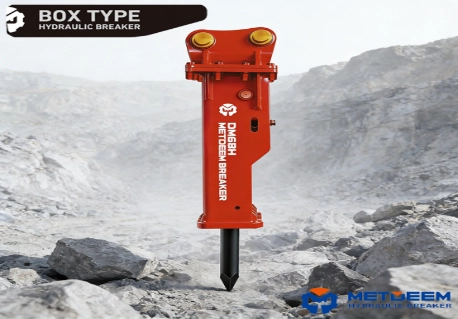
Box Type Hydraulic Breaker
A box type hydraulic breaker is also known as a silenced type breaker. Its enclosed shell helps reduce noise and protects the hammer body. It is a strong choice for urban demolition, residential areas, road repair, and sites where noise control matters.
This type can make long working days easier for operators because the housing helps control some sound and vibration. It does not remove the need for hearing protection, but it can support a cleaner site environment.
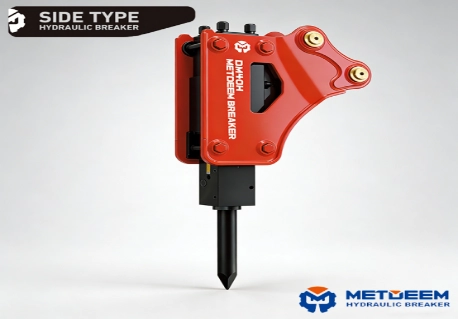
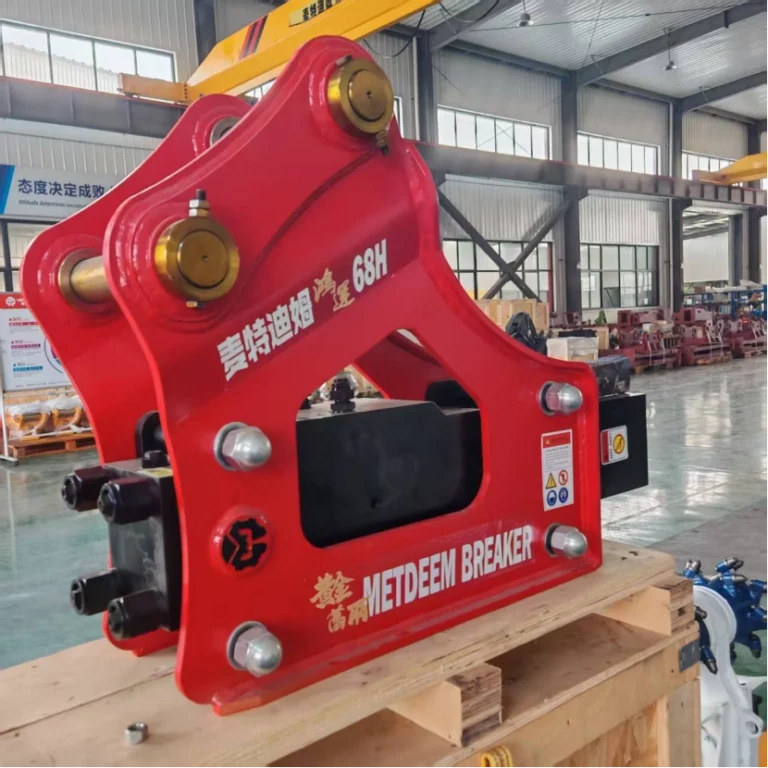
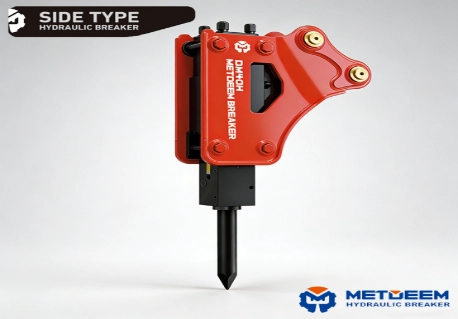
Side Type Hydraulic Breaker
A side type hydraulic breaker is often used for horizontal breaking. It is common in road work, quarry work, and mining conditions. The open structure gives good visibility around the tool, which helps operators position the chisel accurately.
For large flat surfaces, side type breakers can be efficient. Still, the same rule applies: do not keep hammering one point for more than 30 seconds.
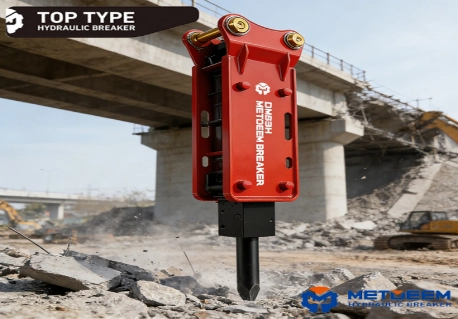
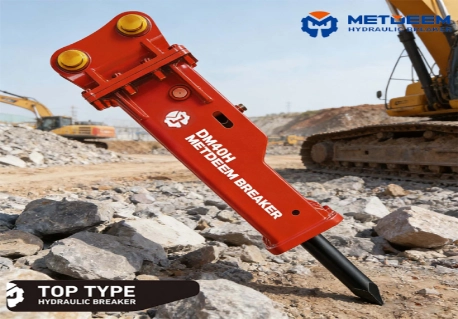
Top Type Hydraulic Breaker
A top type hydraulic breaker is useful for demolition, tunnels, and non-horizontal breaking. Its structure can be easier to position in certain vertical or overhead working areas.
When working in hard material, operators should attack from a good angle and avoid forcing the tool sideways. A top type breaker can be powerful, but poor technique will still shorten tool life.
Maintenance Intervals That Protect Service Life
Breaker maintenance should follow working hours and model size. For models below MD175, seals are commonly replaced every 500-600 working hours. For MD175 and larger models, seals are commonly replaced every 300-500 working hours. Heavy models face stronger impact, higher oil flow, and more demanding conditions, so they need closer attention.
If the inner and outer bushings in the front head wear more than 10 mm beyond the original diameter, replacement is needed. Waiting too long can damage the chisel and front head. It can also cause poor impact direction, more vibration, and faster seal wear.
For long storage, place the breaker in a cool and dry area. Remove the chisel, release internal nitrogen as required, let the piston return into the cylinder, and coat the piston end, chisel, and bushings with grease or rust protection. Hose joints should be capped to keep dust out. If possible, store the breaker upright.
METDEEM is a construction machinery and parts manufacturer with products covering mini excavators, buckets, quick hitches, hydraulic breakers, and other attachments. On our Sobre Nós page, we share our focus on controlled production, ISO 9001, CE certification, and service for global customers. We also meet customers through international events shown on our exhibition page, where jobsite feedback helps us improve product details.
Safety, Noise, and Operator Fatigue
Breaker working time is also a safety topic. Construction noise remains a major concern. The CDC reports that many construction workers face hazardous noise exposure, and a large share of noise-exposed workers do not always wear hearing protection. OSHA also gives guidance for construction noise control and hearing protection.
This matters because tired operators make more mistakes. Long breaker sessions create vibration, sound, dust, and mental fatigue. A smart work plan should include breaks, rotation when possible, hearing protection, water control for dust where suitable, and regular tool checks.
A breaker should not be used underwater or in mud unless it has the right preparation. Operators should also avoid striking when the excavator boom or arm cylinder is at full stroke. In winter, warm the engine for 5-20 minutes before breaker use so oil flow and machine response become stable.
Conclusão
So, how long should you use an excavator hydraulic breaker for? Use it in controlled bursts, and do not strike one point for more than 30 seconds. If the material does not break, move the chisel, change the angle, or begin from an edge. Across a full working day, the breaker can keep working if oil temperature, grease, pressure, hose movement, and operator technique stay in good condition. The best results come from matching the breaker to the excavator, avoiding blank firing and prying, greasing every 2-3 hours, and following service intervals. Good habits protect the tool, the carrier, and the project budget.
FAQs
Q: How long should an excavator hydraulic breaker hit one spot?
A: No more than 30 seconds. Move the chisel if the material does not crack.
Q: How often should I grease an excavator hydraulic breaker?
A: Grease every 2-3 hours during use to protect the chisel and bushings.
Q: What oil flow does an excavator hydraulic breaker need?
A: Small models need 15-20 L/min; large models may need 300-330 L/min.