A hydraulic hammer mounted on an excavator transforms hydraulic oil pressure into constant impact. The excavator pushes oil through the auxiliary circuit. Inside the hammer, a specific valve directs that fluid. The piston then travels up and down. Nitrogen stores energy and releases it. Finally, the chisel strikes the final blow into concrete, hard rock, asphalt, or solid ground.
This basic description conceals a tough mechanical process. A hydraulic hammer operates under intense pressure, heavy vibration, heat, dirt, and sudden shock. For equipment contractors, machinery dealers, and rental fleets, understanding this operation helps with proper model selection. It also improves maintenance planning, fuel usage control, and overall safer operation.
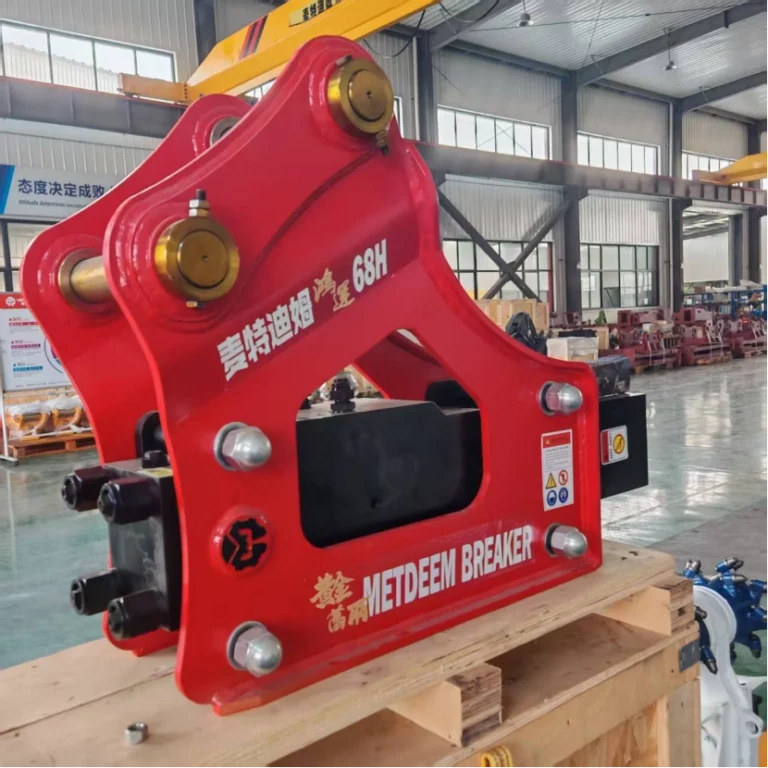
METDEEM manufactures tough construction machinery and attachments for diverse construction sites, mining, quarrying, agriculture, demolition, and material handling tasks. Our quebradores hidráulicos include box type, side type, and top type models. These options fit different excavator capacity in tons and various working conditions.
O princípio básico de trabalho
Before examining each specific part, it helps to view the hammer as a carefully controlled energy cycle. The excavator provides the needed hydraulic oil. Next, the hammer changes that fluid flow into active piston movement. The piston then strikes the chisel with steady force. Because of this interaction, the carrier, the hammer, the hydraulic circuit, and the human operator all affect the final performance.
Hydraulic Oil Starts the Cycle
The excavator pump drives pressurized oil to the hydraulic hammer using the auxiliary lines. This oil travels to the directional valve. That valve controls exactly when oil enters and exits the specific working chambers around the piston. If the fluid flow remains too low, the hammer might strike poorly. If the flow becomes too high, excess heat, seal wear, and severe hose stress can increase.
A small hammer might require around 15-20 L/min. Meanwhile, larger models can demand 300-330 L/min. The working pressure can vary from about 8-12 MPa on compact units up to 34-36 MPa on heavy models. Therefore, matching the hammer correctly with the excavator forms the first crucial step in achieving reliable performance.
The Piston Delivers the Impact
The piston acts as the primary moving part inside the hammer. Hydraulic oil raises it upward. Nitrogen pressure and strong hydraulic force then combine to push it downward. The descending piston hits the chisel. The chisel subsequently transfers that raw energy into the target material being broken.
The piston must stay completely straight, very smooth, and properly fitted inside the main cylinder. If the piston becomes scratched, badly worn, or damaged by dirty oil, the hammer might lose impact power. It could also leak oil or ruin internal seals.
Nitrogen Adds Stored Energy
Hydraulic hammers utilize nitrogen gas in the back head or the accumulator system to boost impact energy. When the piston moves up, the nitrogen gets tightly compressed. When the working cycle shifts, that compressed gas helps drive the piston down hard. Incorrect gas pressure can lead to weak impact, uneven movement, or a complete failure to start.
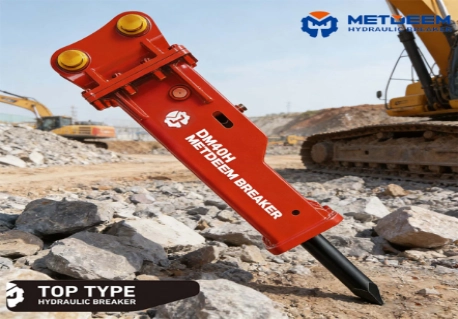
Valve, Seals, and Chisel The Supporting System
A hydraulic hammer is more than a piston and chisel. The valve controls oil direction. Oil seals keep hydraulic oil inside. Gas seals keep nitrogen in the back head. Dust seals help prevent debris from entering the cylinder as the piston moves.
The Valve Controls Timing
The directional valve decides when oil moves into one side of the piston chamber and when it returns. Good valve timing gives stable impact. Poor timing can cause weak striking, irregular movement, or failure to start.
METDEEM breaker materials are selected for each part. The directional valve uses 20CrNiMo, the piston uses 40CrNiMo, the cylinder and bushings use 20CrMo, and the back head, front head, and chisel use forged 40CrMo.
The Chisel Transfers Energy to the Material
The chisel is the final contact point. It must stay aligned with the material. If the operator uses it as a pry bar, drags rocks, lifts objects, or strikes at a poor angle, the force no longer travels straight. This can damage the chisel, bushings, front head, and piston.
Good operation means pressing the chisel firmly against the material before striking. For large hard rocks, break from the edge or tail end. Continuous striking at one point should not exceed 30 seconds. If the material does not break, move the tool and change the angle.
Choosing the Right Hammer for the Excavator
Selection is where many later problems begin. A hammer that is too large can overload the carrier. A hammer that is too small may waste time and increase fuel usage. The right breaker depends on excavator capacity in tons, hydraulic flow, pressure, chisel diameter, working material, and project type.
METDEEM offers hydraulic breakers for different carriers, including compact excavators and larger construction machines used in quarrying and rear mining support work. Our products are used with excavators, skid steer machines, and backhoe loaders when the hydraulic match is correct.
Key Factors to Check Before Buying
- Excavator capacity in tons
- Hydraulic flow in L/min
- Working pressure in MPa
- Chisel diameter in mm
- Breaker operating weight in kg
- Back head nitrogen pressure in kg/cm2
- Accumulator pressure for larger models
- Pin size, bracket size, and hose connection
- Working material: concrete, asphalt, rock, frozen ground, or reinforced structure
Compact models may work with 0.8 ton to 2.5 ton excavators. Heavy models may fit carriers up to 75-100 tons. These numbers affect impact energy, fuel usage, machine stability, and repair cost.
Breaker Types and Where They Work Best
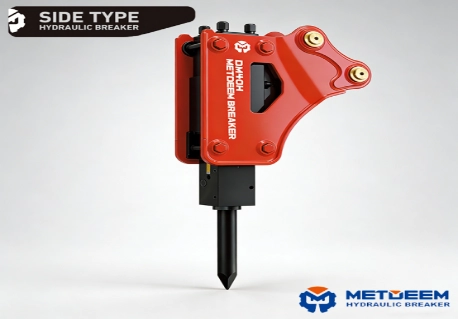
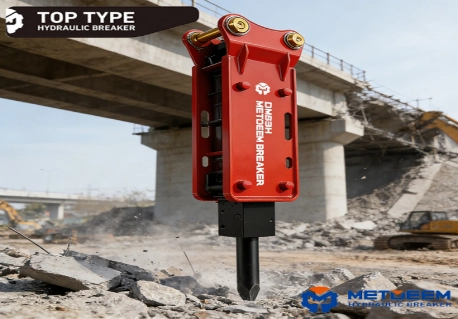
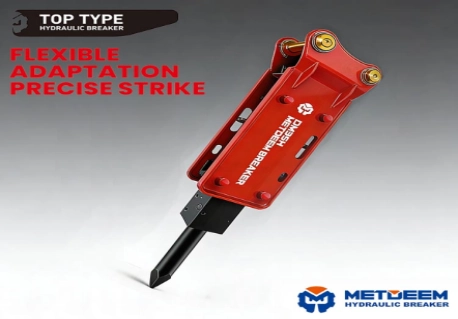
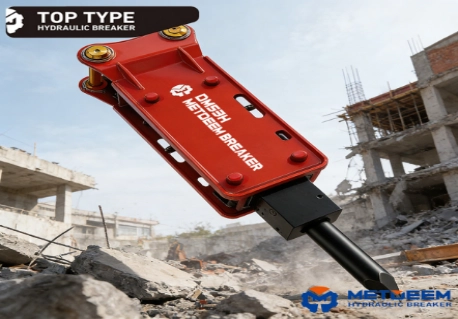
Different outer structures help the hammer fit different jobs. A box type breaker is often chosen when lower noise and body protection matter. A side type breaker is used on horizontal surfaces such as roads and quarry floors. A top type breaker suits demolition, tunnels, and non-horizontal breaking.
Some buyers search for jack hammer excavator, skid steer jack, or breaking equipment. These terms often point to hydraulic breaker products, but the correct choice still depends on carrier and hydraulic data. A handheld compactor cannot replace a properly matched excavator hammer in heavy rock or concrete work.
How the Hammer Fits a Full Jobsite Workflow
A hydraulic hammer usually starts the work by breaking hard material. After that, the site may need sorting, loading, or attachment changes. A quick hitch can help operators change tools faster. A hydraulic pulverizer can process concrete after breaking. A mechanical grapple bucket can move mixed debris.
On cleanup jobs, an excavator timber grab may move wood and branches. On demolition and recycling sites, a hydraulic magnet can collect steel pieces after concrete is broken. METDEEM supplies construction machines and attachment solutions for different industries.
Maintenance That Keeps the Hammer Working
A hammer can fail early if it is used without grease, with loose bolts, incorrect nitrogen pressure, dirty oil, worn bushings, or the wrong carrier settings. Good maintenance protects the piston, seals, bushings, chisel, cylinder, and excavator circuit.
- Grease the tool every 2-3 hours during operation.
- Check bolts before daily work.
- Stop if hoses vibrate violently.
- Avoid blank firing.
- Do not use the chisel to move rocks or lift objects.
- Do not work underwater or in mud unless the hammer is prepared.
- Warm the excavator for 5-20 minutes in winter before hammer use.
- Replace seals according to working hours and model size.
For models below MD175, sealing parts are commonly replaced after 500-600 working hours. For MD175 and larger models, sealing parts are commonly replaced after 300-500 working hours. If the bushing wears more than about 10 mm beyond its original diameter, it should be replaced.
Conclusão
A hydraulic hammer works on an excavator by using hydraulic oil, valve timing, piston movement, nitrogen energy, and chisel impact. The excavator supplies flow and pressure. The valve controls direction. The piston stores and releases motion. The nitrogen chamber supports impact force. The chisel transfers that force into rock, concrete, asphalt, or other hard material.
The best performance comes from correct matching and careful operation. Buyers should check excavator capacity in tons, flow, pressure, chisel size, breaker weight, and nitrogen pressure. With the right model and regular care, hydraulic hammers can reduce labor, save time, and support a flexible jobsite workflow.
FAQs
Q: How does a hydraulic hammer work on an excavator?
A: It uses hydraulic oil, nitrogen pressure, a piston, and a chisel to break hard material.
Q: How much oil flow does a hydraulic hammer need?
A: METDEEM models range from 15-20 L/min to 300-330 L/min.
Q: How often should a hydraulic hammer be greased?
A: Grease it every 2-3 hours during operation.