A hydraulic breaker might seem like a basic excavator attachment at first glance. However, its internal design is extremely demanding. During daily operation, the piston travels at incredible speeds. The chisel takes repeated heavy blows. Meanwhile, the cylinder, valve, seals, and bushings function under continuous hydraulic pressure. In harsh environments like quarrying, mining, demolition, and road building, these core parts often endure thousands of tough impact cycles every single day.
This exact reality explains why hydraulic breaker processing technology matters so much. It includes the entire production cycle, starting from raw material selection. Then, it moves through forging, heat treatment, and precision machining. Finally, it covers assembly and strict testing. A properly processed breaker delivers steady impact power. It also ensures lower maintenance expenses and guarantees a much longer service life.
For busy contractors, equipment dealers, rental firms, and smart buyers, processing quality usually means far more than just finding the lowest purchase price.
What Does Hydraulic Breaker Processing Technology Mean?
Hydraulic breaker processing technology stands for the specific manufacturing methods utilized to build a tough, precise, and dependable breaker. It never relies on just one machine. It is not just one isolated production step, either. Rather, it represents a comprehensive system. This system involves strict material control, smart component design, and exact machining accuracy. It also includes proper sealing, thorough hydraulic testing, and careful final inspection.
A typical breaker features several essential parts:
- Back head
- Front head
- цилиндр
- поршень
- Directional valve
- Valve ring
- Чисель
- Bushings
- Oil seals
- Nitrogen chamber
- Outer housing
Every single part serves a distinct purpose. The piston creates the heavy impact. The cylinder accurately guides the movement. Meanwhile, the valve manages the hydraulic oil flow, and the seals defend the sensitive internal system. If even one piece is poorly crafted, the whole breaker might suffer a major drop in performance.
Material Selection for Different Components
The chosen material absolutely must handle the specific stress placed on each unique component. A working chisel requires massive impact resistance. A fast-moving piston needs exceptional toughness, high hardness, and great fatigue resistance. Furthermore, a cylinder demands strict dimensional stability alongside a perfectly smooth internal surface.
The standard technical specifications for hydraulic breakers usually feature these common material choices:
- Back head, front head, and chisel: forged 40CrMo
- Cylinder: 20CrMo
- Directional valve: 20CrNiMo
- Piston: 40CrNiMo
- Bushings: 20CrMo
- Frame: Q335Mn
Engineers pick these metals based on overall strength, solid wear resistance, and reliable toughness. They also consider specific processing requirements. Good material selection by itself cannot magically build a durable breaker. However, poor material choices will definitely ruin the service life before the tool even starts its first job.
Forging Creates a Stronger Foundation
Manufacturers widely rely on forging for parts that must survive constant, repeated impact. Under immense pressure, the solid metal gets forced into the desired shape. This intense action helps form a much stronger internal grain structure than you would get from cheap, low-quality casting.
Forged components are particularly vital for:
- Chisels
- Front heads
- Back heads
- Heavy-duty impact parts
The raw forging process must always be followed by accurate heat treatment and careful machining. A solid forged part with the wrong hardness level or bad physical dimensions can still break easily. Real durability always comes from the perfect mix of high material quality and strictly controlled processing.
Why Heat Treatment Affects Durability
Heat treatment directly alters both the hardness and the toughness of the steel. It stands out as one of the most crucial stages in hydraulic breaker manufacturing. This is mainly because breaker parts must fight off harsh surface wear while also handling violent, repeated impact.
If the treated steel remains too soft, the active component will wear down very fast. On the other hand, if it becomes too hard but lacks enough toughness, it will likely shatter under a sudden, heavy blow. The ultimate goal is to reach the perfect, safe balance between surface hardness and core flexibility.
Protecting the Piston and Chisel
The piston and chisel experience the greatest direct impact. Their surfaces must resist wear, while their internal structure must absorb repeated force without cracking.
A proper heat treatment process can improve:
- Surface hardness
- Impact resistance
- Fatigue strength
- Wear resistance
- Dimensional stability
- Resistance to deformation
The piston must remain straight and stable as it moves inside the cylinder. The chisel must transfer energy into concrete or rock without bending or creating unnecessary side force.
This is particularly important for low failure rate hammers used in quarrying, rear mining support, demolition, and other high-frequency work.
Controlling Heat During Processing
Temperature control is important during both heat treatment and later operation. If a component is processed at the wrong temperature, its hardness may be uneven. If the hydraulic breaker operates with excessive oil temperature, the seals and internal parts may wear faster.
Manufacturers should control:
- Heating temperature
- Holding time
- Cooling speed
- Surface hardness
- Internal hardness
- Straightness
- Final dimensions
These checks help reduce the risk of cracking, deformation, and uneven wear.
Precision Machining Inside the Breaker
After forging and heat treatment, key components must be machined accurately. The piston and cylinder, for example, need a precise fit. Too much clearance can cause hydraulic leakage. Too little clearance can create friction, heat, and piston movement problems.
Modern machining methods help control:
- Cylinder bore size
- Piston diameter
- Valve dimensions
- Seal grooves
- Chisel contact surfaces
- Bushing inner diameter
- Alignment between components
The internal surface of the cylinder should be smooth. Scratches or machining marks may damage the seals and reduce the working efficiency of the piston.
The Piston and Cylinder Relationship
The piston is the central moving part of the hydraulic breaker. Hydraulic oil moves the piston upward, while nitrogen pressure and hydraulic force help drive it downward. The piston then strikes the chisel, which transfers the energy to the material being broken.
This cycle must remain stable. If the piston is not correctly matched with the cylinder, the breaker may show:
- Weak impact
- Irregular striking
- Oil leakage
- Excessive vibration
- High oil temperature
- Slow response
- Early seal damage
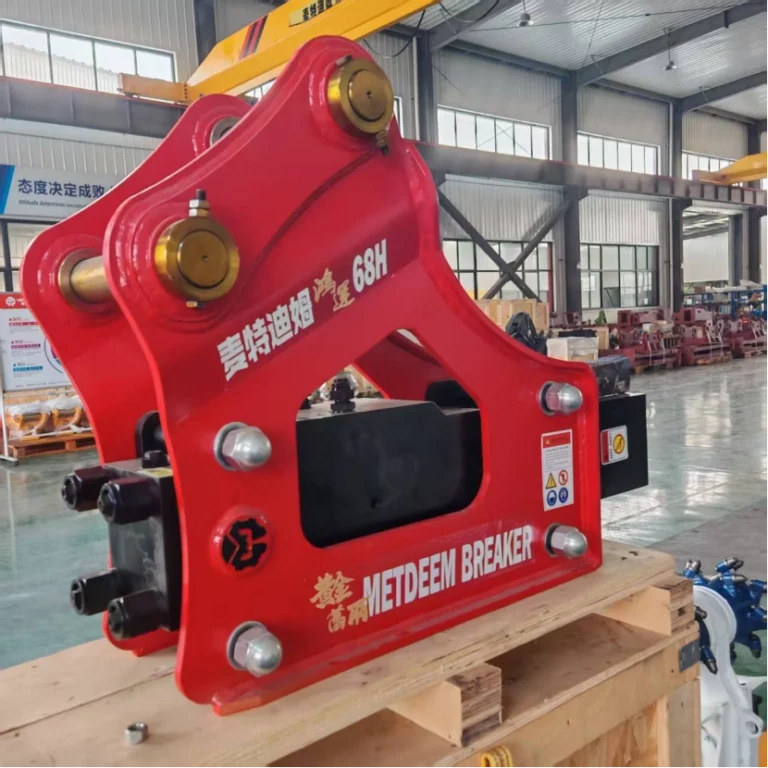
В METDEEM hydraulic breaker range includes models for different excavator sizes and working conditions. Correct machining and accurate assembly help each model deliver stable performance within its rated specifications.
The Directional Valve Controls the Impact Cycle
The directional valve controls the flow of hydraulic oil. It determines when the piston moves upward and when it moves downward. The valve ring and related parts must also maintain proper sealing and movement.
If the valve is poorly processed or incorrectly adjusted, the impact cycle may become unstable. The breaker may fail to start, strike weakly, or stop during operation.
For this reason, valve processing should include dimensional inspection, surface inspection, and functional testing before assembly.
Sealing Technology and Nitrogen Performance
The hydraulic breaker uses several sealing parts to protect oil and nitrogen pressure. These include gas seals, oil seals, main seals, dust seals, and sealing seat rings.
The nitrogen chamber supports impact energy. The gas seal keeps nitrogen inside the back head, while oil seals prevent hydraulic oil from leaking. Dust seals help stop dirt and debris from entering the cylinder when the piston moves.
Why Seal Quality Cannot Be Ignored
A damaged or poorly fitted seal may lead to:
- Nitrogen loss
- Oil leakage
- Reduced impact force
- Piston scratches
- Contamination inside the cylinder
- Increased repair frequency
- Higher operating temperature
Dust is especially harmful in quarry and mining work. Fine particles can enter the front section and damage the piston, chisel, and bushings. Proper sealing, clean hydraulic oil, and regular greasing are therefore essential.
The METDEEM maintenance guidance recommends regular greasing, daily bolt checks, seal replacement based on working hours, and inspection of bushing wear. These maintenance steps help preserve the benefits created during manufacturing.
Quality Control Before Delivery
A durable hydraulic breaker should not leave the factory without testing. Quality control should continue from raw materials to finished assembly.
Important inspection stages may include:
- Raw material inspection
- Forged part inspection
- Hardness testing
- Dimensional measurement
- Cylinder surface inspection
- Piston straightness inspection
- Valve fit inspection
- Seal installation check
- Hydraulic pressure testing
- Nitrogen pressure testing
- Impact performance testing
- Final appearance inspection
A production team should also check whether the hoses, chisel, nitrogen meter, tool box, and other supplied components match the selected model.
В МЕТДИМ, we focus on controlled production, product improvement, ISO 9001 quality management, CE certification, and technical development. Our aim is to provide durable construction machinery and attachments for global users.
Matching Manufacturing Quality with Excavator Capacity
Even a well-manufactured breaker may perform poorly if it is matched with the wrong carrier. Buyers should check excavator capacity in tons, hydraulic flow, working pressure, breaker weight, chisel diameter, and mounting dimensions.
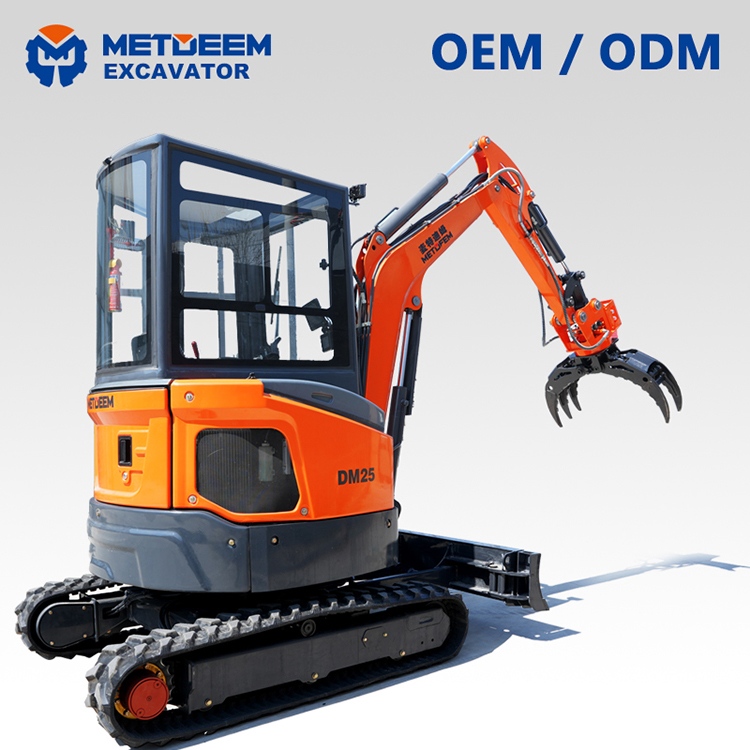
For example, compact excavators may use small breakers with a 30 mm to 45 mm chisel and a hydraulic flow of approximately 15-40 L/min. Larger models may use 140 mm to 230 mm chisels and require much higher flow and pressure.
Before ordering, confirm:
- Excavator capacity in tons
- Hydraulic flow in L/min
- Working pressure in MPa
- Breaker weight in kg
- Chisel diameter in mm
- Nitrogen pressure in kg
- Accumulator pressure
- Mounting bracket size
- Hose connection type
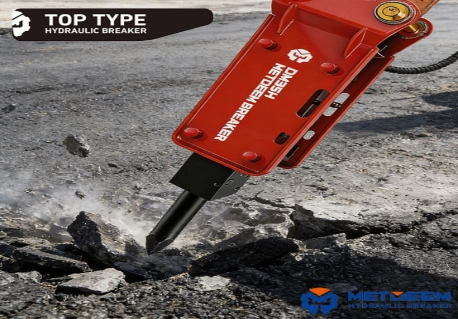
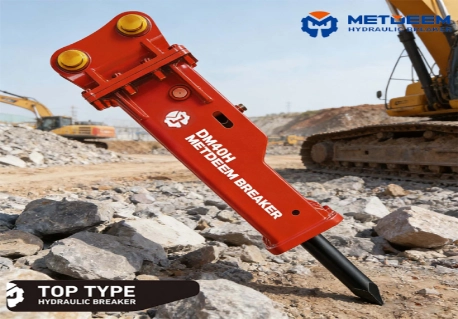
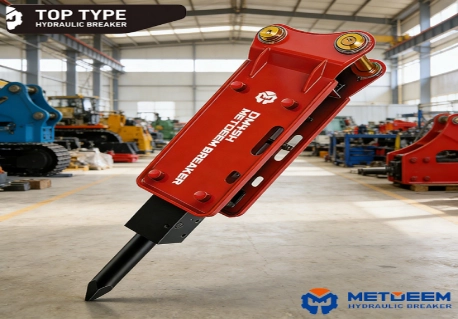
A side breaker may be suitable for horizontal road and quarry work, while a top type breaker may better fit demolition, tunnel, and non-horizontal applications. The outer design changes, but the internal processing standards must remain consistent.
How Durability Supports the Complete Worksite
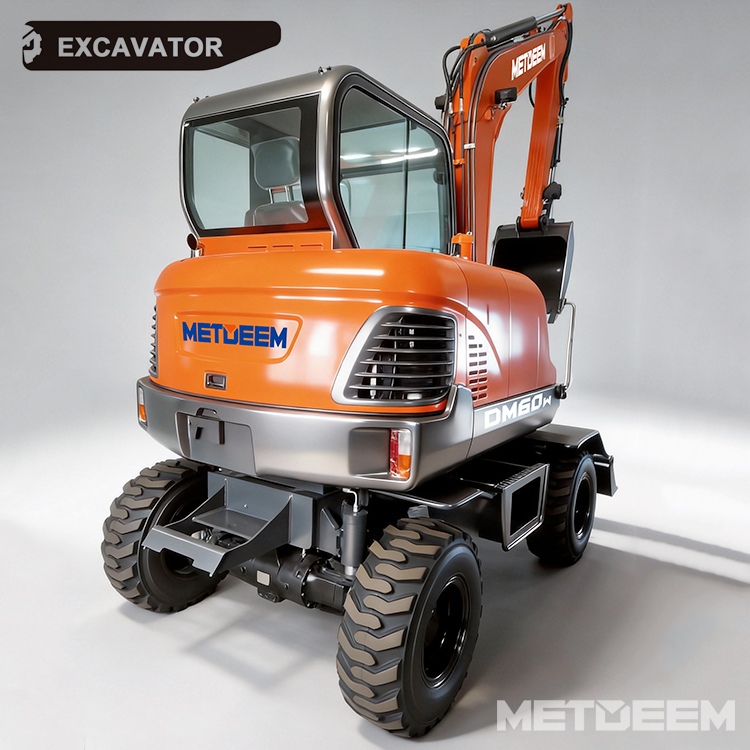
A hydraulic breaker is often used as part of a wider equipment system. After breaking concrete or rock, an excavator wood grapple may move wood and branches. A hydraulic magnet can collect metal debris, while a steel grab or mechanical grapple can handle scrap and structural materials.
In rear mining areas, contractors may use breaking equipment for hard rock, buckets for cleanup, and grabs for sorting and loading. If the breaker suffers frequent failures, the entire work sequence can slow down.
This is why buyers often look for low failure rate hammers. A reliable breaker can reduce unexpected downtime, protect the excavator, and lower the total cost of ownership.
METDEEM supplies hydraulic breakers along with buckets, quick hitches, grapples, magnets, and other attachments. Our construction machinery portfolio is designed to support different construction, quarry, mining, forestry, and agricultural tasks.
Maintenance After Manufacturing
Good processing creates a strong product, but correct use and maintenance determine how long that quality remains. Operators should follow the manufacturer’s working and service recommendations.
Important practices include:
- Grease the breaker every 2-3 hours during operation.
- Check all bolts before daily work.
- Stop if hydraulic hoses vibrate strongly.
- Avoid blank firing.
- Keep the chisel aligned with the material.
- Do not use the chisel as a pry bar.
- Do not strike one point continuously for more than 30 seconds.
- Check seals and nitrogen pressure regularly.
- Replace worn bushings before they damage the chisel or piston.
For models below MD175, seals are commonly replaced after 500-600 working hours. For MD175 and larger models, replacement may be needed after 300-500 working hours, depending on material, dust, temperature, and operating intensity.
METDEEM also communicates with distributors and end users through international exhibitions. This field feedback helps us understand practical challenges and improve product design and service. More information is available on our exhibition page.
Вывод
Hydraulic breaker processing technology is a complete manufacturing system, not a single production step. Material selection, forging, heat treatment, precision machining, sealing, nitrogen control, assembly, and testing all influence the final durability of a breaker.
The piston, cylinder, valve, chisel, bushings, and seals must work together with accurate dimensions and suitable material strength. The breaker must also match the excavator capacity in tons, hydraulic flow, working pressure, and jobsite conditions.
For contractors, dealers, rental companies, and quarry operators, quality processing can mean stronger impact, fewer failures, lower repair costs, and longer service life. A durable hydraulic breaker is not simply a cheaper tool. It is a more reliable investment in the complete project.
FAQs
Q: What is hydraulic breaker processing technology?
A: It is the complete manufacturing process covering materials, forging, heat treatment, machining, assembly, and testing.
Q: Which part delivers impact energy?
A: The piston delivers impact energy to the chisel.
Q: How often should a hydraulic breaker be greased?
A: Grease the breaker every 2-3 hours during operation.