A hydraulic breaker might appear to be a basic tool. However, its striking force relies on a strictly managed internal process. The hydraulic breaker piston sits right at the core of this operation. This part travels very quickly within the cylinder. It passes energy down to the chisel. The chisel then breaks materials like concrete, rock, asphalt, and frozen ground.
The breaker provides consistent hitting power when the piston functions properly. A worn or damaged piston causes problems. An improper match with the excavator also creates issues. In these cases, the entire attachment will likely lose strength. This drop in power hurts daily productivity. It also increases fuel consumption and repair expenses while delaying project timelines.
What Does a Hydraulic Breaker Piston Do?
The piston acts as the primary moving part within a hydraulic breaker. Its main duty is changing hydraulic fluid power into physical striking energy. First, the hydraulic oil builds up pressure. Next, the piston speeds up. Finally, the piston hits the top of the chisel. The chisel then pushes that heavy force directly into the target material.
This action repeats over and over. It frequently occurs multiple times within a single second. The sequence seems straightforward from the outside. Yet, the piston must stay perfectly straight, tightly sealed, and stable throughout each stroke. Just a tiny scratch on the surface can cause trouble. A slight loss of proper fit will also lower the overall output.
The piston operates in close coordination with several other components:
- Middle cylinder
- Directional valve
- Nitrogen chamber
- Oil seals
- Чисель
- Front head
- Bushings
- Accumulator on some models
Simply attaching a larger breaker cannot fix a weak piston. The entire hydraulic breaker setup needs to function together as a single, unified machine.
How the Piston Converts Hydraulic Energy
The operating cycle starts as high-pressure fluid flows into the breaker. This oil forces the piston up through the middle cylinder. During this upward travel, the back section of the piston squeezes the nitrogen gas located inside the back head.
After that, the directional valve shifts the path of the oil. The fluid pressure moves to the top side of the piston. At the same time, the squeezed nitrogen gas releases its trapped energy. The fluid power and the gas expansion work together. They push the piston down at a very high velocity.
The piston crashes into the chisel shank. The shockwave travels straight through the steel tool. It finally strikes the concrete or solid rock. This sequence forms the fundamental hydraulic breaker working principle.
Therefore, a piston handles three linked tasks:
- It takes in pressure directly from the hydraulic system.
- It packs and discharges energy alongside the nitrogen chamber.
- It passes heavy striking energy down to the chisel.
Any instability in these steps will cause problems. Both the hitting power and the striking speed might fluctuate.
Why Piston Quality Matters
A hydraulic breaker operates under constant pounding. It faces intense surface pressure, extreme heat, and heavy rubbing. The piston takes on a massive portion of this physical stress. The chosen metal and its overall hardness matter greatly. The exterior smoothness and cutting precision also play major roles. All these factors directly determine how long the part will last.
The main parts list for METDEEM breakers shows a specific metal. The piston consists of forged 40CrNiMo alloy steel. Engineers choose this specific material for its raw strength and durability. It also resists damage from endless pounding. The production method holds equal importance. A tough metal will still break down if the factory shapes it poorly. Incorrect heat treatment will also ruin a strong material.
Piston Material and Surface Treatment
A dependable hydraulic breaker piston material needs to fight off cracks. It must avoid bending out of shape while maintaining a highly polished exterior. The component has to glide smoothly through the cylinder. It must do this without creating too much rubbing. Furthermore, the outer finish needs to interact properly with the installed oil seals.
Important manufacturing factors include:
- Forged alloy steel
- Controlled heat treatment
- Accurate diameter
- Smooth surface finish
- Correct hardness
- Stable concentricity
- Resistance to corrosion and wear
A rough piston surface may damage seals. Excessive clearance may cause internal oil leakage. A bent piston can create uneven impact and damage the cylinder wall.
At METDEEM, we treat the piston as a core performance part rather than an ordinary replaceable rod. Our production focus covers material selection, machining, testing, and matching between piston, cylinder, valve, and chisel.
How the Piston Affects Breaker Performance
The quality of the piston influences more than impact force. It also affects working speed, vibration, oil temperature, seal life, and the working condition of the excavator.
A good piston supports:
- Stable striking frequency
- Better energy transfer
- Lower internal friction
- Longer seal life
- Lower vibration
- Reduced oil leakage
- More predictable maintenance
- Lower risk of sudden failure
This is why buyers looking for low failure rate hammers should study internal components, not only the outer frame or painted housing. A strong shell is useful, but it cannot compensate for a poor piston or damaged cylinder.
Impact Force and Energy Transfer
The energy of each blow depends on the piston’s mass, speed, and movement control. A piston that moves smoothly can transfer more usable energy to the chisel. If the piston loses alignment, part of the energy becomes friction, heat, or vibration.
This matters in several difficult applications:
- Quarry rock breaking
- Road foundation removal
- Concrete demolition
- Tunnel excavation
- Frozen soil work
- Rear mining access preparation
- Industrial structure removal
In quarrying, even a small reduction in impact efficiency can slow the entire material flow. In urban excavation, excessive vibration may create additional challenges near buildings, roads, or underground services.
Piston Problems and Warning Signs
A piston does not always fail without warning. Operators and service teams can often identify early signs before a full breakdown occurs.
Common warning signs include:
- Noticeably weaker impact
- Unstable striking frequency
- Metallic knocking sounds
- Excessive hose vibration
- Hydraulic oil leakage
- High oil temperature
- Slow starting
- Reduced breaking speed
- Chisel or bushing wear
- Cylinder scoring
A weak breaker is not always caused by the piston. Low hydraulic flow, incorrect pressure, wrong nitrogen pressure, a blocked line, or a damaged valve can create similar symptoms. Proper diagnosis should check the complete system.
The piston and cylinder must also be measured together. Replacing only the piston may not solve the problem if the cylinder has excessive wear. Incorrect clearance can lead to internal leakage and rapid damage to the new part.
Matching the Breaker to the Excavator
The piston is designed to work within a specific hydraulic range. The excavator must provide suitable oil flow, pressure, carrier weight, and stability. This is especially important for compact excavators, rental fleets, and mixed equipment fleets.
A breaker that is too large may overload the arm, bracket, hoses, and hydraulic system. A breaker that is too small may strike quickly but lack enough energy for hard rock or thick concrete.
Before selecting a model, check:
- Excavator capacity in tons
- Hydraulic flow in L/min
- Working pressure in MPa
- Chisel diameter in mm
- Breaker operating weight in kg
- Mounting pin size
- Nitrogen pressure
- Accumulator pressure, if fitted
МЕТДИМ breaker models cover applications from mini excavators to large machines. For example, smaller models use chisel diameters around 30-53 mm, while heavier models may use 140-230 mm chisels. The correct match depends on the excavator capacity in tons and the hydraulic specifications, not on appearance alone.
A common buyer question is: which models are best for urban excavation work? For narrow streets, residential areas, and indoor demolition, DM30-53 breakers and box type breakers are often practical choices because they offer easier machine control and, in the box type design, better noise protection.
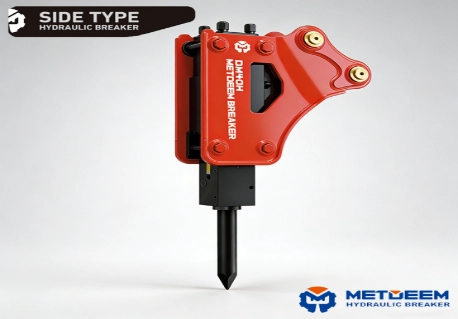
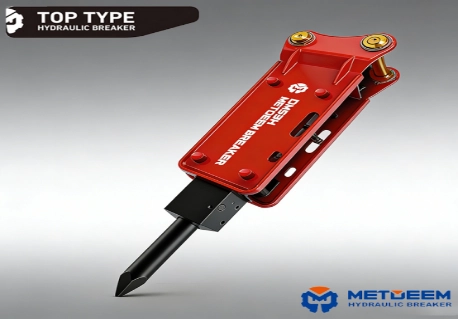
You can review the METDEEM hydraulic breaker range to compare box type, side type, and top type options.
Piston Maintenance and Daily Operation
Good operation protects the piston. The operator should keep the chisel aligned with the material and avoid side loading. The breaker should not be used as a pry bar, lifting tool, or rock-moving device.
Continuous blank firing is especially harmful because the piston strikes without proper resistance from the material. Operators should also avoid holding the breaker on one point for too long. If the material does not crack, move the chisel or attack another area.
Daily maintenance should include:
- Checking for loose bolts
- Inspecting hoses and fittings
- Checking oil leakage
- Adding grease every 2-3 hours
- Inspecting the chisel and bushings
- Watching for abnormal vibration
- Checking nitrogen pressure as required
For models below MD175, seals are commonly replaced after around 500-600 working hours. For MD175 and larger models, replacement may be required after approximately 300-500 working hours, depending on working conditions.
For long-term storage, the chisel should be removed and the piston should be pushed into the cylinder. The piston end, chisel, and bushings should be protected with grease or rust inhibitor. Hose connections should be capped to prevent dust and moisture from entering.
В METDEEM hydraulic breaker maintenance guide also emphasizes nitrogen checks, lubrication, storage, and regular inspection.
How the breaker Fits into a Larger Attachment Fleet
An excavator rarely performs only one task on a modern site. After breaking concrete or rock, operators may switch to a bucket, grab, or magnet to clear the material. This makes attachment compatibility and quick replacement increasingly important for contractors.
After using a hydraulic breaker, the excavator may work with:
- Excavator timber grab for logs and branches
- Steel grab for scrap and structural metal
- Hydraulic magnet for collecting ferrous debris
- Mechanical grapple for general material handling
- Bucket for loading and cleanup
- Pulverizer for processing reinforced concrete
METDEEM supplies a wider range of construction machinery and attachments, including breakers, buckets, grapples, quick hitches, and material-handling equipment. Our construction machine product range is designed for construction, mining, quarrying, agriculture, and demolition applications.
The piston still matters even when the breaker is only one part of the workflow. If the breaker suffers repeated failures, the excavator, operator, and following cleanup equipment may all be delayed.
Вывод
The piston is the power-transfer center of a hydraulic breaker. It receives hydraulic pressure, works with the nitrogen chamber, accelerates inside the cylinder, and transfers impact energy to the chisel. Its material, machining accuracy, surface finish, and alignment directly affect breaking power, vibration, seal life, and downtime. Choosing the right breaker also requires matching the piston system to the excavator capacity in tons, hydraulic flow, pressure, and working condition. With correct lubrication, nitrogen checks, proper alignment, and regular inspection, a well-made piston can support reliable performance in quarrying, urban excavation, demolition, and mining support work.
FAQs
Q: What is the main role of a hydraulic breaker piston?
A: It converts hydraulic pressure and nitrogen energy into impact force for the chisel.
Q: What material is used for METDEEM breaker pistons?
A: METDEEM breaker pistons commonly use forged 40CrNiMo alloy steel.
Q: How often should hydraulic breaker seals be replaced?
A: Models below MD175: 500-600 hours; MD175 and larger: 300-500 hours.