The Growing Need for Efficient Timber Handling Solutions
In forestry, timber processing, and wood recycling industries, workers move, sort, stack, and load thousands of kilograms of logs each day. Traditional manual methods often demand heavy labor and lead to production delays. As companies seek safer and more productive options, excavator attachments have grown into a key element of modern material handling.
A high-quality excavator wood grapple can change a standard excavator into a strong timber handling machine. It provides strong gripping force, smooth operation, and precise control. As a result, operators finish loading and sorting tasks more quickly. At the same time, they reduce reliance on manual labor.
For companies that manage large volumes of timber, selecting the right wood grapple matters greatly. The choice affects productivity, operating costs, and long-term business results.
Common Challenges in Timber Handling Operations
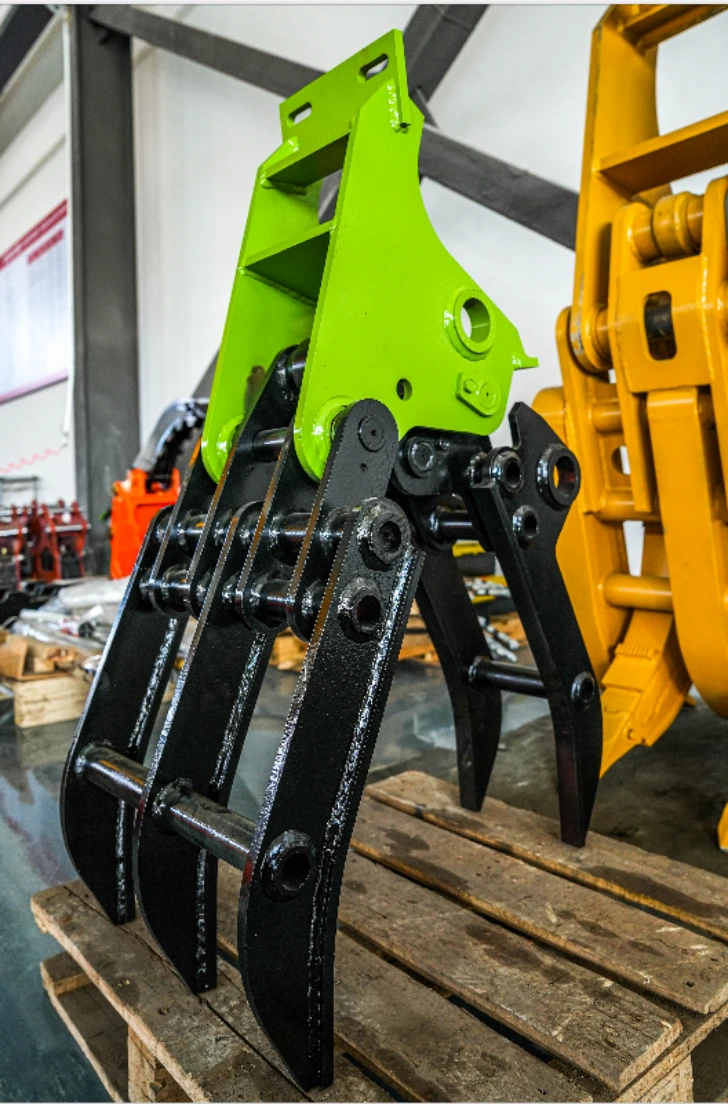
The timber industry meets several daily challenges that influence efficiency and profitability. These range from transportation delays to material damage. Traditional handling methods frequently fail to satisfy the needs of modern production settings.
Labor Costs and Safety Risks in Manual Timber Movement
Moving logs by hand is physically tiring and creates safety risks. Timber is heavy, uneven in shape, and hard to manage. Workers therefore face possible accidents from slipping loads or unstable lifting techniques.
Common problems include high labor needs for loading and stacking. Handling speed often drops during peak production times. The risk of injuries rises during lifting work. In addition, it becomes difficult to keep material organization consistent.
Mechanical solutions such as excavator wood grapples let operators manage large amounts of timber with improved control and higher workplace safety.
Material Organization and Product Loss Issues
Good timber organization affects transportation efficiency and product value directly. Weak stacking methods can clog work areas, slow truck loading, and extend handling time.
For valuable timber, incorrect gripping or too much pressure may create surface damage, cracks, or changes in shape. A suitable wood grapple supplies controlled gripping force. Operators can therefore move logs while they limit unnecessary damage.
These challenges explain why advanced attachments have become necessary in forestry and wood processing operations. The right equipment does more than move materials. It builds a smoother workflow from collection to final transportation.
How an Excavator Wood Grapple Works
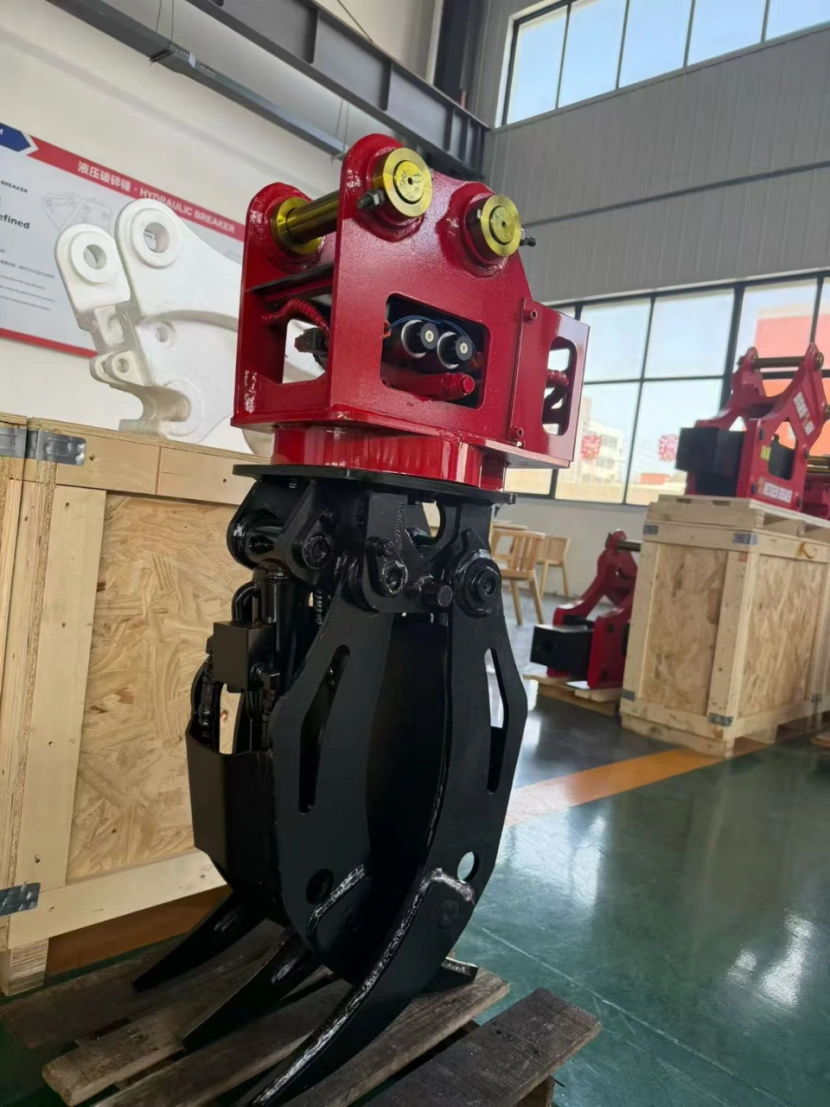
An excavator wood grapple attaches to the front of an excavator. It performs tasks such as grabbing, lifting, rotating, and positioning timber. The grapple uses the excavator’s hydraulic system to manage the opening and closing of its arms.
The operator directs the hydraulic cylinder through the excavator controls. When the cylinder extends or retracts, the grapple fingers close to hold logs firmly or open to release them. This allows the grapple to turn materials for more exact placement.
Main Functions of a Wood Grapple
A professional wood grapple delivers several important functions. These include log grabbing that holds different sizes of timber materials securely. It also supports sorting that separates logs by size, type, or processing needs. Loading becomes faster and better organized. Position adjustment lets operators place materials with accuracy. Finally, rotation control adds flexibility during stacking and transportation.
For forestry companies and recycling facilities, these functions cut unnecessary movements. They also raise overall work efficiency.
Mechanical vs Hydraulic Wood Grapples: Which One Fits Your Operation?
Different working environments need different attachment solutions. Mechanical and hydraulic wood grapples each bring distinct advantages. Understanding these differences helps operators pick the correct option.
Before they choose a grapple, businesses should review workload frequency, material size, required accuracy, and future growth plans. A simple operation may work well with a mechanical design. Continuous industrial work, however, often needs a hydraulic solution that offers greater flexibility.
Mechanical Wood Grapples
Mechanical wood grapples rely on the excavator arm movement and the existing hydraulic cylinder system to control opening and closing. They feature a relatively simple structure. Therefore, they suit occasional timber handling tasks.
Advantages of Mechanical Grapples
Mechanical models remain popular because of several practical benefits. These include lower purchase cost, a simple structure, fewer maintenance requirements, and a reduced number of potential failure points.
Limitations of Mechanical Grapples
Mechanical designs still present some restrictions. These involve limited angle adjustment, no independent rotation function, and usual unsuitability for frequent attachment changes.
They form a good choice for light-duty operations where basic timber movement forms the main requirement.
Hydraulic Wood Grapples
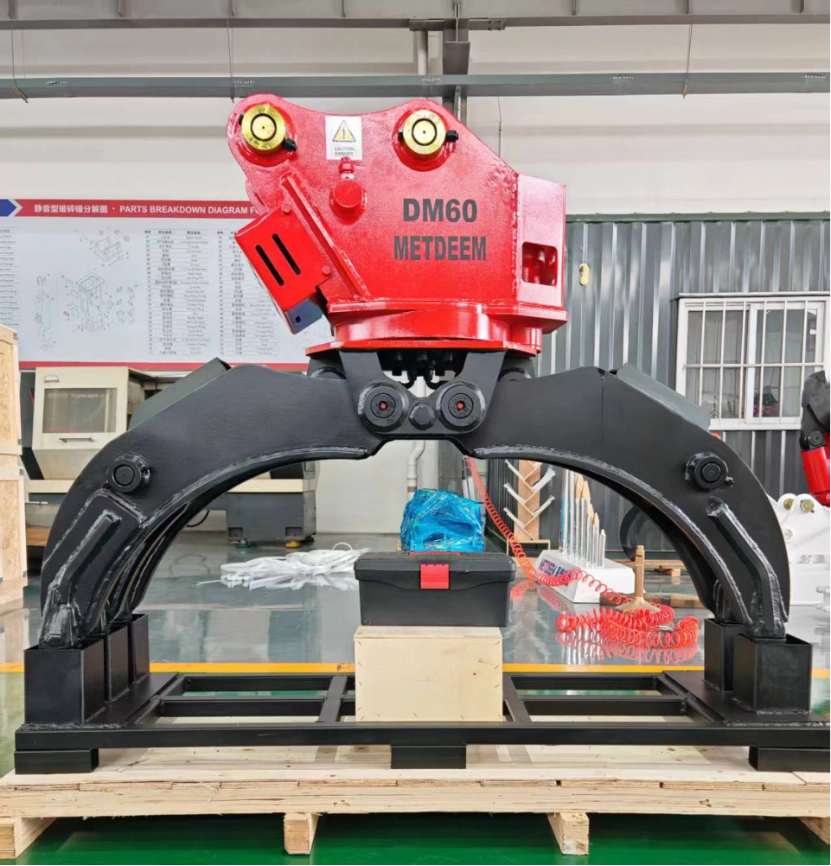
Hydraulic wood grapples employ their own hydraulic cylinders to control gripping. Many models also include independent rotation motors. They are built for professional operations that demand higher efficiency and precision.
We develop METDEEM wood grapples with practical working conditions in mind. Our hydraulic wood grapple solutions emphasize strong gripping performance, flexible operation, and long service life.
Advantages of Hydraulic Grapples
Hydraulic models supply several important benefits. These include stronger gripping force, 360-degree rotation capability, faster attachment changes when combined with a quick coupler, better control over material placement, and reduced risk of timber damage.
For companies that handle large timber volumes every day, hydraulic grapples can deliver notable productivity improvements.
Key Factors When Choosing an Excavator Wood Grapple
Selecting the correct grapple requires attention beyond the purchase price. The equipment must match the working environment, excavator specifications, and production goals.
Consider Working Frequency and Material Type
Businesses should evaluate several points. These include daily timber handling volume, log size and weight, required stacking accuracy, operating environment, and attachment replacement frequency.
For occasional use, a mechanical grapple may offer enough performance. For continuous forestry or recycling operations, a hydraulic grapple generally provides better long-term value.
Check Compatibility and Product Quality
A reliable wood grapple must fit the excavator’s hydraulic system and working requirements. Material strength, pin quality, and manufacturing standards also affect service life.
عند ميتديم, we concentrate on durable construction and practical design. Our products use high-strength materials and carefully chosen components. These choices support stable performance in demanding environments.
Typical Applications of Excavator Wood Grapples
Wood grapples appear widely in industries that need efficient handling of long and heavy materials.
Timber Processing Facilities
In wood processing plants, grapples assist with several tasks. These include feeding logs into processing equipment, moving finished timber products, organizing storage areas, and supplying recycling equipment.
Improved material flow helps factories keep continuous production.
Forestry and Logging Operations
In forest environments, wood grapples see common use for multiple purposes. These involve collecting scattered logs after cutting, creating organized timber piles, preparing materials for transportation, and sorting logs by size and quality.
Better organization reduces handling time and raises transportation efficiency.
Additional Material Handling Uses
Although designed mainly for timber, wood grapples can also manage other long materials. These include bamboo, straw, reeds, and similar lightweight bulk materials.
This flexibility allows one excavator to finish more tasks across different industries.
Why Choose METDEEM Wood Grapples?
At METDEEM, we design مرفقات الحفار according to real working conditions and customer requirements. Our aim is to deliver reliable solutions that help operators raise productivity and reduce operating challenges.
Our wood grapples provide wide compatibility suitable for various excavator applications. They feature strong construction built with wear-resistant materials for long service life. Reliable components support stable operation and easier maintenance. In addition, we offer professional support that includes product selection guidance and installation assistance.
We believe a good attachment should perform well and also create long-term value for customers.
استنتاج
An excavator wood grapple serves as an important tool for raising timber handling efficiency. Compared with traditional methods, it supplies faster operation, better safety, and more accurate material control. Whether the grapple is used in forestry, timber processing, or recycling, the right model can help businesses lower labor pressure and improve workflow.
METDEEM provides durable and practical wood grapple solutions designed for professional material handling needs. With strong construction, flexible operation, and reliable performance, our products help customers complete demanding jobs more efficiently. Choosing the right attachment forms not only an equipment decision but also an investment in future productivity.
FAQs
Q: What is an excavator wood grapple used for?
A: It is used for grabbing, sorting, rotating, and loading timber materials.
Q: Can METDEEM wood grapples fit different excavators?
A: Yes, METDEEM wood grapples support many excavator applications with proper specifications.
Q: Are hydraulic wood grapples better for frequent work?
A: Yes, hydraulic wood grapples provide stronger control for continuous operations.