Embracing New Year Goals for Your Fleet
In the Chinese New Year, people often pause to look back and set fresh aims. The custom of fresh starts and steady gains applies just as well to building work. It hits home for those who run machine fleets and handle daily ops.
The drive for betterment fits the kickoff of a new moon cycle. This makes it a prime spot to check and refresh your gear. Targets like trimming fuel burn or sharpening task accuracy can shift your fleet’s work in big ways.
Why Equipment Upgrades Make Strategic Resolutions
Updating gear, above all key parts like hydraulics, beats a quick patch or short-term band-aid. Boosting hydraulic work cuts fuel tabs sharply. It also shortens cycle runs and stretches machine life. At METDEEM, we hold that taking on fresh updates forms a strong business aim. It matches daily targets and green practices.
Understanding Excavator Hydraulic Systems
Core Components of Hydraulic Systems
Excavators depend on hydraulic systems for their drive and signals. These units hold pumps that push flow along. They include valves that steer the path and force. Actuators, such as cylinders and motors, handle the actual jobs. Electronic control units tie all the moves together.
The hydraulic system of an excavator primarily enables the working device to perform actions such as digging, bucket lifting and rotation, unloading and returning, and overall machine movement. A solid hydraulic setup keeps the engine’s power flowing evenly. It delivers steady, teamed actions for the boom, arm, bucket, or drive tracks.
Common Challenges in Traditional Systems
Older hydraulic systems face issues like heavy power draw, warmth from inside drips or part rub, and slow kick-ins. Yet, if the oil runs cheap or wears out, the rubber builds up. This sparks excess heat, shortens part spans, and muddies move handling. Slow starts and weak links between actions do more than annoy. They trim output and hike fuel needs.
Advantages of Advanced Hydraulic Technologies
Load-Sensing System Benefits
Newer load-sensing systems shift pump yield to fit live force needs. They skip steady high-force runs when they are not called for. This slashes power loss big time.
Valve Control Precision and Its Impact
Sharp valve handling eases shifts between tasks. Think of raising the boom as you turn or curling the bucket. This proves key for tough dig work. Excavators often perform complex actions, such as simultaneously raising the boom, retracting the stick, hooking the bucket, and rotating.
Top valves make this flow without hitches. They ease driver strain and lift job finish.
METDEEM’s Hydraulic Innovations
Key Features of METDEEM Systems
METDEEM has built strong hydraulic units with built-in load-sensing tech and fine main valve handling. These let power adjust to needs and keep multi-task runs smooth. With designing capability and a QA system in all production processes, METDEEM continues to outperform customers’ expectations. Our setups shine in spots like quarries or builds. They handle variable pulls without skipping a beat.
Performance Gains from METDEEM Upgrades
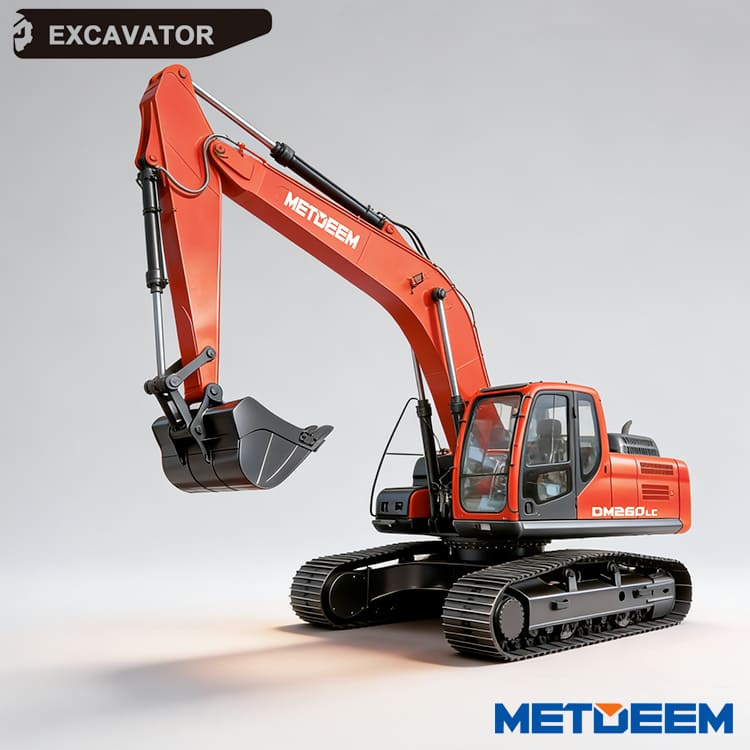
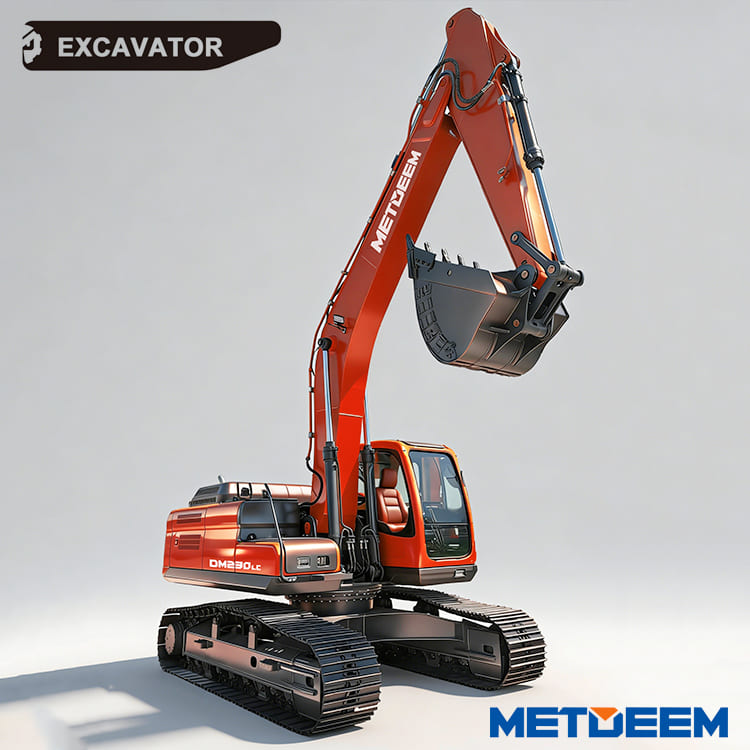
Units such as the METDEEM DM230LC and METDEEM DM260LC carry Kawasaki main pumps and control valves. They team with Doosan Motors. This setup gives fast replies in rough work.
Under standard conditions, the fuel consumption is about 12 liters per hour (DM230LC), while still delivering 1.1 m³ of bucket capacity—an optimal balance of efficiency and output.
Operational Cost and Time Savings Analysis
Fuel Efficiency and Cost Reduction Metrics
Based on average working hours of 2,000 hours annually and fuel prices around $1/L: A 20% reduction in fuel consumption can save up to 4,800 liters/year. At $1/L, this translates to $4,800/year per machine. Reduced component strain also lowers maintenance costs by extending intervals between overhauls. If overheating occurs in a hydraulic system and is not addressed promptly, it can have extremely adverse effects on the system.
Time-Saving Through Improved Coordination
Gear like the METDEEM DM60W packs a quick hydraulic setup and tight action links. It wraps tasks faster. The hydraulic system is responsive, the control is precise, and it is convenient for conducting meticulous leveling and slope correction operations.
Better overlap of functions leads to higher daily productivity with less operator fatigue—a significant benefit in labor-intensive operations.
In slope work on roadsides, this cuts the finish time. Drivers handle fine grades without extra passes, drawing from hands-on trials in varied terrains.
Planning Your Fleet Upgrade This New Year
Evaluating Your Current Fleet Performance
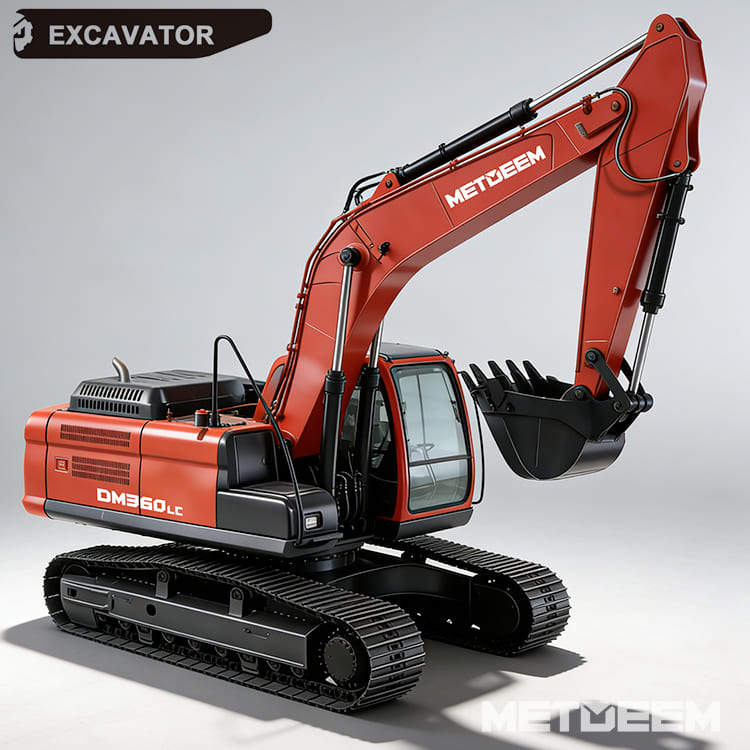
Worn hydraulic units often spark heat, slow moves, or regular fixes. When the oil temperature of the excavator hydraulic system is too high, the back pressure valve and bypass valve should be checked for faults. Using performance benchmarks from METDEEM DM260LC or DM360LC, you can calculate ROI by comparing current fuel usage vs. expected savings post-upgrade.
Steps Toward a Successful System Upgrade
- Conduct a system audit with your maintenance team.
- Consult METDEEM to determine compatibility with retrofit kits.
- Plan installations during Chinese New Year downtime to minimize disruptions.
We provide reliable spare parts support and professional technical guidance, ensuring seamless integration into your existing fleet.
Conclusion: A Red Envelope of Efficiency for Your Projects
Switching to solid hydraulic setups like METDEEM’s matches the New Year push for growth, wins, and steady runs. With built-in load-sensing and sharp valve handling across our excavator lineup, including DM230LC, DM260LC, and DM360LC, it’s more than a tech swap. You’re putting money into enduring work boosts.
FAQ
Q: What is a load-sensing hydraulic system?
A: A load-sensing system adjusts hydraulic pressure based on real-time demand, improving efficiency by reducing unnecessary energy use.
Q: How does valve control precision affect excavator performance?
A: Precise valve control allows smoother coordination between different movements, leading to faster cycle times and improved accuracy.
Q: What are the cost benefits of upgrading to METDEEM’s hydraulic systems?
A: Upgrades can reduce fuel consumption by up to 20%, lower maintenance costs, and increase daily productivity — resulting in significant annual savings.
Q: Can METDEEM systems be retrofitted to existing excavators?
A: Yes, METDEEM offers retrofit solutions compatible with various excavator models for seamless integration.