Land clearing serves as an essential initial phase in various construction, farming, and yard projects. If you are setting up a spot for a fresh structure or handling wild plants, picking the proper land clearing attachments can cut down on hands-on work and boost output. Effective land clearing promotes safety, enhances access, and paves the way for upcoming growth.
Common Tools for Clearing Land
To clear land, you need a combination of sturdy tools based on the ground and plant types. Typical options cover bulldozers, chainsaws, excavator buckets, trenching buckets, and brush cutters. For accurate and flexible work, hydraulic attachments such as tilt buckets and quick hitches help broaden the uses of main machines. Hydraulic tools use the strength of pressurized liquid to create power. This setup leads to easier handling, greater turning force, and steady results across different weights. Plus, hydraulic systems provide improved handling and flexibility when linked with building gear like excavators and skid steers.
Understanding Hydraulic Brush Cutters
What is a Brush Cutter
A brush cutter stands out as a strong tool for land clearing, built to chop through dense plants such as weeds, bamboo, and young trees. It differs from basic grass mowers, since these are made for tough jobs on rough ground.
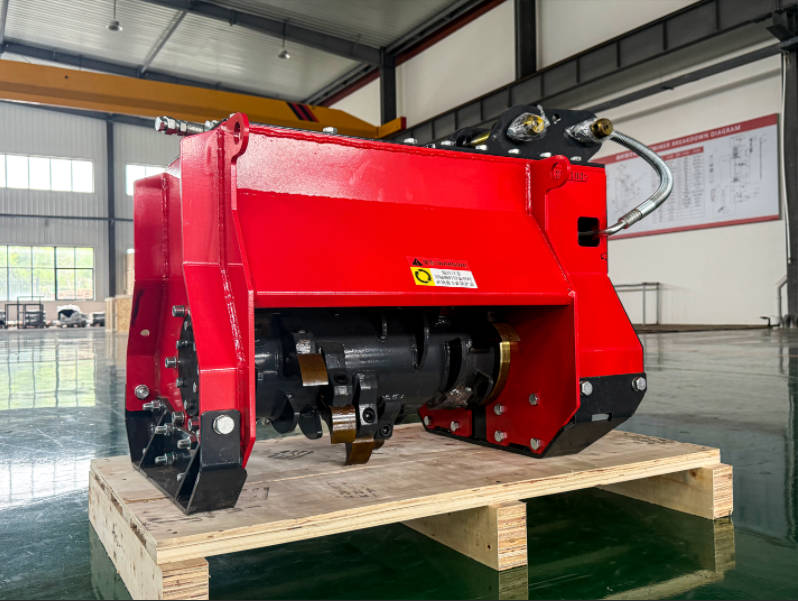
Hydraulic brush cutters link up to an excavator or skid steer through an arm connection. The hydraulic setup drives the cutting edges via a motor fueled by the machine’s hydraulic oil stream. METDEEM Brush Cutter handles weeds, bamboo, and various trees with ease. It also tackles hedge plants on road dividers, growth along riverbeds, road edges, and hillsides, plus weeds and mixed trees on golf courses and fields.
Key Components Explained
A hydraulic brush cutter usually has a steel body, hydraulic motor, blade setup, and pulley arrangement. The body structure stays small, lightweight, and adaptable, offering quick cutting rates, good output, safety, and dependability. The hydraulic motor features a high-turning-force and fast-speed build with solid cutting power and reliable steadiness. The pulley setup prevents direct connections that might harm the motor; swapping the pulley proves straightforward, and you can adjust its tightness easily.
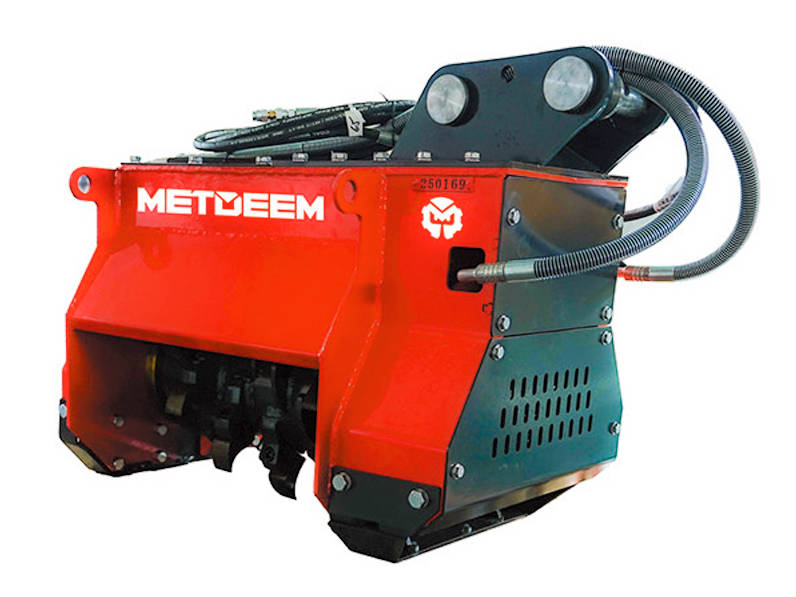
Main Parts of a Hydraulic Brush Cutter
- The Cutting Head: This part is where the main work takes place. Edges fixed to the head rotate quickly to cut through plants. METDEEM models come with tough blade setups that manage anything from soft grass to thick brush.
- The Hydraulic Motor: The hydraulic motor has a high torque and high-speed design with strong cutting force and good stability, making it the core power source of the cutter. It takes in fluid pressure from the excavator’s hydraulic lines, which then effectively powers the blades.
- The Mounting Arm: Installation is straightforward using the excavator arm link; the hydraulic oil path follows the broken hammer pipe style. Because of this, METDEEM’s brush cutters work well with most current excavators, and you won’t need big changes to set them up.
Applications in Land Management
Forestry and Vegetation Control
Hydraulic brush cutters are well-suited for controlling forest floor growth, trimming busy spots, or opening paths. In forestry jobs, they play a key role in keeping fire lines clear and roads open. For instance, forest workers often use them to remove underbrush in wooded areas, preventing fires from spreading quickly during dry seasons.
Site Preparation and Construction
Before any big building task begins, you must remove plants and junk from the land. Brush cutters aid in making flat areas ready for measurements and base work. Take a typical housing development: crews clear out old shrubs and roots first, so the ground stays even for foundations, saving time on later steps.
Roadside Maintenance and Utility Work
These tools fit perfectly for hedge plants on road dividers, growth on riverbeds, road shoulders, and slopes, which makes them very useful for city offices and public projects. Utility teams, for example, rely on them to cut back vines along highways, ensuring safe visibility for drivers and easy access for repairs.
Using METDEEM Hydraulic Brush Cutters
Overview of METDEEM Products
At METDEEM, we craft our hydraulic brush cutters to be tough but simple to run. METDEEM brand Brush Cutter is suitable for 1.5-30 ton excavators, serving a wide array of building machine demands. We provide a few models like DM02, DM04, DM06, and DM08. Each one matches various machine sizes and cutting tasks. In real jobs, the DM02 model helps small farms clear edges without much hassle, while the DM08 tackles larger sites like road projects.
Compatibility with Excavators and Skid Steers
Simple installation with the excavator arm link; the hydraulic oil road uses a broken hammer pipe. Our attachments pair up with most brands, including Caterpillar®, Komatsu®, Volvo®, SANY®, and others. This turns them into handy choices for builders. Field reports show that switching between brands takes just minutes, keeping downtime low on busy sites.
Benefits of Choosing METDEEM
Our brush cutters focus on lasting strength and user-friendly design. Low input cost, can replace the workload of 15 workers, thus saving labor costs. Maintenance stays basic, often just needing grease for moving parts; blade replacement is simple. On top of that, we supply full OEM/ODM options to fit your specific job needs. Contractors often note how one METDEEM unit cuts daily expenses by handling what a full crew might do in hours, based on experiences from farm clearings to urban lots.
Choosing the Right Attachment
Factors to Consider Before Buying
When picking a brush cutter or other land clearing attachment, think about things like ground type, plant thickness, machine fit, hydraulic flow needs, and safety during use. For rough hills with thick weeds, you might need a model with extra power, whereas flat fields call for something lighter.
Matching Cutter Size to Your Machine
Make sure your excavator or skid steer delivers the right hydraulic output to run the cutter. For example:
- DM02: Length 1200mm – fits smaller machines.
- DM04: Length 1222mm – for mid-sized operations.
- DM06: Length 1830mm – ideal for heavy-duty tasks.
- DM08: Length 1900mm – designed for large-scale jobs.
The METDEEM Brush Cutter is suitable for 1.5-30 ton excavators, making it easy to find a model that suits your equipment. Users in the field, such as those on 2-ton excavators, find the DM02 perfect for daily tasks without overloading the system, drawing from years of on-site feedback.
Safety and Maintenance Tips
Safe Operation Guidelines
Always check the gear before starting. Confirm that all hydraulic links hold tight and blades show no damage. Workers must use safety items like gloves, eye protection, and sturdy boots. Keep onlookers away from the work zone. In practice, teams on construction sites follow these steps to avoid accidents, like ensuring clear perimeters during slope clearing.
Routine Maintenance Checklist
- Check blade sharpness regularly.
- Lubricate moving parts as required.
- Inspect hydraulic hoses for leaks.
- Tighten bolts and fittings.
- Replace worn or damaged components promptly.
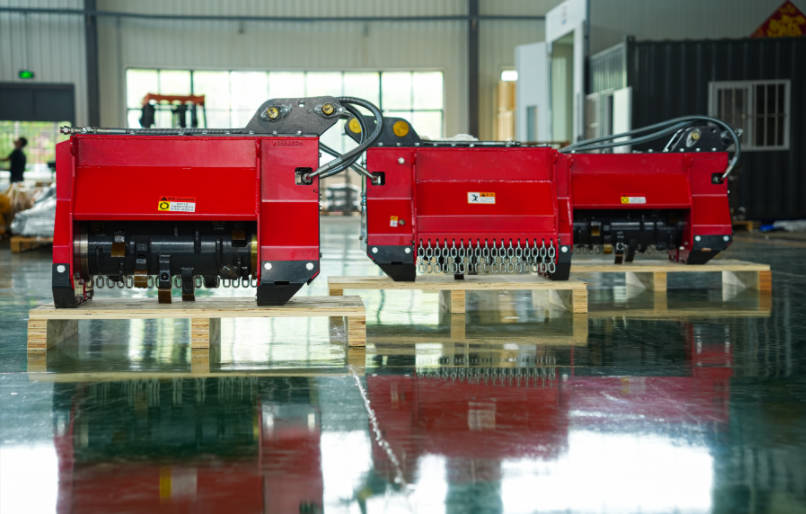
Each attachment will be tested before delivery. Our QC will submit the inspection report before shipment. Operators report that sticking to this list extends tool life by months, based on routine checks in demanding environments like riverbank jobs.
Conclusion
As a trusted construction machinery manufacturer with global reach, METDEEM is committed to delivering high-performance land clearing attachments that work as hard as you do. Whether you’re managing a small farm or developing a commercial site, our brush cutters will help you get the job done efficiently and safely. From clearing overgrown lots in rural areas to prepping urban builds, these tools have proven reliable in countless projects worldwide, backed by user stories of quick setups and long runs.
FAQ
Q: Can I use METDEEM brush cutters with any excavator?
A: Yes! METDEEM Brush Cutter is suitable for 1.5-30 ton excavators and works with all major brands like CAT®, Komatsu®, Volvo®, etc.
Q: How often do I need to replace blades?
A: Blade replacement frequency depends on usage intensity, but blade replacement is simple and usually only needed after heavy use in abrasive conditions. In tough spots like rocky slopes, teams swap them every few weeks, while lighter farm work stretches it to months.
Q: Is customization available?
A: Absolutely! Products can be customized according to personalized requirements with excellent after-sales service.
Q: What warranty does METDEEM offer?
A: METDEEM Excavator hydraulic Brush Cutters are guaranteed against failure due to defective design, materials, or workmanship for one year or 2,000 hours. Free replacement service within the first six months.