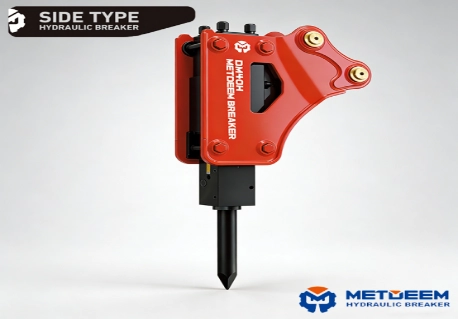
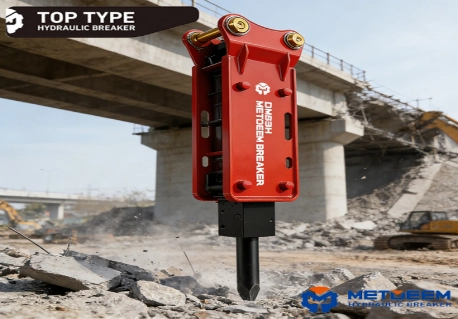
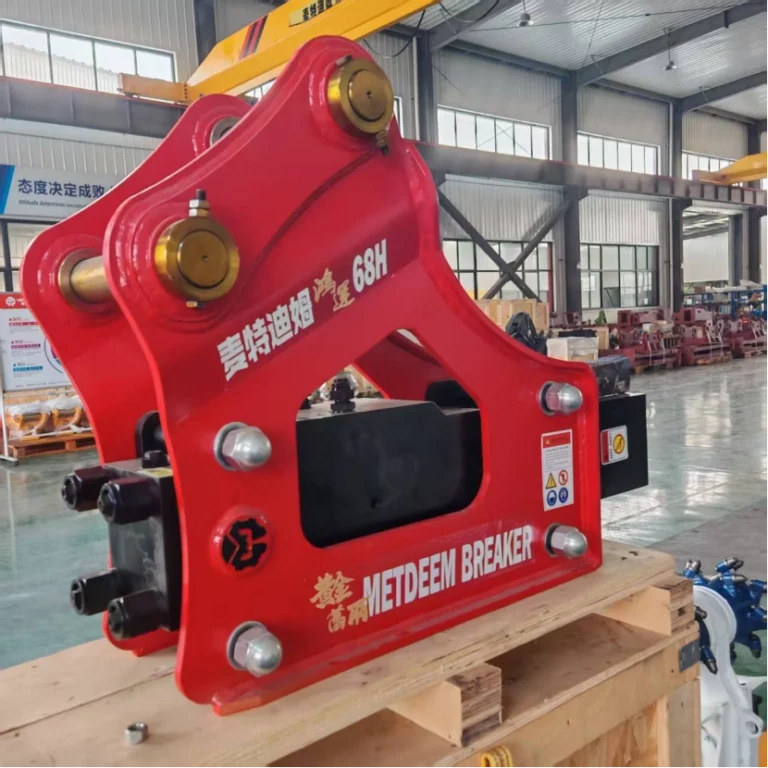
With the acceleration of urbanization, the demand for operations in narrow spaces such as interior renovations, basement expansions, and greenhouse renovations is increasing day by day. Many brands have all launched mini excavators, with the lightest model weighing as little as 0.8 tons. They are small in size, lightweight, and highly maneuverable, capable of easily entering places that large equipment cannot reach, such as workshops, basements, and greenhouse sheds. However, with just a bucket, the potential of small excavators has not been fully exploited. Today, at the METDEEM factory, we will share from a practical perspective how to enable a small excavator to achieve “multiple uses with one machine” through quick hitches and various attachments, increasing efficiency by 5 to 10 times.
Core Advantages and Limitations of Small Excavators
Advantages: Flexible, highly accessible
- Compact size: Models ranging from 0.8 to 3 tons typically have a width of less than 1 meter and can pass through standard doorways.
- Small turning radius: Can rotate 360 degrees in narrow corners without affecting the surroundings.
- Low ground pressure: Rubber tracks cause almost no damage to the completed ground.
- Easy transportation: Can be transported using pickup trucks or small trailers, without the need for large flatbed trucks.
Limitations: A single function cannot meet complex working conditions
When a small excavator leaves the factory, it is usually only equipped with a standard bucket, which can only perform simple digging and backfilling tasks. If tasks such as crushing, grasping, and cutting are required, the equipment must be replaced or human labor must be relied upon. However, when humans work in a confined space, such as in the demolition of basement walls, it takes 2 to 3 days, which is not only inefficient but also poses safety risks.
Solution: By using quick hitches and specialized tools, a small excavator can switch its functions within a few minutes and complete various operations such as digging, crushing, grasping, and cutting.
The core for maximizing the efficiency of small excavators: Quick Hitch
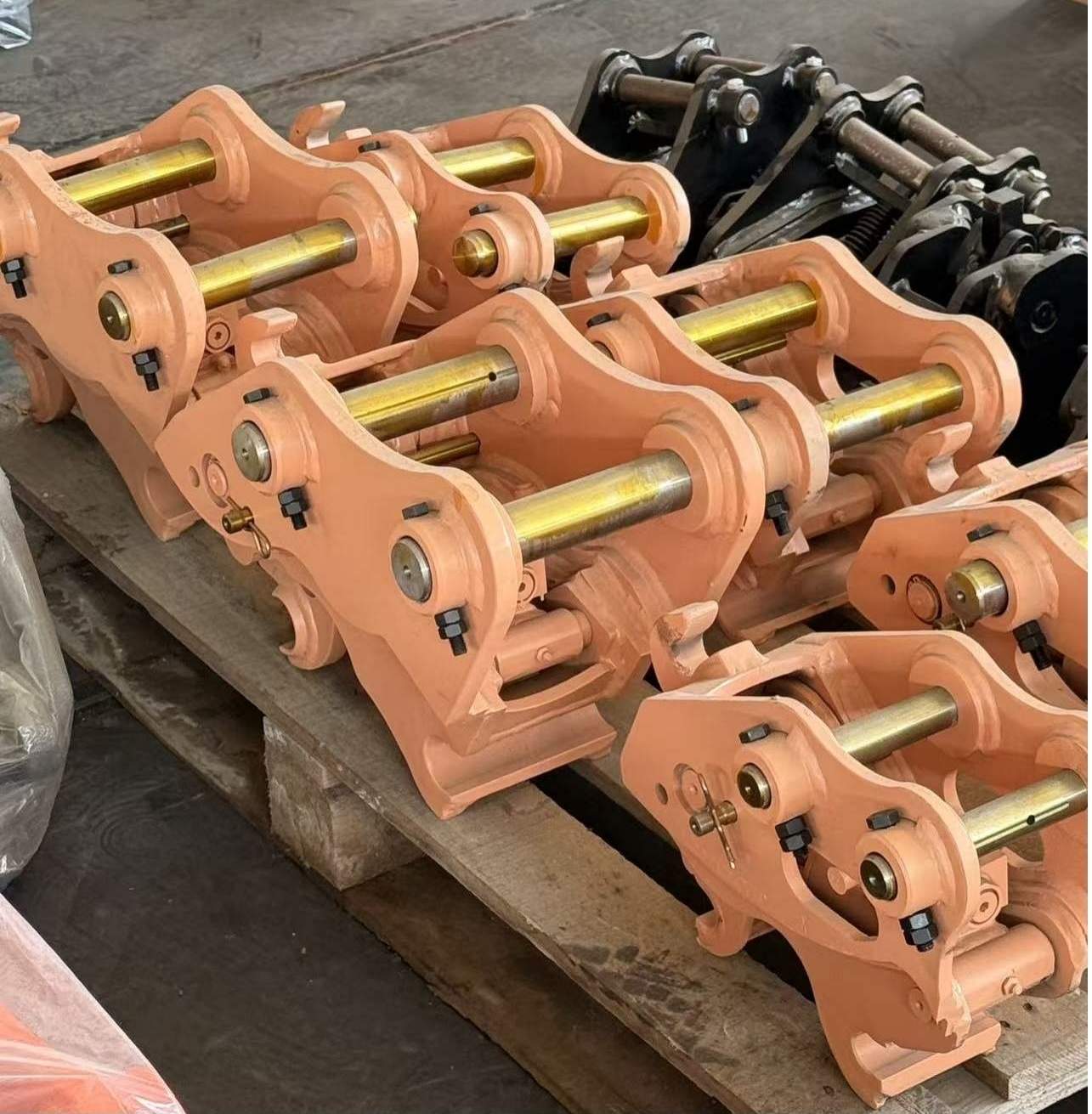
What is a Quick Hitch?
The Quick Hitch is installed at the front end of the excavator’s boom. It enables quick locking and disengagement of attachments and the excavator through hydraulic or mechanical means. METDEEM has specially developed lightweight Quick Hitches for small excavators, featuring the following characteristics:
- Replacement of attachments can be completed within 30 seconds, without the need to disassemble the pin shaft.
- The operator can operate alone, without having to get off the machine or requiring auxiliary tools.
- Dual safety mechanisms: hydraulic lock + mechanical lock, preventing accidental detachment.
- Wide compatibility: compatible with excavators of various brands ranging from 0.8 to 10 tons.
Why are quick hitches a necessary prerequisite for “multi-purpose in one machine”?
Without quick hitches, changing attachments requires two people to work together. They need to use a sledgehammer to strike the pin, then re-drill the hole and install it again. This process takes 30 to 60 minutes, and frequent disassembly and assembly will accelerate the wear of the pin holes. With quick hitches, the driver can complete the switch by simply toggling the switch in the cab. This truly enables “changing as needed”. An excavator equipped with 3 to 5 types of attachments has an operation range equivalent to 3 to 5 sets of dedicated equipment, while the total cost is only the cost of one excavator plus the attachments.
Four Typical Attachments for Efficient Utilization of Small Excavators
Demolition and Disassembly: One micro-excavator requires 8 workers
- Typical working conditions: Demolition of basement walls, crushing of stairs, renovation of old floors, demolition of indoor structures.
Using manual electric hammers or pneumatic picks to remove concrete is extremely inefficient and very dangerous when performed at heights or on stairs. However, small excavators (such as 1.5-ton models) equipped with impact hammers can be positioned on a stable surface and use the boom to precisely aim the hammer at the target. Even if the stairs collapse, it will not harm people or equipment.
- Efficiency comparison:Manual method: A team of 3 people can dismantle approximately 10-15 square meters of concrete walls in a day.
- Micro excavation + hammer crusher: One machine can dismantle 80-100 square meters of concrete in a day, with an efficiency 6-8 times that of manual work.
- METDEEM recommended accessories: Mini hydraulic breaker (suitable for 1-3 ton excavators), featuring imported oil seals and nitrogen acceleration system, with stable impact force and low noise.
Excavation and Loading: Quickly change, seamless connection
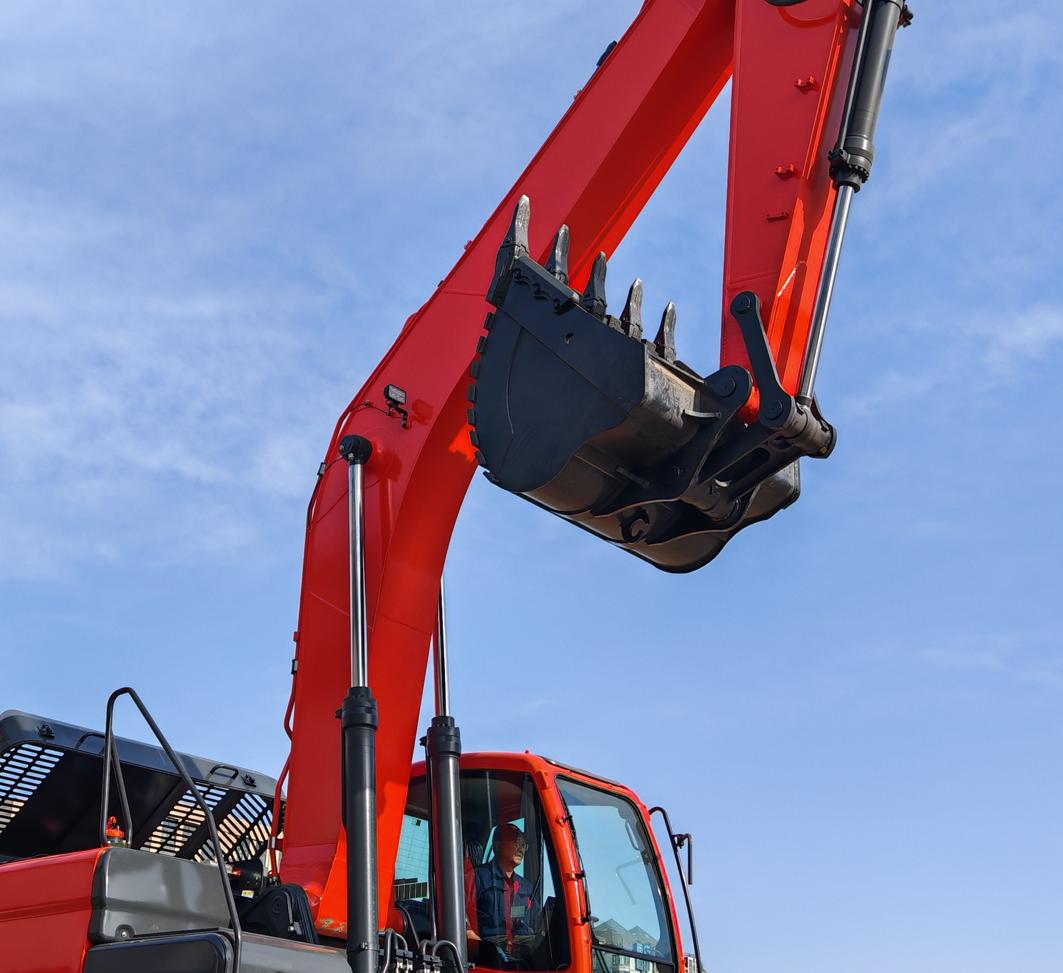
- Typical applications: ditch excavation, site leveling, construction waste loading.
After the dismantling is completed, a large amount of waste will be piled up at the site. At this point, by using the quick connector to replace the breaker hammer with the bucket, the process of loading and clearing can be carried out. The entire process takes no more than one minute and does not require waiting for the second machine.
- Operating techniques:
Choose rock buckets with reinforcing ribs to enhance wear resistance.
Use thumb clamps to assist in grasping large chunks of concrete, improving loading efficiency.
Material Grabbing: Grabbing tools for wooden and stone materials make transportation easier
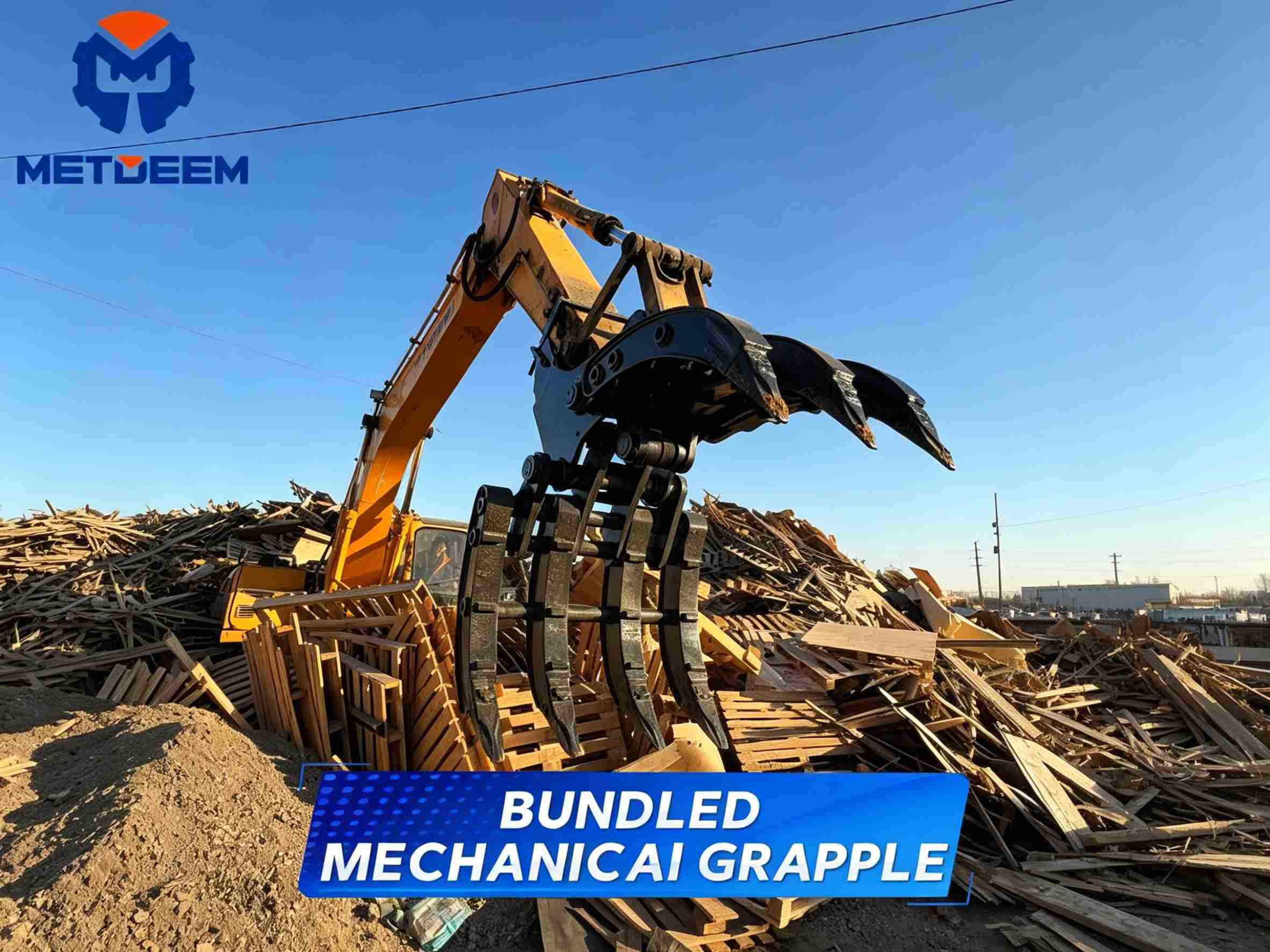
- Typical working conditions: Loading and unloading in wood storage areas, stone material transportation, and scrap steel recycling.
Replace the hydraulic timber-grabber or stone-grabber, and a small excavator can be transformed into a “multi-functional mechanical hand”. The grabber adopts a multi-leaf design, which can rotate 360 degrees. It is stable in grasping and does not damage the materials. It is particularly suitable for transporting bundled wood, bagged cement, stones, etc. in narrow loading yards or greenhouses.
- METDEME Advantages: The single-cylinder wood-grabber is lightweight and does not reduce the lifting capacity of the excavator; the tip of the grab is embedded with wear-resistant alloy teeth, ensuring a long service life.
Shearing and Disassembly: The Effective Use of Eagle-Claw Shears and Heavy-duty Shears
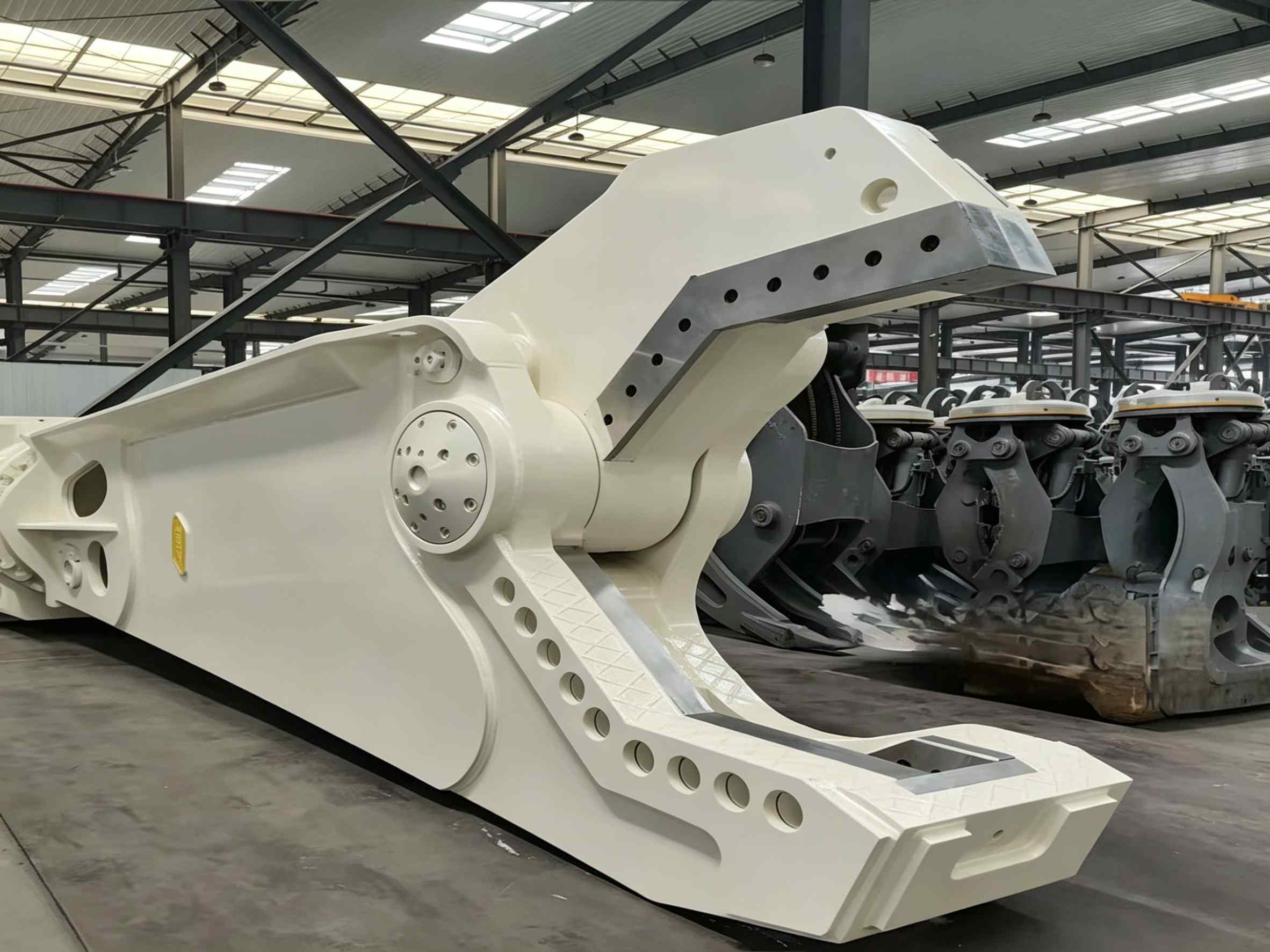
- Typical Applications: Scrap vehicle dismantling, light steel structure demolition, and steel bar shearing.
Small excavators can be equipped with Eagle Shears or double-cylinder heavy-duty shears. By leveraging the powerful clamping force of the hydraulic system, they can easily cut through car chassis beams, thin steel plates, reinforcing bars, etc. This is a highly valuable investment for users engaged in scrap vehicle recycling or light dismantling projects.
- Note: The hydraulic flow of small excavators is relatively limited. It is recommended to choose lightweight cutting tools specifically designed for small-tonnage applications to avoid overload.
- Chart: Common Tools Used in Small Excavators and Efficiency Improvement Comparisons
| Tool name | Primary function | Efficiency improvement by replacing manual labor | Recommended excavator tonnage |
| Quick connector | 30 seconds to change attachments | Replacement time reduced by 95% | 0.8 – 10 tons |
| Hydraulic breaker | Concrete / brick wall crushing | 6 – 8 times | 1 – 3 tons |
| Bucket | Excavation, loading | 3 – 5 times | All series |
| Hydraulic grabber | Grasping wood, straw | 4 – 6 times | 2 – 6 tons |
| Grabber | Transporting stones, scrap steel | 4 – 5 times | 3 – 8 tons |
| Eagle-nose shears | Automobile, light steel cutting | 5 – 7 times | 3 – 10 tons |
- Note: The efficiency improvement is based on a comparison of typical working conditions between 3 to 5 manual teams.
How to select the appropriate small excavator attachments for your specific working conditions
Select the core tools based on the type of work
- For demolition-oriented tasks: Impact hammer + bucket + quick connector.
- For transportation-oriented tasks: Wood/gravel grabber + quick connector + optional finger clamp.
- For disassembly-oriented tasks: Eagle jaw shears + bucket + quick connector.
- For comprehensive construction sites: Quick connector + impact hammer + bucket + grabber (four-piece set).
Three Criteria for Selecting Reliable Suppliers
- Weight Matching: The weight of the equipment should not exceed 30% of the lifting capacity of the excavator, otherwise it will affect stability.
- Hydraulic Parameter Matching: Ensure that the hydraulic flow rate (L/min) and working pressure (bar) of the excavator are consistent with the requirements of the equipment.
- Safety Certification: The quick connector must have a double safety structure and provide an official test report from the factory.
The METDEEM team can offer free selection consultation. Based on your excavator brand, model and specific working conditions, they will recommend the most suitable combination of attachments.
Conclusion
The small excavator itself is a flexible tool, but it can truly unleash its great potential only when paired with quick hitches and diverse attachments. From demolition and crushing to material grasping, from ground compaction to steel structure cutting, with a micro excavator and a few sets of attachments, it can handle over 80% of the tasks on the construction site. This not only significantly improves construction efficiency and shortens the construction period, but also reduces labor costs and accident risks.
METDEEM focuses on the research and development of front-end attachments for excavators. They provide high-quality, cost-effective quick-change systems, breaker hammers, grabs, and shears for various brands of excavators ranging from 0.8 to 50 tons. If you want to enable your small excavator to achieve “multi-purpose operation and efficient work”, please contact us through the official website or the contact information below to obtain a customized accessory solution.
Enable every excavator to generate greater value. METDEEM looks forward to cooperating with you! Contact us to explore more.
FAQ
Q:My excavator is a Kubota 1.5-ton model. Can it be equipped with a quick connector?
A:OK. METDEEM provides dedicated quick hitches for small excavators ranging from 0.8 to 10 tons. During installation, there is no need to modify the original vehicle’s oil system, and it can be installed and used immediately.
Q:Will the quick connector accidentally come loose during use?
A:No. The METDEEM quick connector adopts a dual design of hydraulic self-locking and mechanical safety mechanism. Even if the engine is turned off or the hydraulic pipeline loses pressure, the mechanical lock pin will remain in a locked state.
Q:Does the crushing hammer need additional hydraulic piping?
A:Yes. Small excavators usually have pre-installed crushing hammer piping, or it can be optionally installed. After installation, it can be used immediately. METDEEM can provide a complete piping kit.
Q:How many types of attachments can be equipped on a small excavator at most?
A:There is no theoretical limit. However, it is recommended to always have 3 to 5 of the most commonly used attachments on hand, such as impact hammers, buckets, and tree grabbers. The rest can be rented or purchased temporarily according to the project requirements.
Q:After purchasing the METDEEM accessories, is there any after-sales support available?
A:Yes. METDEEM offers a one-year warranty and lifetime technical support. This includes installation guidance, training on usage, and troubleshooting, ensuring that you can operate efficiently.