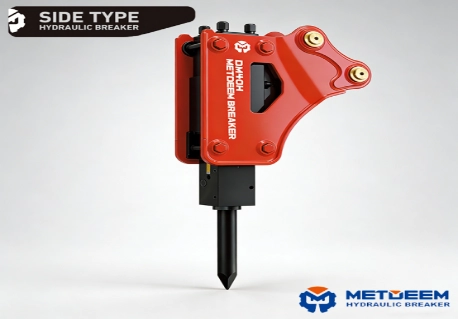
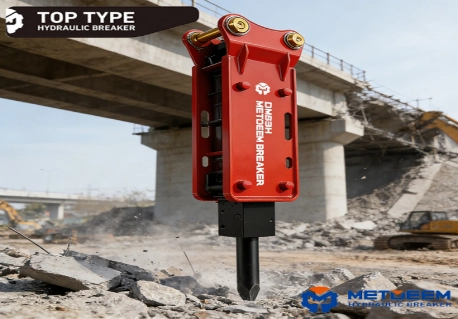
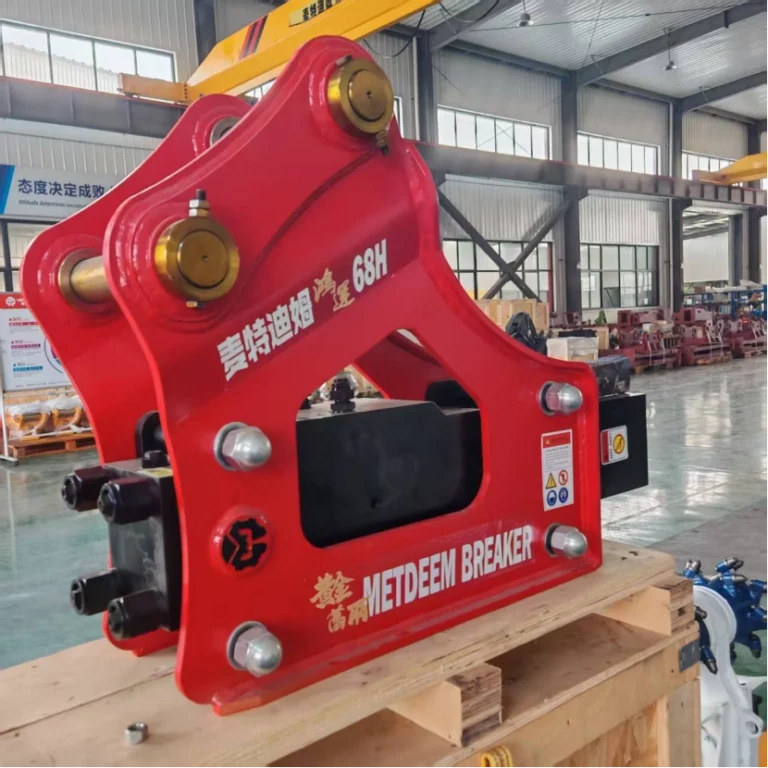
Le interrupteur hydrauliquecomme l'un des accessoires les plus importants d'une pelle, doit fonctionner dans des conditions difficiles, comme dans les mines et les chantiers de construction, pendant de longues périodes de temps à haute intensité.
Sa structure interne est très précise et la charge de travail est énorme. Sans entretien et entretien standardisés, cela entraîne non seulement une diminution de la force d'impact et de l'efficacité, mais peut également causer des dommages aux composants de base, ce qui entraîne des coûts d'entretien élevés et des pertes d'arrêt à long terme.
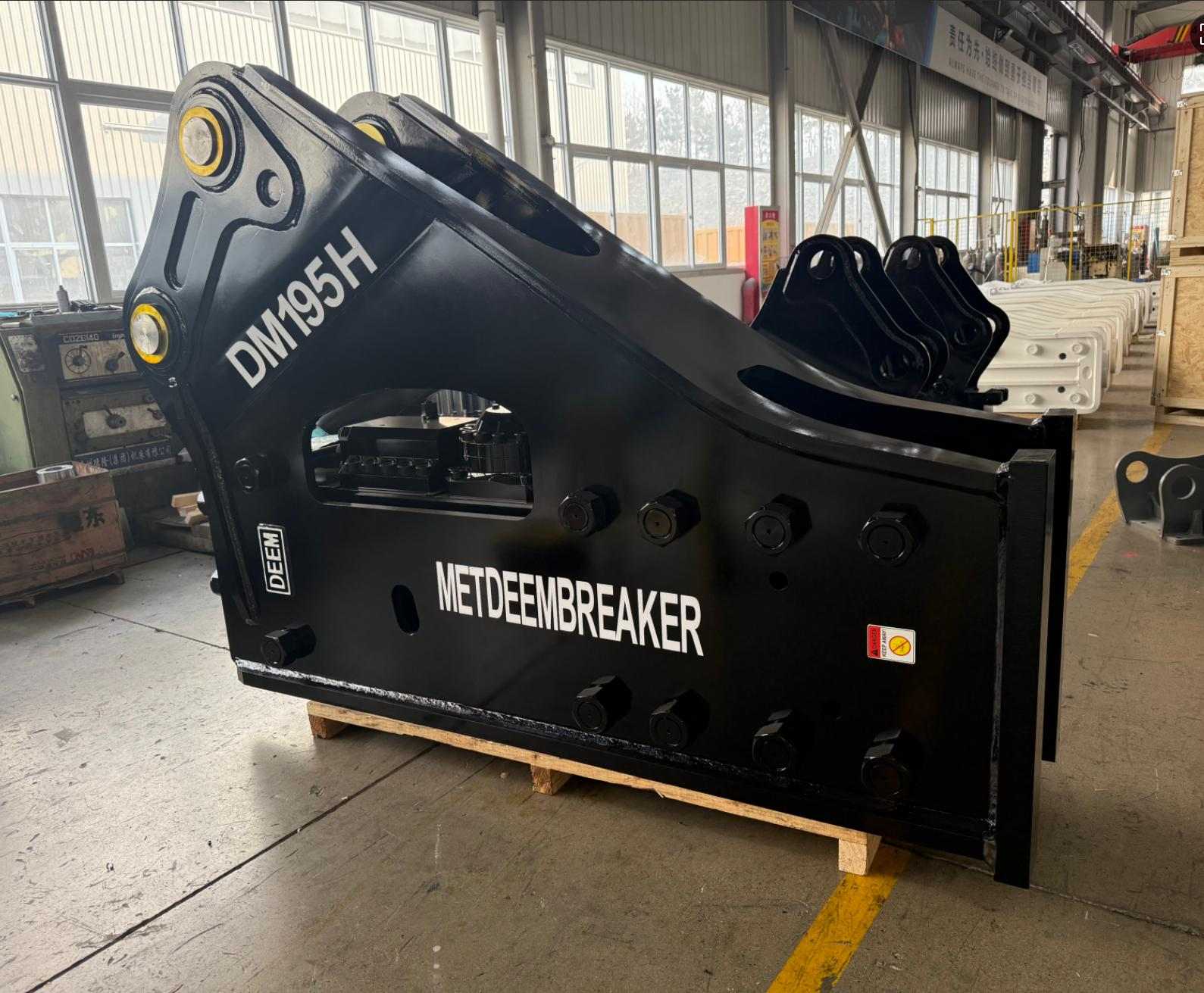
Une utilisation et une maintenance correctes sont les clés pour déverrouiller le potentiel du disjoncteur et étendre l'équipement’ S durée de vie. Cet article détaillera systématiquement les spécifications d'entretien complètes des disjoncteurs METDEEM depuis leur installation initiale jusqu'à leur utilisation quotidienne, aidant chaque utilisateur à bien utiliser le disjoncteur et à le maintenir correctement.
Première installation: éliminer les risques, jeter une base solide
Avant d'installer le marteau disjoncteur sur l'excavatrice, il y a une étape cruciale qui est souvent négligée – nettoyer les débris des tuyaux hydrauliques.
Empêcher l'entrée de débris
Avant d'installer le nouveau briseur, il peut y avoir des traces d'impuretés ou de résidus qui sont entrés dans le tuyau de concasseur de l'excavatrice pendant le transport et le stockage. Si ces contaminants pénètrent à l'intérieur du disjoncteur avec l'huile hydraulique, ils peuvent gratter le piston et le cylindre de montage précis, provoquant des dommages irréversibles.
Étapes opérationnelles
- Connectez les tuyaux d'entrée et de retour de l'impacteur directement au tuyau du corps du marteau.
- Ouvrez la vanne d'arrêt sur la conduite hydraulique.
- Appuyez sur l'interrupteur de pied d'impact de l'excavatrice pour faire circuler l'huile hydraulique dans le pipeline.
Connexion et échappement de tubes flexibles
Une fois le rinçage de la conduite terminé, la connexion réelle entre le marteau de coupe et l'excavatrice peut être effectuée. Connectez l'entrée d'huile (IN) du marteau de rupture au tuyau d'alimentation d'huile haute pression de l'excavatrice et connectez la sortie d'huile (OUT) au tuyau d'huile de retour. Assurez-vous qu'il n'y a pas de connexion inverse.
Fonctionnement d'échappement
- Une fois la connexion terminée, placez le ciseau verticalement au sol.
- Activez l'interrupteur en appuyant doucement ou en lui appuyant rapidement et intermittemment.
- Laissez l'huile hydraulique pénétrer lentement à l'intérieur du marteau de rupture et expulsez l'air restant dans le tuyau et le corps du marteau.
Entretien quotidien: la prévention est la clé pour éviter les problèmes
Inspection des fixations
Le marteau disjoncteur fonctionne sous vibration haute fréquence et il est possible que les boulons de connexion et autres éléments de fixation du boîtier se détachent.
remplissage beurre
La fonction du beurre est non seulement de lubrifier, mais aussi de former un film protecteur entre le ciseau et les manchons intérieurs et extérieurs, réduisant considérablement l'usure.
- Fréquence d'ajout: Ajoutez une fois avant de commencer le travail, puis ajoutez toutes les 2 heures de travail.
- Quantité d'ajout: L'ajout régulier est d'environ 50 millilitres.
- Ajout initial spécial: Pour le marteau disjoncteur nouvellement installé, le passage interne de l'huile n'a pas encore de graisse. L'ajout initial nécessite environ 100 millilitres pour assurer une lubrification adéquate.
Remplacement des composants d'étanchéité
Les composants d'étanchéité sont les pièces clés qui empêchent les fuites d'huile hydraulique et maintiennent la pression du système. À mesure que le temps d'utilisation augmente, ces composants d'étanchéité vieilliront naturellement et s'usureront.
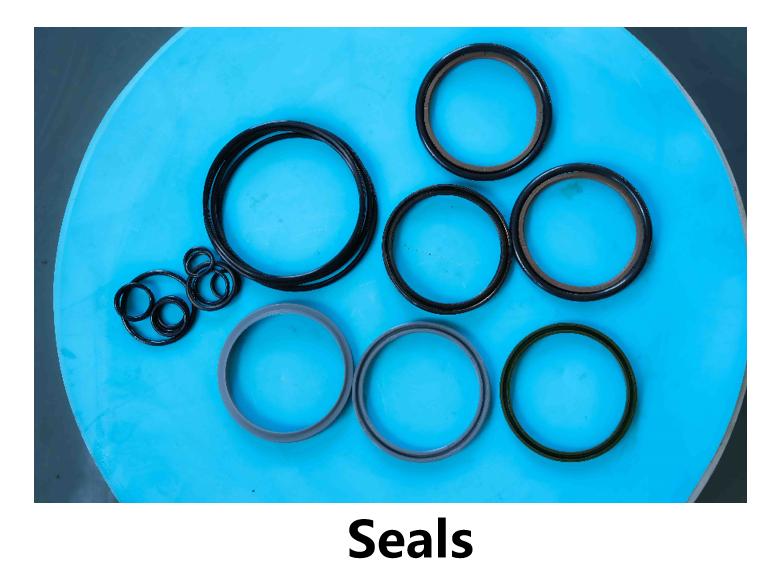
Cycle de remplacement en fonction du diamètre du ciseau
METDEEM a formulé un cycle de remplacement préventif scientifique pour les composants d'étanchéité basé sur les conditions de travail de différents types de marteaux à impact:
- Pour les ciseaux de diamètre inférieur à 100 mm, il est recommandé de les remplacer toutes les 2500 à 3000 heures.
- Pour les ciseaux de diamètre allant de 100mm à 175mm, il est recommandé de les remplacer toutes les 1500 à 2000 heures.
- Pour les ciseaux de plus de 175 mm de diamètre, il est recommandé de les remplacer toutes les 1000 à 1500 heures.
| Chisels Diamètre(mm) et | ≤ 100 | 100–175 | ≥175 |
| Suggesté Remplacement Ccycle(heures) | chaque 2500 à 3000 | Chaque 1500 à 2000 | Chaque 1000 à 1500 |
Gestion des situations anormales
Si une fuite d'huile est détectée pendant l'utilisation, qu'elle ait atteint ou non la durée spécifiée, la machine doit être arrêtée immédiatement et les pièces d'étanchéité remplacées.
Entretien du système d'azote: le noyau pour assurer une force d'impact stable
La pression d'azote détermine directement l'efficacité d'impact du marteau disjoncteur. Les inspections régulières et la gestion normalisée sont la clé pour garantir les performances de l'équipement.
Inspection de l'azote dans le bloc cylindre arrière
- Fréquence de vérification: Il est recommandé de vérifier une fois par semaine.
- Fonction: La pression d'azote dans le cylindre arrière affecte directement la force d'impact. Si la pression est trop basse, l'impact sera faible; si la pression est trop élevée, il peut provoquer le piston à ne pas retourner.
- Ajustement: Utilisez un manomètre d'azote dédié et des outils de remplissage pour ajuster la pression à la valeur standard spécifiée pour ce modèle.
Vérification de l'azote pour l'accumulateur
Certains modèles de marteaux à impact sont équipés d'accumulateurs externes, qui sont utilisés pour augmenter la force d'impact et absorber les chocs hydrauliques.
- Fréquence de contrôle : Il est recommandé de procéder à un contrôle une fois par mois.
- Détection anormale: Si des fluctuations anormales de la fréquence d'impact ou une augmentation des vibrations de l'équipement sont détectées pendant l'utilisation, la pression d'azote de l'accumulateur doit être vérifiée immédiatement.
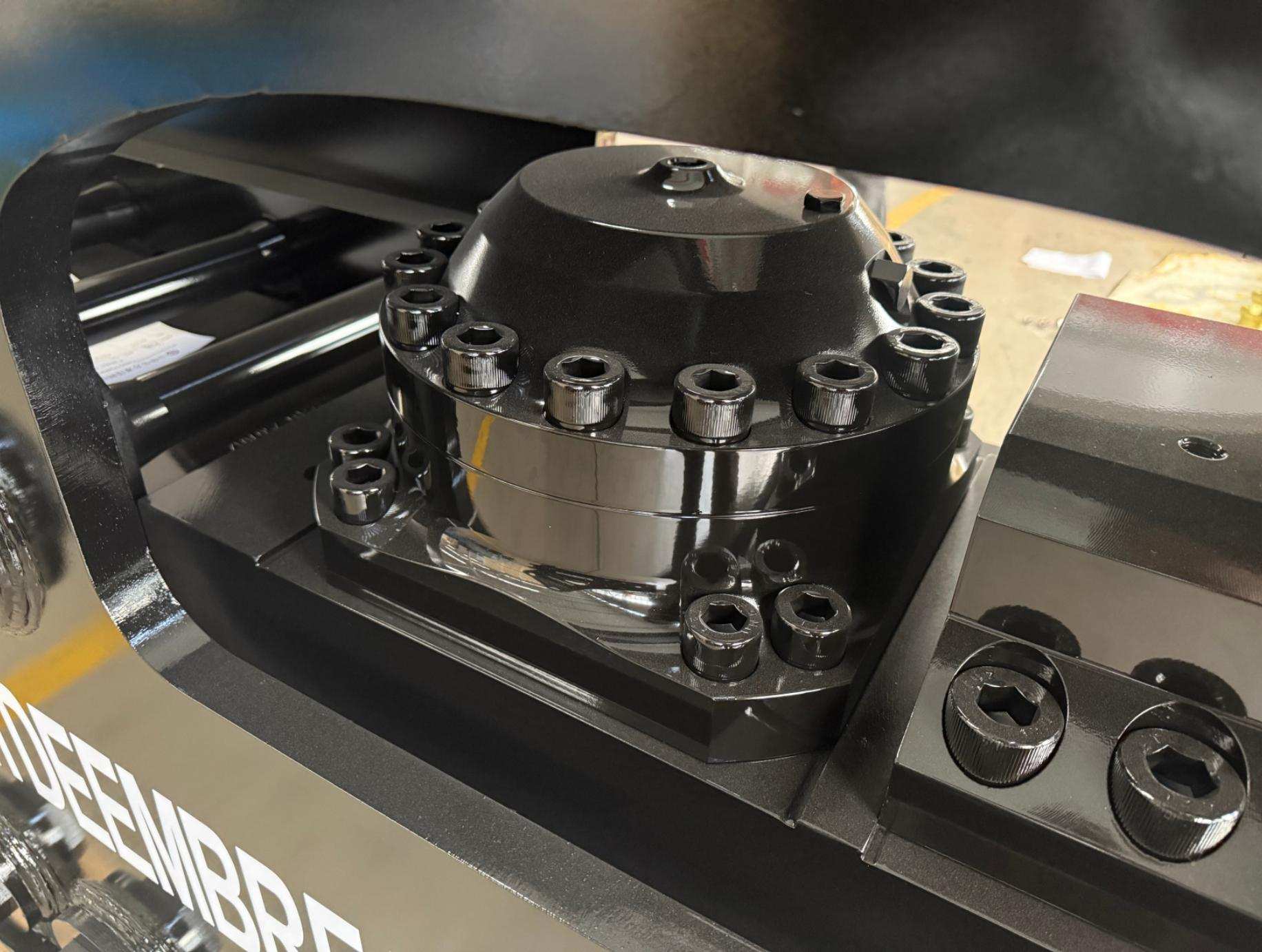
Stockage à long terme Traitement par azote
Lorsqu'on s'attend à ce que le marteau casseur soit inutilisé pendant une longue période, les opérations suivantes doivent être effectuées:
- Libérer le gaz azoté: Évacuer complètement le gaz azoté dans le cylindre arrière.
- Insérer le piston: Utilisez un ciseau pour pousser le piston dans le cylindre central.
- Principe de prévention de la rouille: L'huile hydraulique résiduelle à l'intérieur du cylindre moyen peut couvrir la surface du piston, l'isolant de l'air et empêchant efficacement le piston de rouiller en raison du stockage à long terme.
Si le gaz azote n'est pas libéré, le piston s'étendra naturellement vers l'extérieur sous la pression du ressort, exposant sa surface de travail à l'air, qui est très sujette à la rouille et affectera sérieusement son utilisation ultérieure.
Conclusion
Le marteau à impact est un outil d'investissement à rendement extrêmement élevé, mais ce rendement nécessite une maintenance appropriée comme condition préalable. Du rinçage initial de la tuyauterie pendant l'installation au serrage et à la lubrification quotidiens, du suivi du cycle de remplacement des joints à la détection régulière de la pression d'azote, chaque détail de la persistance contribue au fonctionnement stable à long terme de l'équipement.
METDEEM s'engage à fournir des produits de marteau à impact haute performance et espère également aider chaque utilisateur à maîtriser les méthodes de maintenance scientifique, afin que l'équipement puisse fonctionner au mieux dans chaque opération et créer une plus grande valeur pour vous.
Contactez METDEEM aujourd'hui pour explorer plus !
FAQ (questions fréquentes)
Q: Pourquoi est-il nécessaire d'utiliser le tuyau du corps du marteau pour connecter et rincer le tuyau avant d'installer le nouveau marteau?
R: Le rinçage est fait pour enlever tous les débris qui peuvent être présents dans le pipeline de l'excavatrice’ s concasseur, pour empêcher que ces impuretés pénètrent dans les parties internes du concasseur et endommagent les pistons de précision et les corps de cylindre.
Q: Pourquoi est-il nécessaire de presser fermement le ciseau dans le sol lorsque vous ajoutez du beurre?
R: Presser fermement le ciseau permet au joint de poussière de se contracter, ouvrant le passage pour que le beurre entre dans le canal interne de coulissement. En même temps, il empêche le beurre d'être poussé dans la chambre d'impact du piston, évitant ainsi d'endommager l'étanchéité à huile ou le collage du piston.
Q: Pourquoi le cycle de remplacement des pièces d'étanchéité est-il différencié en fonction du diamètre du ciseau?
A: Plus le diamètre du ciseau est grand, plus l'énergie d'impact et le débit hydraulique du disjoncteur sont grands, et plus la pression et l'usure que les pièces d'étanchéité doivent supporter sont grandes. Par conséquent, le cycle de remplacement est raccourci en conséquence.